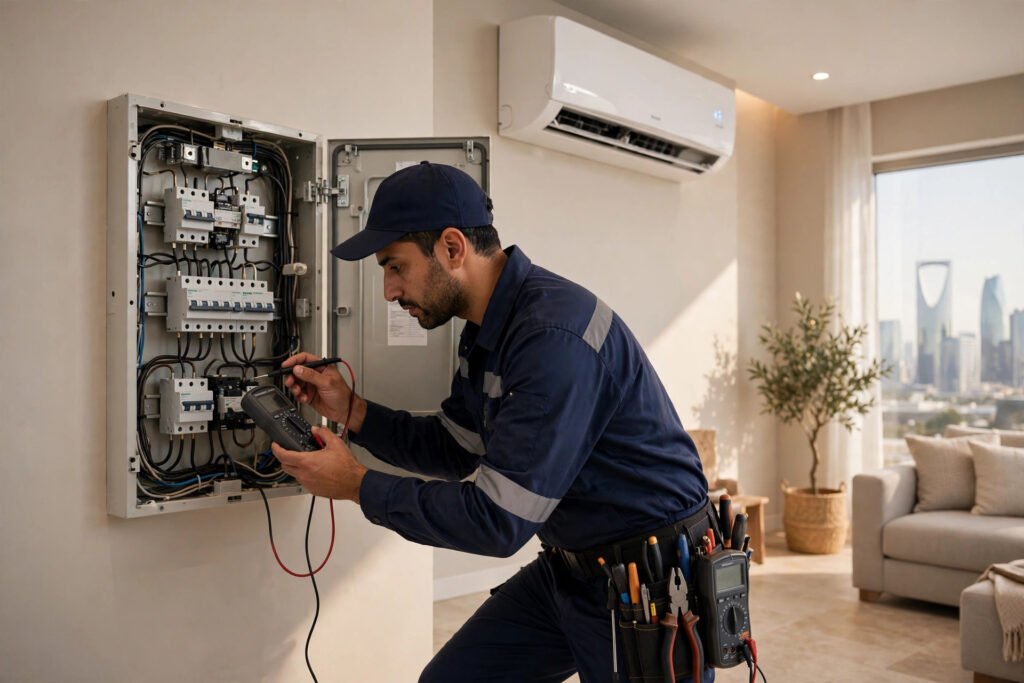
If your lights flicker ac turns on every time the cooling kicks in, you are not imagining things. In Riyadh, where air conditioners run almost year round, this is one of the most reported electrical complaints in villas and apartments.
The good news is that a very brief dimming at startup is often normal. The bad news is that persistent or worsening flicker can point to loose wiring, an overloaded circuit, or a distribution panel that is past its limits. Knowing which one you have saves money and keeps your home safe.
This guide explains why lights flicker ac turns on in Riyadh homes, lists the 6 most common causes, and shows which fixes you can handle yourself and which need a certified electrician.
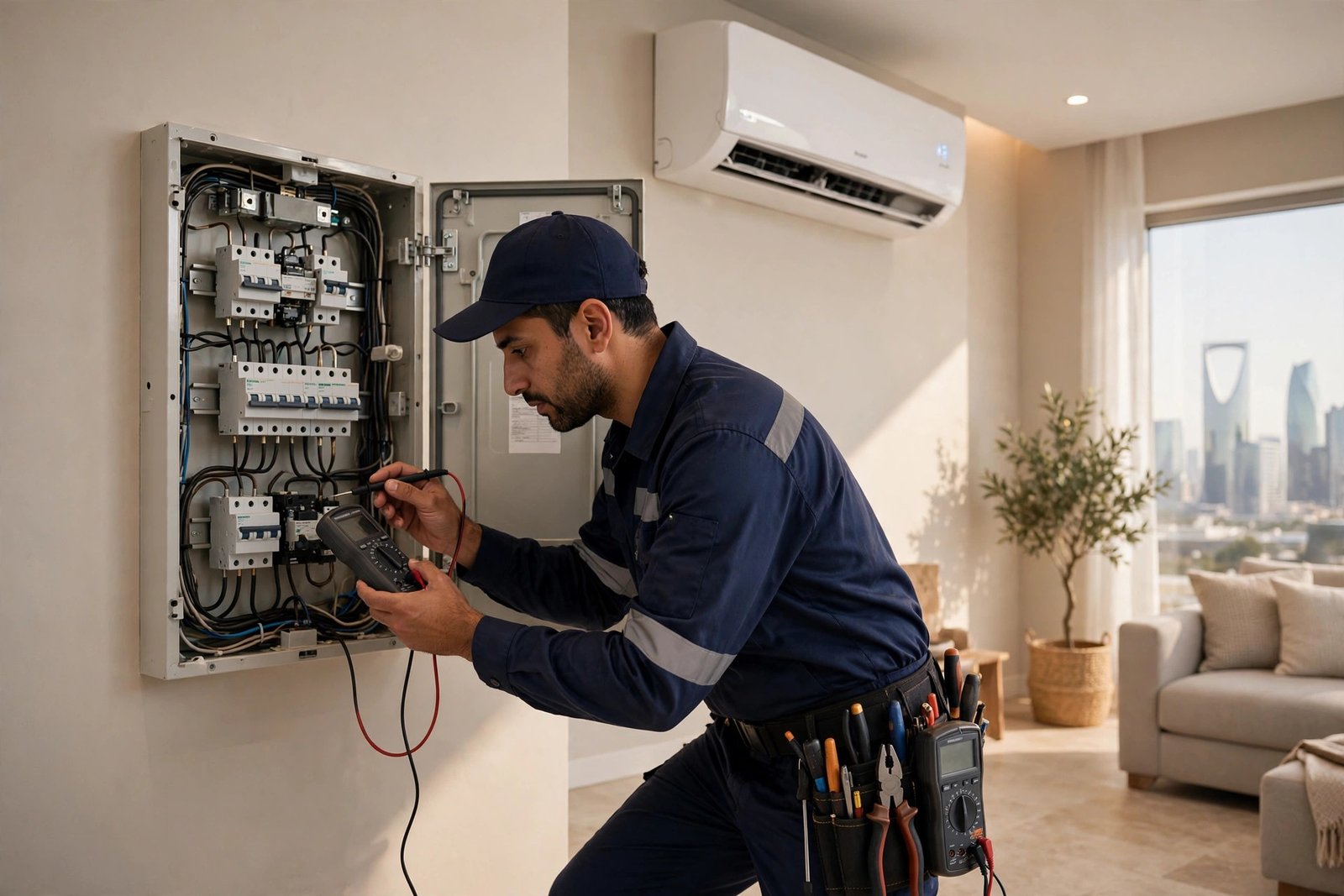
Why Lights Flicker AC Turns On in Riyadh Homes
Every air conditioner compressor draws a huge surge of current in the first split second of startup, sometimes three to five times its normal running current. This inrush momentarily drags down the voltage on the whole circuit, and your lights, especially LED bulbs, show that dip as a flicker.
When lights flicker ac turns on only once and the lights recover instantly, that is usually just the physics of startup. But when the flicker lasts longer, happens on every cycle, or gets worse over weeks, something in your wiring is struggling to deliver that surge cleanly. Riyadh summers make this worse, because AC units work harder and draw more current when outdoor temperatures push past 45 degrees.
What Exactly Happens at Startup
The compressor motor needs extra energy to overcome inertia from a standstill. For that fraction of a second, the current spike creates a voltage drop along your wires, and the longer or thinner the wires, the bigger the drop. Older villas with original wiring feel this effect the most.
LED lights react faster than old incandescent bulbs, so they reveal dips that you would never have noticed before. If the flicker also trips your breaker sometimes, read our guide on why circuit breakers trip in Riyadh homes, because overload and flicker often share the same root cause.
6 Causes and How Each One Is Fixed
Below are the six causes our electricians see most often in Riyadh, from the harmless to the genuinely dangerous. Each one has a matching fix, and the comparison table further down puts them side by side.
1. Compressor Inrush Current
The startup surge described above is the single most common reason. It is most visible in homes where the AC and lighting share wiring paths, and it tends to get worse as the compressor ages and its startup draw climbs.
Fix: A technician can measure the startup current and, if it is out of spec, install a soft start kit or move the AC to a dedicated circuit. If your AC also cools weakly, our AC compressor repair guide explains when repair beats replacement.
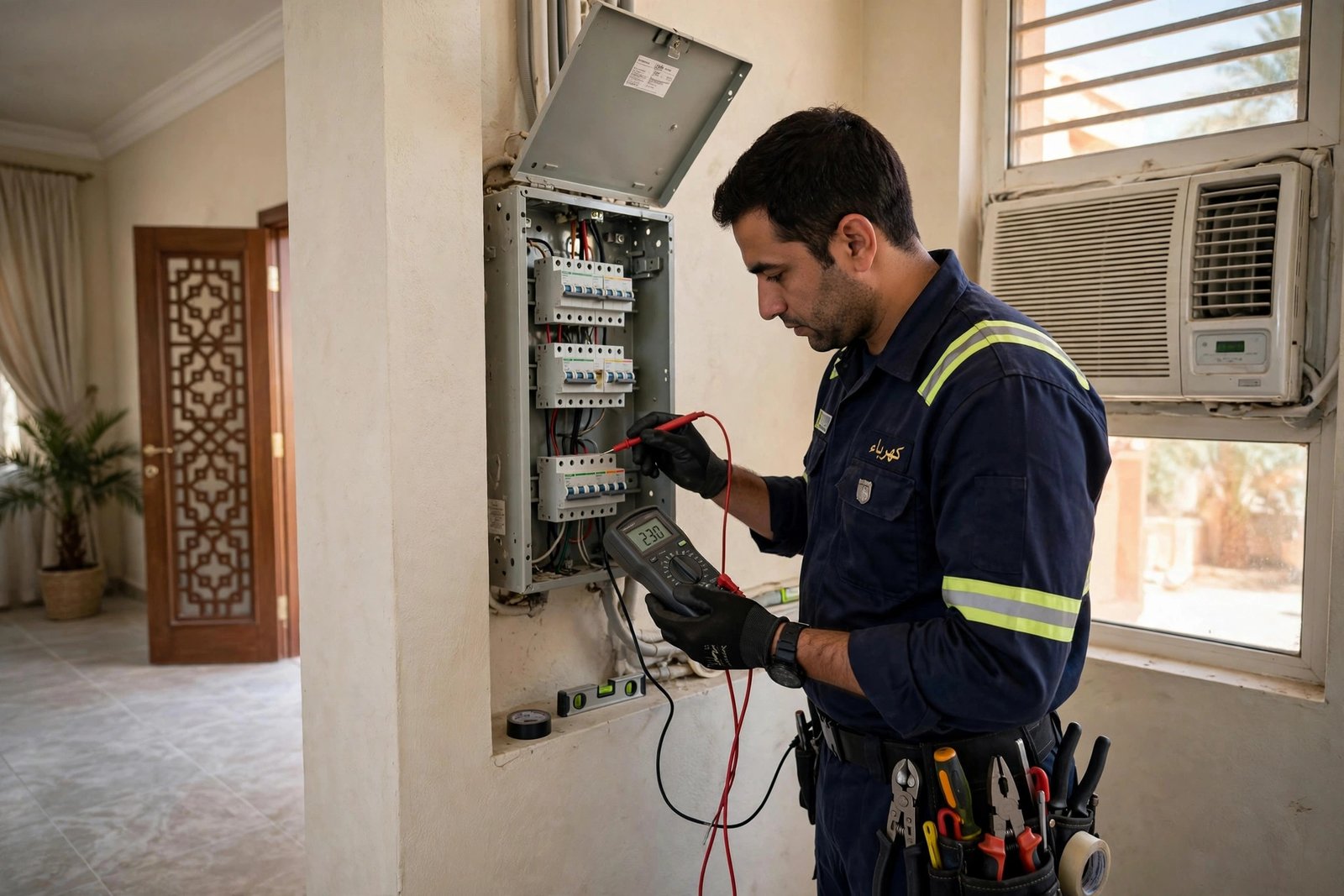
2. Lights and AC Share One Circuit
In many Saudi apartments and older villas, the living room lighting circuit also feeds a socket the AC is plugged into. Every time the compressor kicks on, the lights on that same circuit take the hit.
Fix: The lasting solution is a dedicated circuit for each AC unit, run straight from the distribution panel with the correct breaker size. This is standard practice for new installations and a common upgrade for older homes.
3. Loose Wire Connections
Wires expand and contract with heat, and over years the screw terminals inside panels and switches loosen. A loose connection adds resistance, which turns a small voltage dip into a visible flicker and generates heat exactly where you do not want it.
Fix: This one is strictly for a professional. A licensed electrician shuts down the circuit, re-torques every termination, and inspects for discolored or pitted copper that signals arcing. Never tighten panel terminals yourself while the power is connected.
4. Undersized or Aging Electrical Panel
Some Riyadh villas still run on panels sized for the loads of twenty years ago: a few lights, a fridge, and maybe one AC. Add two or three split units and the panel, breakers, and main switch are all operating at their edge every summer.
Fix: A full load calculation and panel health check. Sometimes moving loads between phases balances things out; often the honest answer is a panel upgrade with a higher rated main breaker and room for growth.
5. Faulty Bulbs or Incompatible Dimmers
Cheap LED bulbs and old dimmer switches are notorious for flicker. If only one room flickers while the rest of the house stays steady, the bulb or the dimmer is usually the culprit, not the AC circuit.
Fix: Replace suspect bulbs with quality LEDs rated for your voltage, and make sure any dimmer is LED compatible. This is the cheapest fix on the list and worth ruling out before calling anyone.
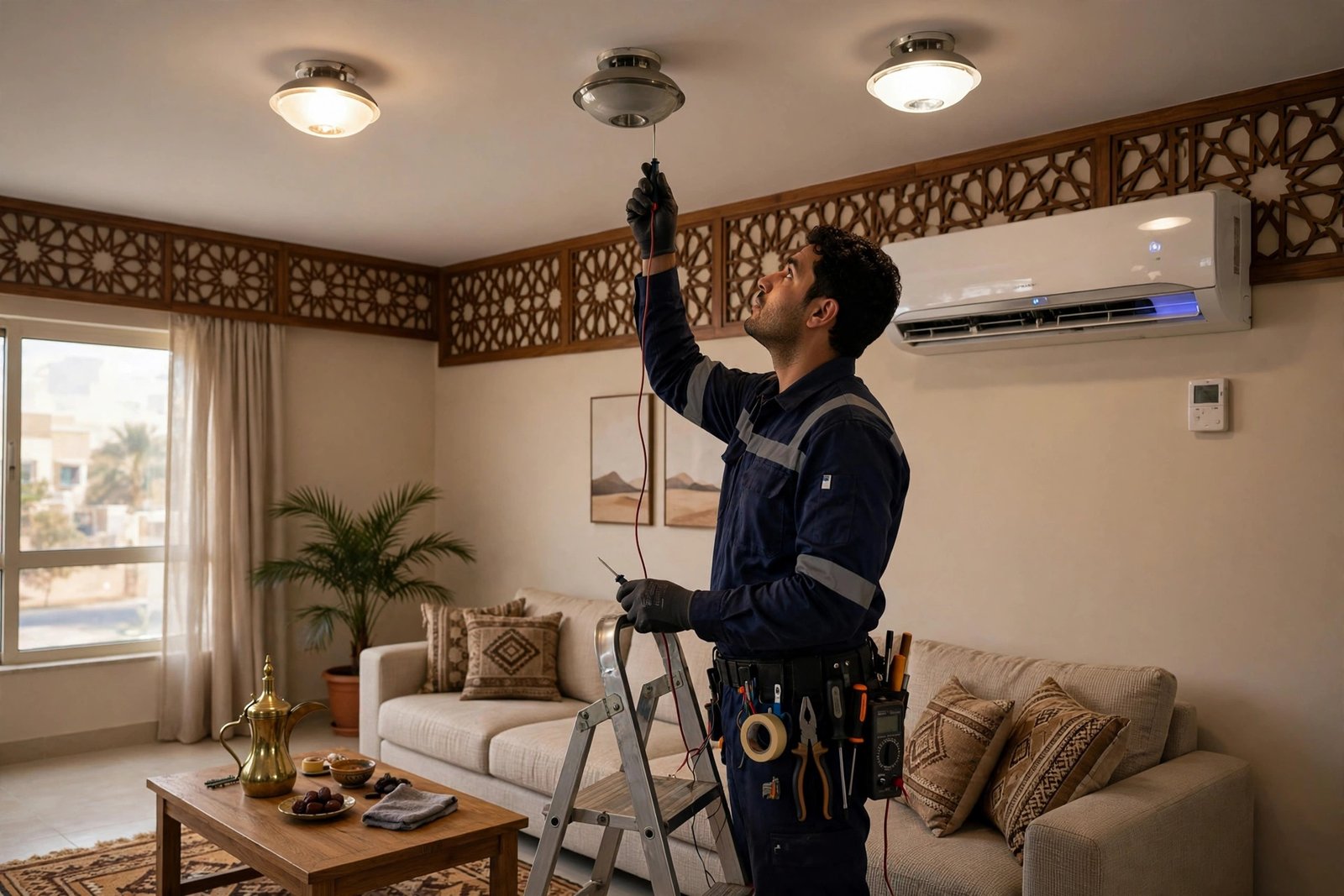
6. Low Utility Voltage During Peak Hours
On the hottest Riyadh afternoons, whole neighborhoods draw maximum power at once and the supply voltage can sag below normal. When the grid is already low, a compressor startup dip that would normally go unnoticed turns into a visible flicker across the house.
Fix: If your neighbors see the same pattern at the same hours, the cause is likely upstream. A voltage stabilizer protects sensitive equipment in the meantime, and persistent low voltage should be reported to your electricity provider.
Causes vs Fixes: Quick Comparison Table
Use this table to match what you are seeing with the right response. Anything involving the panel, loose wiring, or heat and smell belongs to a professional.
| Cause | Fix |
|---|---|
| Compressor inrush current at startup | Measure startup draw; install a soft start kit or move the AC to a dedicated circuit |
| Lights and AC share one circuit | Run a dedicated circuit from the distribution panel with the correct breaker size |
| Loose wire connections in the panel or switches | Professional re-torquing of all terminations and inspection for arcing damage |
| Undersized or aging electrical panel | Load calculation and panel health check; upgrade the main breaker and panel if needed |
| Faulty LED bulbs or incompatible dimmers | Replace with quality rated LED bulbs and an LED-compatible dimmer switch |
| Low utility voltage during peak summer hours | Install a voltage stabilizer and report persistent low voltage to your electricity provider |
Warning Signs You Should Never Ignore
Most flicker is a nuisance, but some of it is a warning. Call an electrician the same day if you notice a burning or hot plastic smell near the panel, a buzzing or crackling sound from breakers, scorch marks on sockets or switches, flicker that spreads to rooms on other circuits, or breakers that trip more than once a month. These are the classic early signs of a failing connection or overloaded wiring.
Our guide to 7 warning signs your home needs an electrician covers these in more detail, and if the situation feels urgent, our emergency electrician service runs 24/7 anywhere in Riyadh. For general electrical safety guidance at home, the Electrical Safety Foundation International at esfi.org is a solid independent reference.
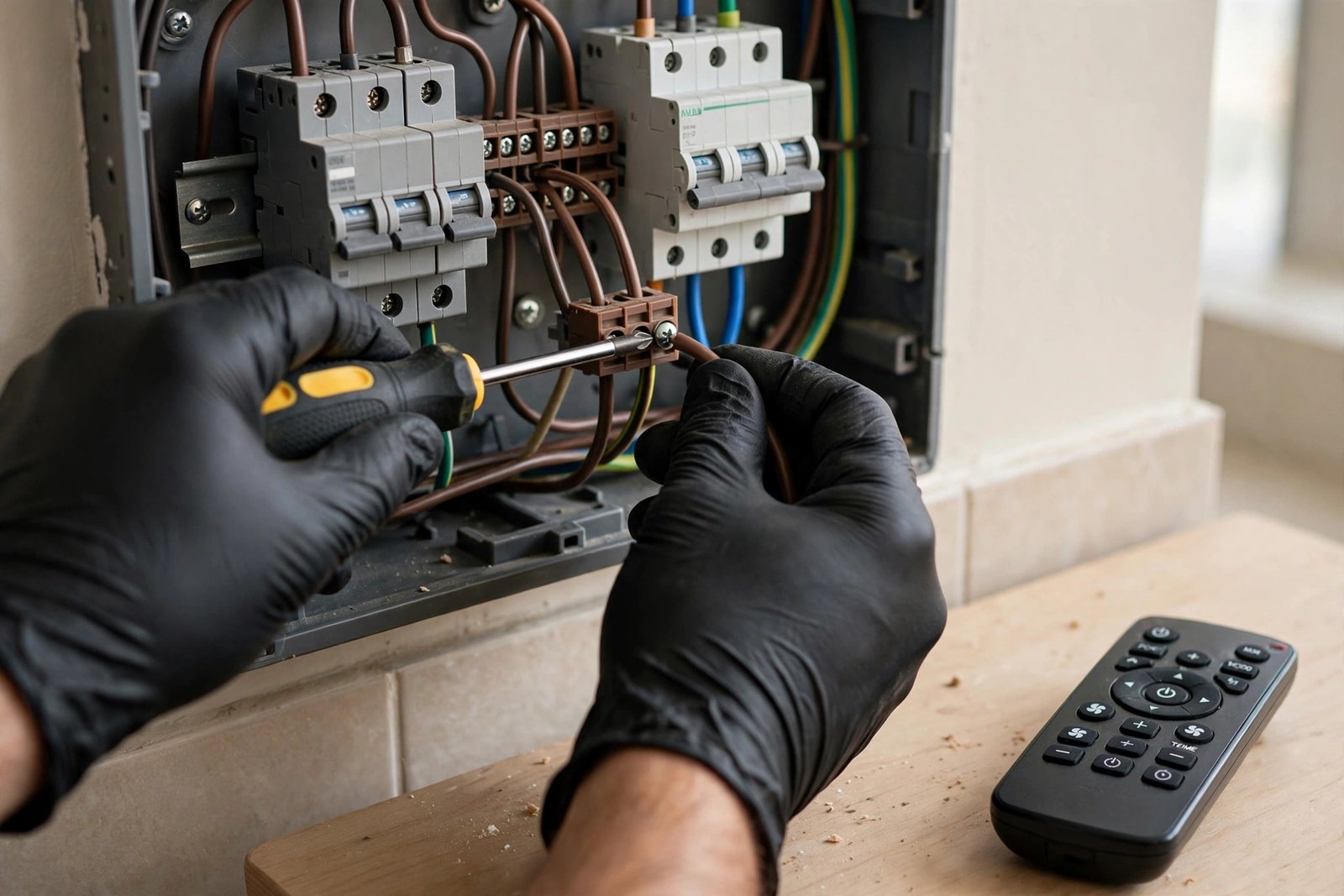
How a SheelTalab Electrician Fixes Flickering Lights
A SheelTalab electrician visit costs 150 SAR (was 190, labor only, no materials) and starts with a full diagnostic: panel inspection, circuit load measurement, startup current test on the AC, and a check of every termination on the affected circuits. You get a clear report of what is wrong and a fixed quote before any work begins.
Most flicker jobs are completed in a single visit: re-torquing loose connections, separating shared circuits, replacing tired breakers, or balancing loads across phases. Every job includes 45-minute rapid dispatch anywhere in Riyadh, 24/7 availability, a 30-day golden warranty, and our 4.9 out of 5 rating from more than 18,500 completed jobs. Call 920084252 or 0570328344, certified technicians and genuine parts guaranteed.
The Bottom Line on Flickering Lights
When lights flicker ac turns on once at startup and recover instantly, relax, it is normal electrical physics. But if the flicker lingers, spreads, or gets worse week by week, your home is telling you something. Rule out the cheap fixes like bulbs and dimmers first, then get a certified electrician to check the wiring before a nuisance turns into a hazard.