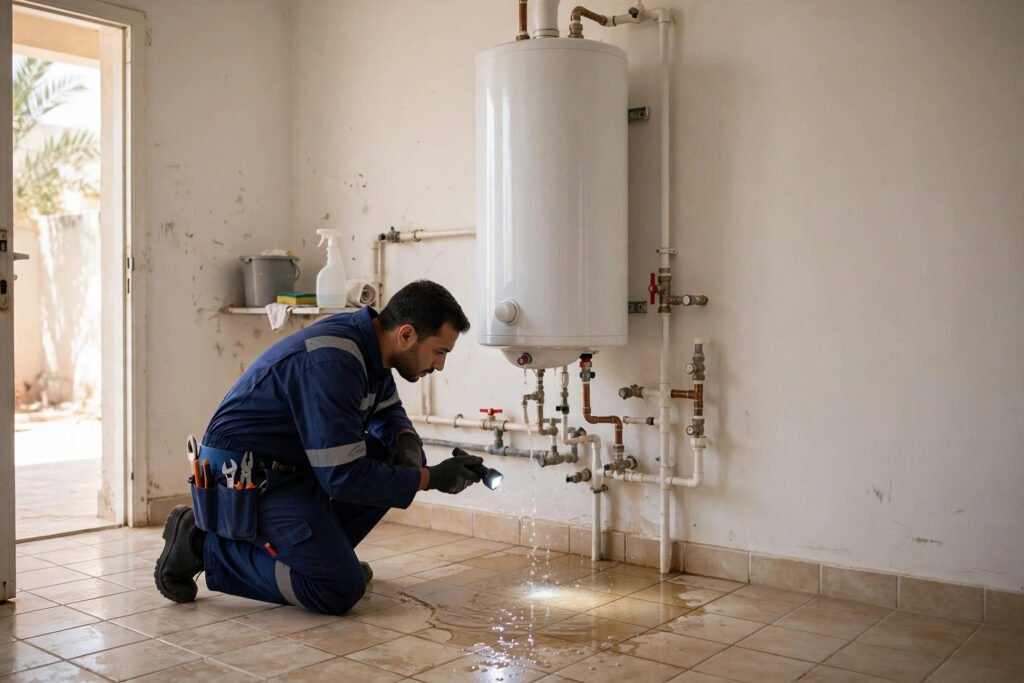
If you found a puddle under your water heater this morning, you are facing one of the most common water heater leaking causes, and the longer you wait, the worse it gets. In Riyadh homes, where water heaters run almost all year, a leak at the bottom of the tank is a warning sign you should never ignore. Water pooling under the tank can mean anything from a loose valve to a rusted out tank that is close to failing completely.
The bottom of the tank is where sediment settles, where the drain valve sits, and where corrosion usually wins first. That makes a leak there more serious than a simple drip from a pipe joint. In this guide, we break down the six water heater leaking causes we see most often in Riyadh villas and apartments, explain how to check each one safely, and tell you exactly when to call a plumber. SheelTalab’s certified plumbers handle water heater repairs across Riyadh with 45-minute rapid dispatch, 24/7 availability, and a 30-day golden warranty.
6 Water Heater Leaking Causes You Should Know
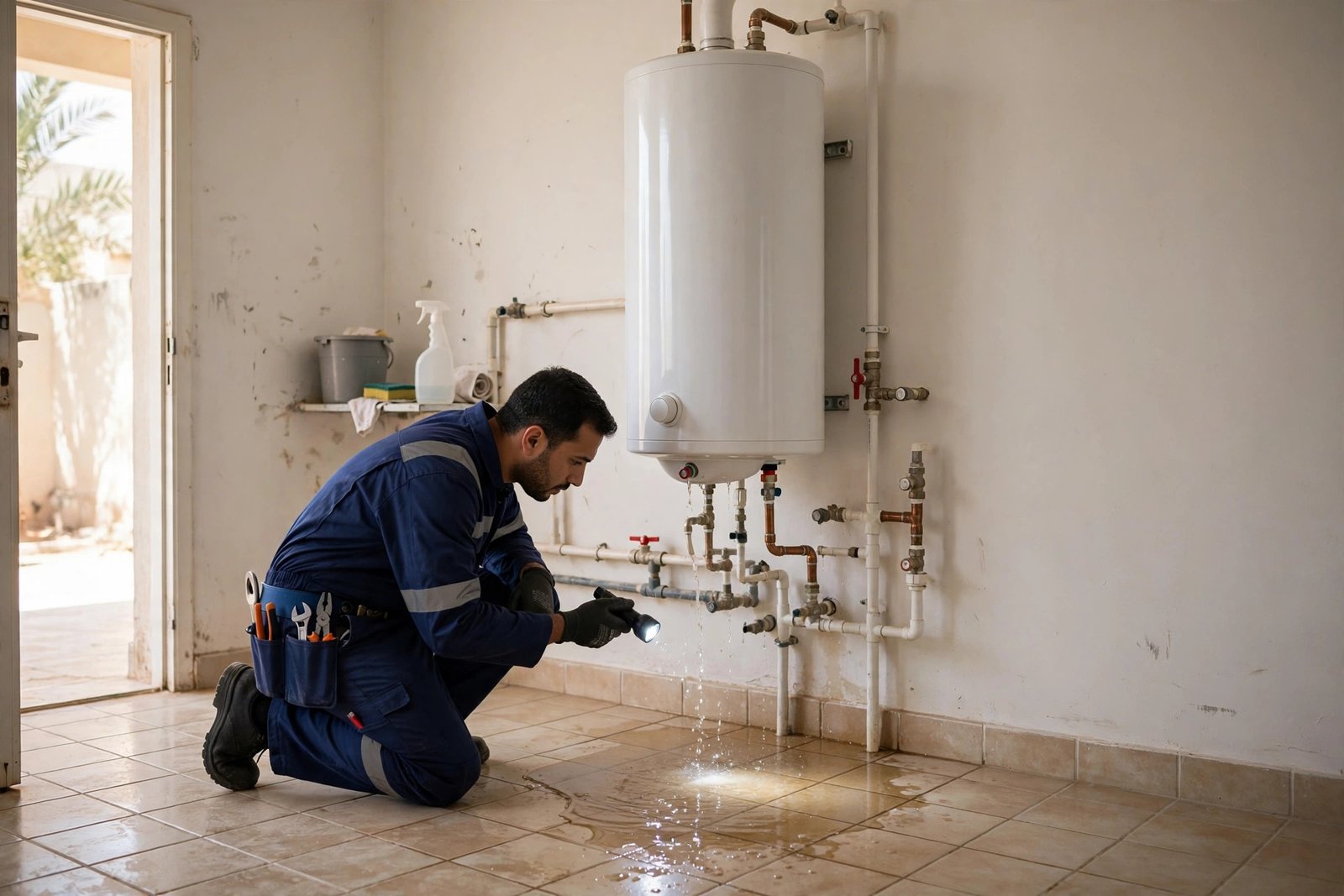
Before you check anything, turn off the power (or gas) to the heater and close the cold water supply valve, then let the tank cool down for safety. These are the most common water heater leaking causes our plumbers find in Riyadh homes, listed in the order we see them most:
1. Internal Tank Corrosion (the Most Common Cause)
Most water heaters have a steel tank with a glass lining and a sacrificial anode rod that slows down rust. Once the lining cracks and the anode rod wears out, the steel starts to corrode from the inside, and the bottom of the tank is where it fails first. If your heater is 8 to 12 years old and the leak is coming from under the tank itself rather than any fitting, corrosion is almost certainly the cause. Sadly, a rusted through tank cannot be repaired safely. It has to be replaced.
2. A Worn or Loose Drain Valve
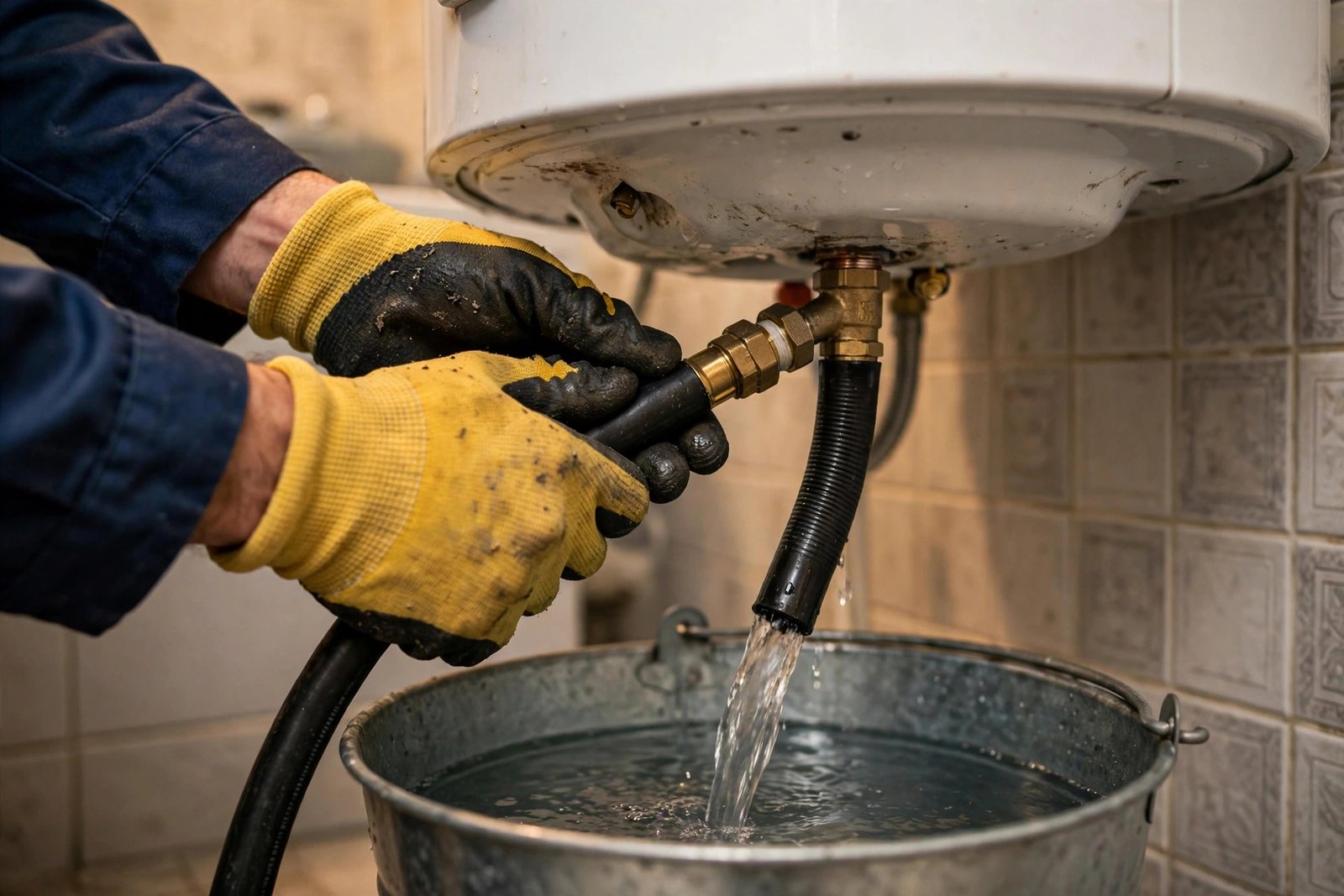
The drain valve sits at the very bottom of the tank and is used to flush out sediment. Over time, its washer hardens and cracks, or the valve works loose from heat expansion. This is actually good news, because a leaking drain valve is one of the cheapest fixes on this list. Try tightening it gently first. If the drip continues, the valve needs replacing, which a plumber can do in under an hour without touching the tank itself.
3. Sediment Buildup Overheating the Tank Floor
Riyadh’s water supply carries minerals that settle as sediment on the floor of the tank. A thick layer of sediment traps heat against the steel, creating hot spots that weaken the metal and eventually cause tiny cracks and leaks. You may also notice rumbling or popping noises from the heater, which is the classic sign of sediment. The U.S. Department of Energy recommends flushing your water heater regularly to prevent sediment problems and extend the tank’s life. If flushing reveals heavy buildup, a professional descaling service is worth it.
4. Loose Pipe Connections Near the Base
Sometimes the tank is fine and the leak is actually coming from a loose inlet or outlet connection above, with water simply running down the side and pooling at the bottom. Dry the outside of the tank completely, then watch where the first drops appear. If water starts at a pipe joint, tightening or resealing that connection solves the problem. If the water seems to come from nowhere and you cannot see the source, our water leak detection service finds hidden leaks without breaking a single tile.
5. Excessive Water Pressure
High water pressure puts constant stress on the tank, valves, and every joint in the system. If your home’s pressure is too high, the weakest point gives way first, and that is often the drain valve or a bottom fitting. Watch for other signs like banging pipes, dripping faucets, or a temperature and pressure relief valve that keeps discharging. A plumber can test your pressure in minutes and fit a pressure reducing valve if needed.
6. A Failed Heating Element Gasket
On electric water heaters, the heating elements screw into ports near the bottom of the tank, sealed by rubber gaskets. Heat cycles harden those gaskets over the years until they start weeping water around the element. The fix is straightforward: drain the tank below the element level, remove the old gasket, and fit a new one. It is a job best left to a plumber, because working around live electrical connections and a full tank of hot water is not a safe DIY task.
Is a Leaking Water Heater Dangerous?
Most water heater leaking causes start as a slow drip, but even a small leak deserves fast action. Standing water can damage flooring and walls, soak into cabinetry, and grow mold within days in a warm utility room. A leaking electric heater also creates an electrical hazard, and a severely corroded tank can rupture under pressure, flooding the room in minutes. If you see rust colored water, hear hissing, or the leak is getting worse quickly, shut off the power and water supply and call a plumber right away.
Repair or Replace: How to Decide
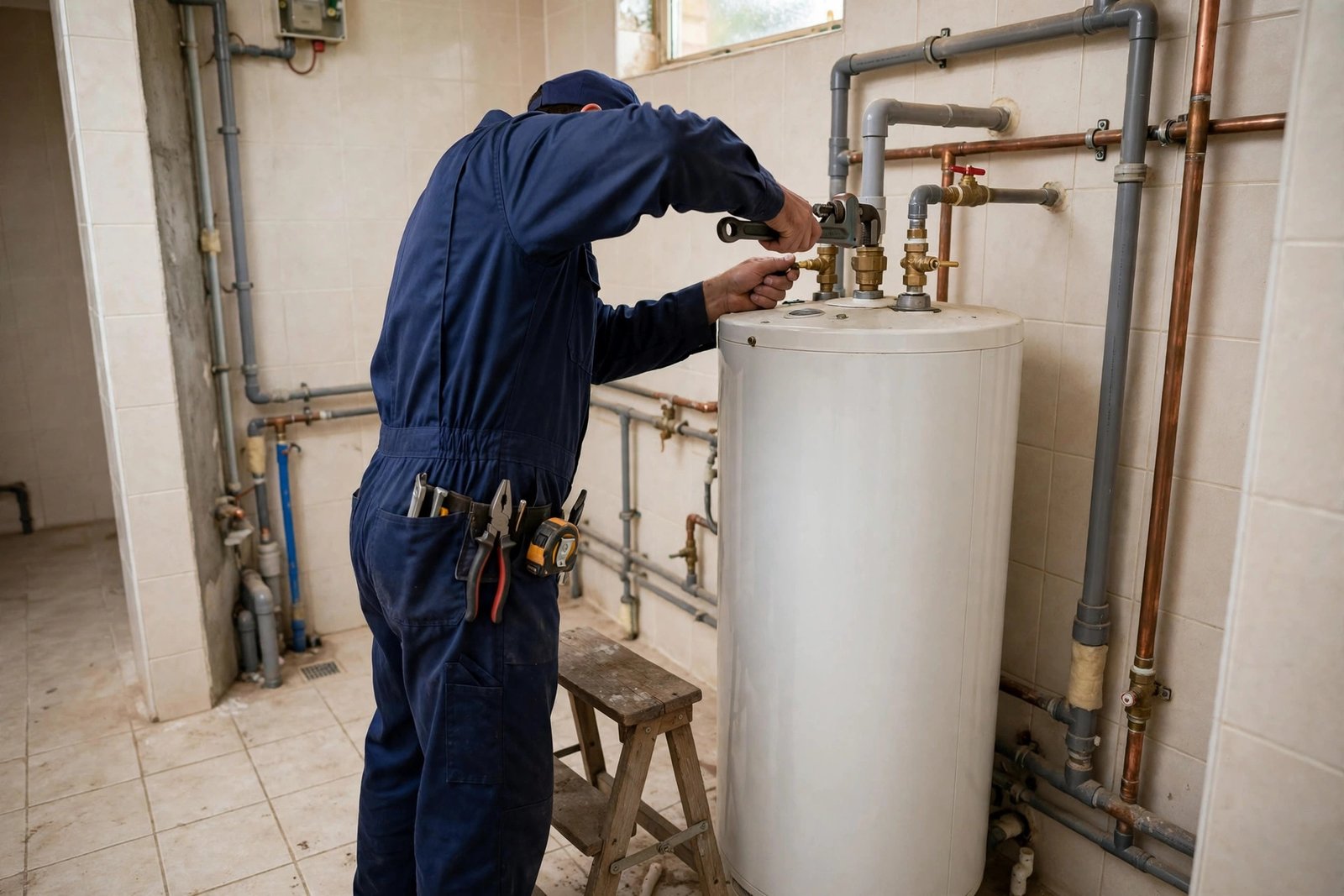
The decision comes down to the age of the unit and the source of the leak. If your heater is under 8 years old and the leak comes from a valve, gasket, or fitting, a repair is almost always the smart choice. If the tank itself is rusted through, or the unit is over 10 to 12 years old with multiple problems, replacement saves you money in the long run because a failing tank will keep leaking in new spots. Also consider the damage around the heater: a leak that has soaked your bathroom or utility floor may need bathroom waterproofing to stop hidden moisture from spreading under the tiles.
How SheelTalab Fixes Water Heater Leaks in Riyadh
Our certified plumbers diagnose water heater leaks in minutes and carry the genuine valves, gaskets, and fittings needed to fix most problems on the first visit. Plumbing and leak detection service starts at 150 SAR (was 180, labor only), backed by 45-minute rapid dispatch anywhere in Riyadh, 24/7 service, and our 30-day golden warranty. With a 4.9 out of 5 rating from more than 18,500 completed jobs, you can trust the repair is done right the first time. Call 0570328344 or 0570328344, or message us on WhatsApp, and we will have a plumber at your door today.
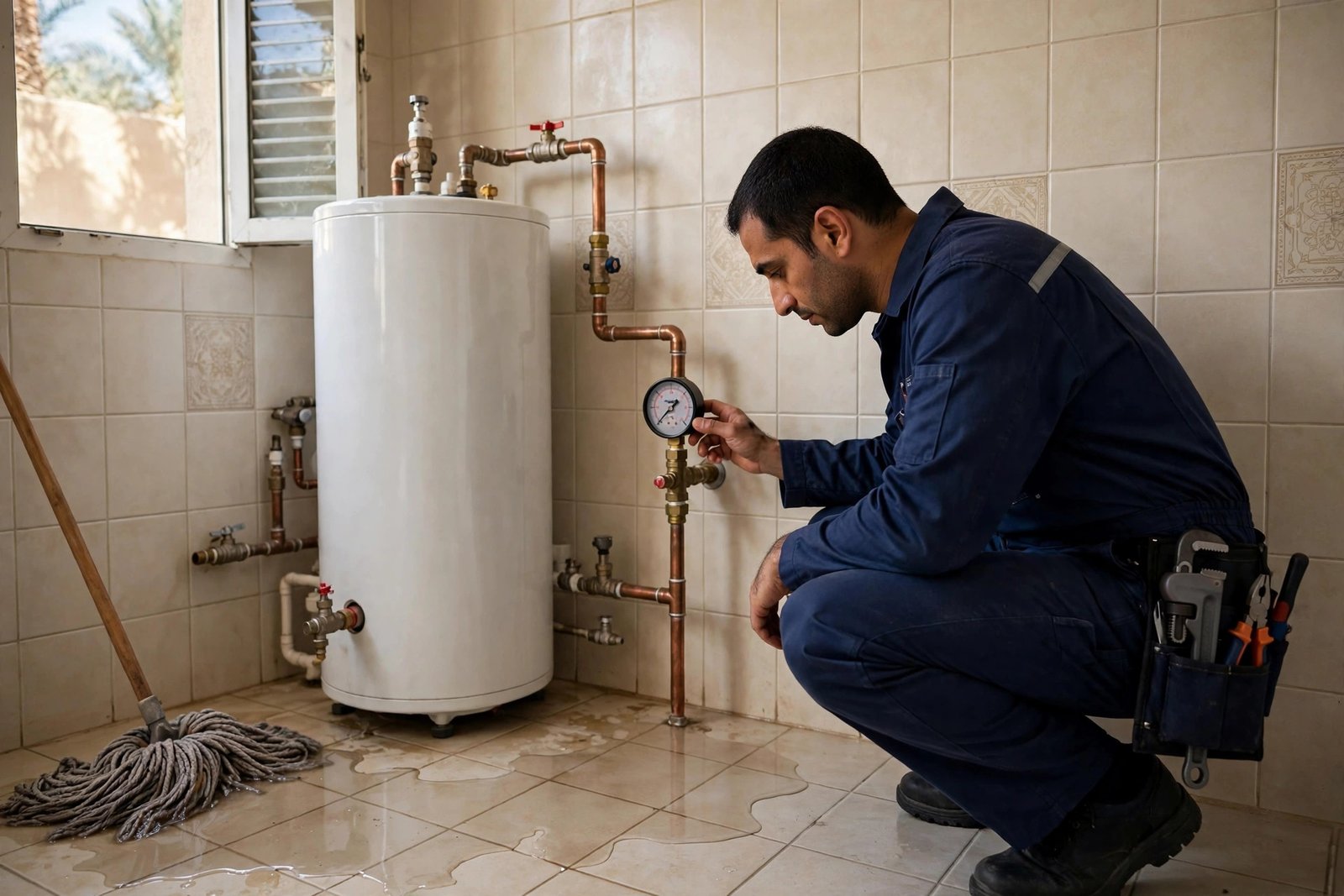
Now you know the six water heater leaking causes behind a puddle at the bottom of the tank, from simple valve fixes to a corroded tank that needs replacing. The key takeaway is simple: act fast. A small drip today becomes floor damage, mold, or a burst tank tomorrow. Check the easy causes safely, and for anything involving the tank itself, rust, or electrical parts, bring in a certified plumber. In Riyadh, SheelTalab is one call away, day or night.