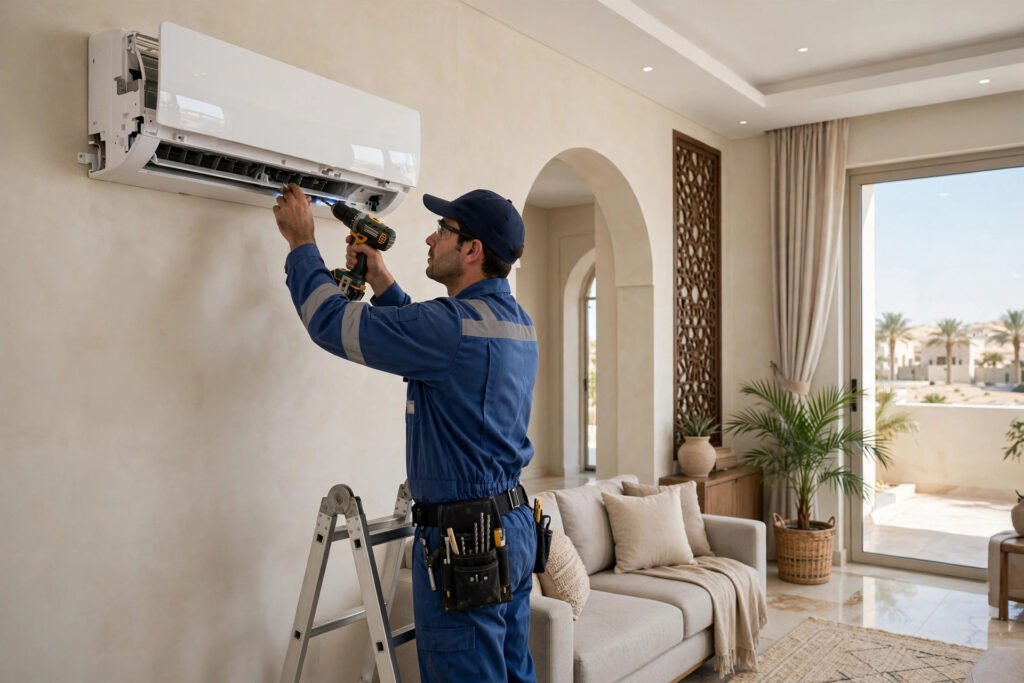
Shopping for a new split AC in Riyadh? The first decision every buyer faces is the inverter vs non inverter split ac choice, and it affects everything from your monthly electricity bill to how well your bedroom cools on a 47°C August afternoon. Pick the wrong type and you could pay too much upfront or sweat through another summer.
In this guide we compare inverter vs non inverter split ac systems across 7 practical differences: energy use, cooling stability, price, noise, lifespan, extreme-heat performance, and repair costs. No jargon, just what actually matters for a home in Riyadh.
SheelTalab’s certified technicians install, service, and repair both types across Riyadh every day, so everything below comes from real field experience, not brochures. And if your current unit is struggling, our AC Diagnostics & Rapid Repair starts at 120 SAR (was 180) with 45-minute dispatch, 24/7.
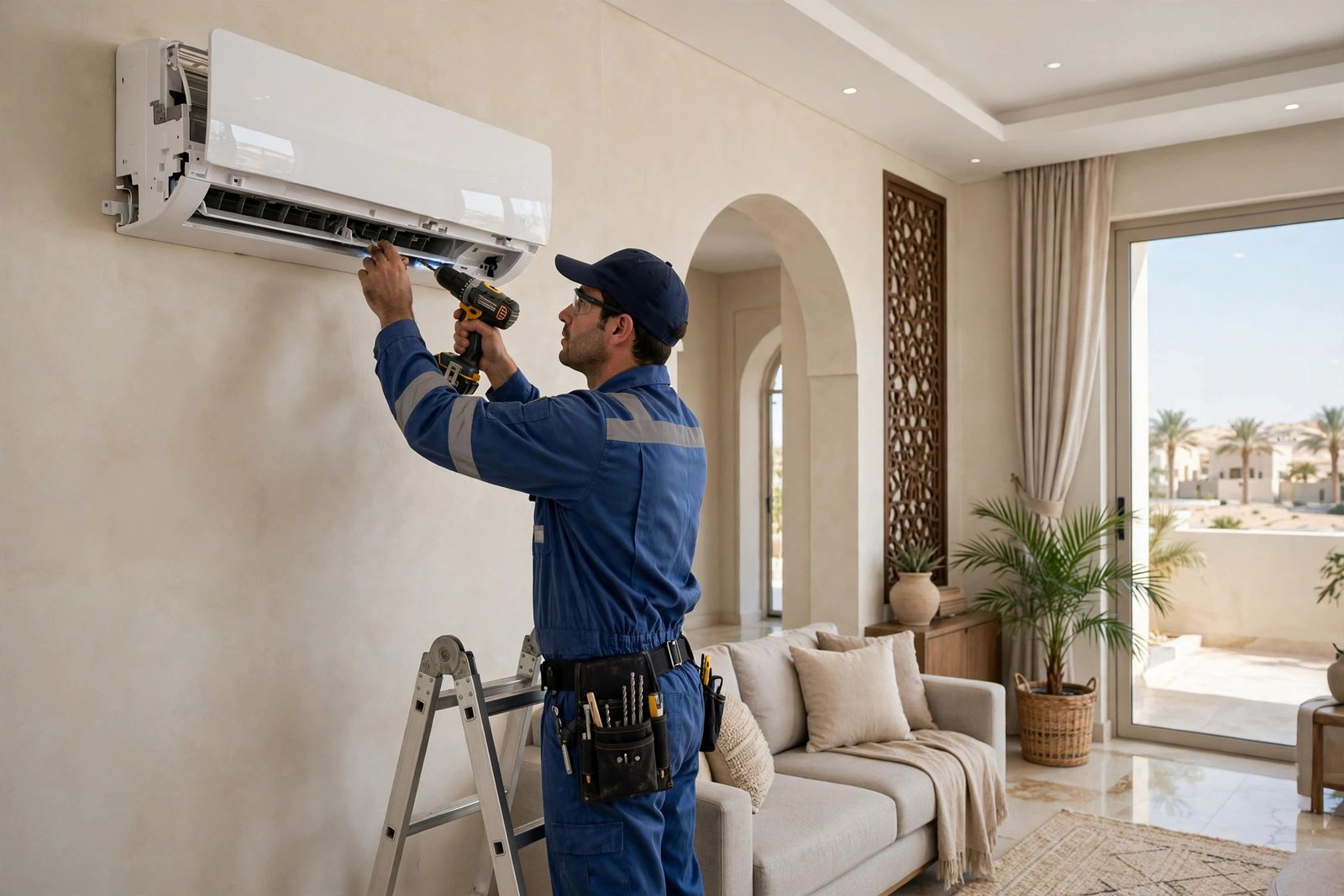
Inverter vs Non Inverter Split AC: 7 Key Differences
Before the differences, here is the 30-second version. A non-inverter split AC compressor has two speeds: full power or off. It blasts cold air until the room hits the set temperature, shuts down, then restarts when the room warms up again. An inverter split AC compressor runs at variable speed. It slows down once the room is cool instead of switching off, then gently ramps back up when needed.
That one mechanical difference, variable versus fixed compressor speed, is what creates every difference below. Inverter technology was originally developed to cut energy waste, and the compressor is the hungriest component in any AC. For a deeper technical look at how the compressor electronics work, see the inverter compressor overview on Wikipedia.
1. Energy Use and Electricity Bills
This is the biggest reason buyers choose inverter ACs. Because the compressor rarely runs at full power once the room is cool, an inverter split AC typically uses 30 to 50 percent less electricity than a non-inverter of the same capacity, mostly by avoiding the repeated hard restarts that draw a surge of current every cycle.
In Riyadh this matters more than almost anywhere else. Your AC does not run for a three-month season here, it runs eight to twelve hours a day for most of the year. Over that kind of runtime, even a modest efficiency gap compounds into a serious difference on your annual electricity bill. If the unit cools a bedroom you use every night, the inverter’s efficiency almost always pays for itself.
2. Cooling Speed and Temperature Stability
Non-inverter units cool a hot room slightly faster at startup, since they always run at full blast from the first second. The problem is what happens next. The compressor cuts out, the room warms by two or three degrees, and it kicks back in with a blast of colder air, which many people feel as alternating waves of too cold and slightly warm.
Inverter units hold the room within about one degree of the set temperature. Once the target is reached, the compressor idles at low speed and keeps the cool steady instead of cycling. For bedrooms and home offices where comfort matters more than a fast initial cooldown, that stability is the clear winner.
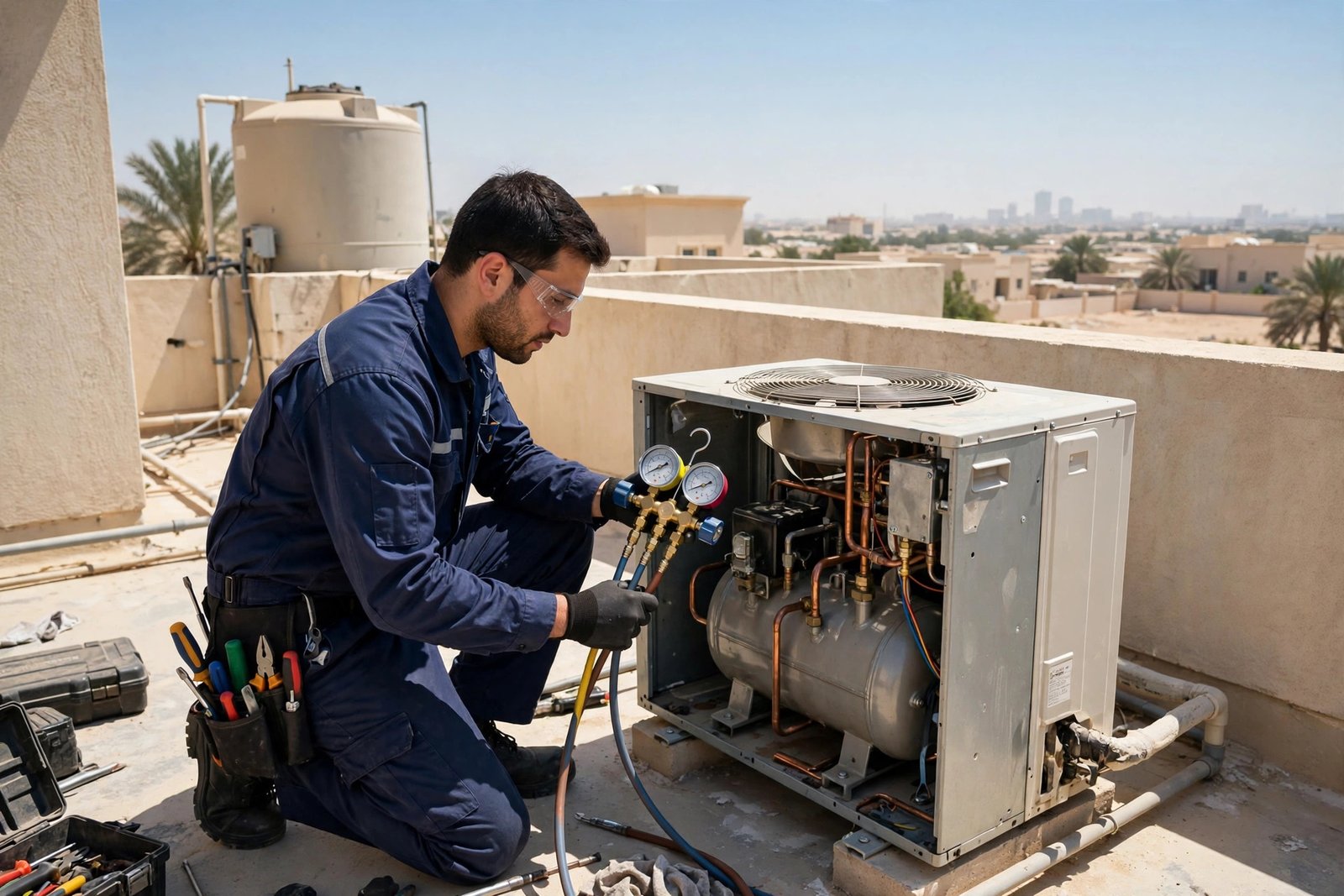
3. Upfront Price vs Long-Term Cost
A non-inverter split AC costs less to buy. For the same cooling capacity, expect an inverter model to carry a premium of roughly 20 to 30 percent. This is the one area where the non-inverter wins outright, and it is why budget buyers still choose them.
But the math flips over time. In a city where the AC runs most of the year, the inverter’s lower electricity consumption typically recovers that premium within three to five years. For a full breakdown of what AC ownership really costs here, read our guide to AC repair costs in Riyadh. If you are buying new, also see our split AC installation guide for Riyadh before you commit to a size and brand.
4. Noise Levels
Both types are quiet at the indoor unit, but the difference shows up over time. A non-inverter outdoor unit makes an audible click and hum every time the compressor restarts, which can be several times an hour on hot days. Inverter units restart far less often and produce a softer background hum at low speed that most people stop noticing within minutes.
5. Compressor Durability and Lifespan
Every hard start wears a compressor. A non-inverter compressor slams on at full power hundreds of times a week during summer, and that stress shortens its life. Inverter compressors start softly and ramp speed gradually, which means far less wear on bearings, windings, and electrical contacts, so well-maintained inverter compressors typically outlast non-inverter ones by several years.

6. Performance in 47°C Riyadh Heat
Riyadh’s extreme heat is where the two designs diverge most. On a 47°C afternoon, a non-inverter compressor runs nearly nonstop trying to satisfy the thermostat, and older units often trip on thermal overload, shutting down exactly when you need them most. We get a wave of these calls every July and August.
Inverter units handle extreme heat better because they never fully stop. The compressor keeps circulating refrigerant at low speed, which protects it from the heat buildup that triggers overload cutoffs. It will still struggle if the unit is undersized, but it degrades gracefully instead of cutting out. If your current AC cannot keep up, start with our 7 fixes for a split AC not cooling in Riyadh before assuming you need a new unit.
7. Maintenance and Repair Costs
Here the non-inverter wins. Its electronics are simple: a contactor, a capacitor, and a thermostat. Parts are cheap, any technician can diagnose it in minutes, and a typical repair bill stays low.
Inverter units add a control board and an inverter PCB that modulates compressor speed. When that board fails, the replacement part costs significantly more, and diagnosis takes longer. The good news is that most inverter failures we see are not the board at all. They are dirty coils, low refrigerant, or clogged drains, the same fixable issues as any AC. Our diagnostics visit (120 SAR, was 180) identifies the real cause with 45-minute dispatch, 24/7, backed by a 30-day golden warranty and our 4.9/5 rating from 18,500+ jobs.
Inverter vs Non Inverter Split AC: Feature Comparison
The full side-by-side summary, so you can compare every feature at a glance:
| Feature | Inverter Split AC | Non-Inverter Split AC |
|---|---|---|
| Compressor operation | Variable speed, adjusts continuously to room temperature | Fixed speed: full power or off, in on/off cycles |
| Energy consumption | 30-50% less electricity than same-capacity non-inverter | Higher bills due to repeated full-power restarts |
| Temperature stability | Holds within about 1°C of the set temperature | Swings 2-3°C as the compressor cycles on and off |
| Purchase price | Higher, roughly 20-30% premium for same capacity | Cheaper to buy |
| Noise level | Quieter: soft hum at low speed, few restarts | Louder: audible click and hum on every compressor restart |
| Compressor lifespan | Longer, soft starts reduce mechanical wear | Shorter, hard start/stop cycles stress components |
| 47°C heat performance | Keeps running at low speed, resists overload cutoffs | Runs nonstop, prone to thermal overload trips |
| Repair costs | Higher when the inverter PCB or control board fails | Lower: simpler parts, faster diagnosis |
Which Type Is Right for Your Riyadh Home?
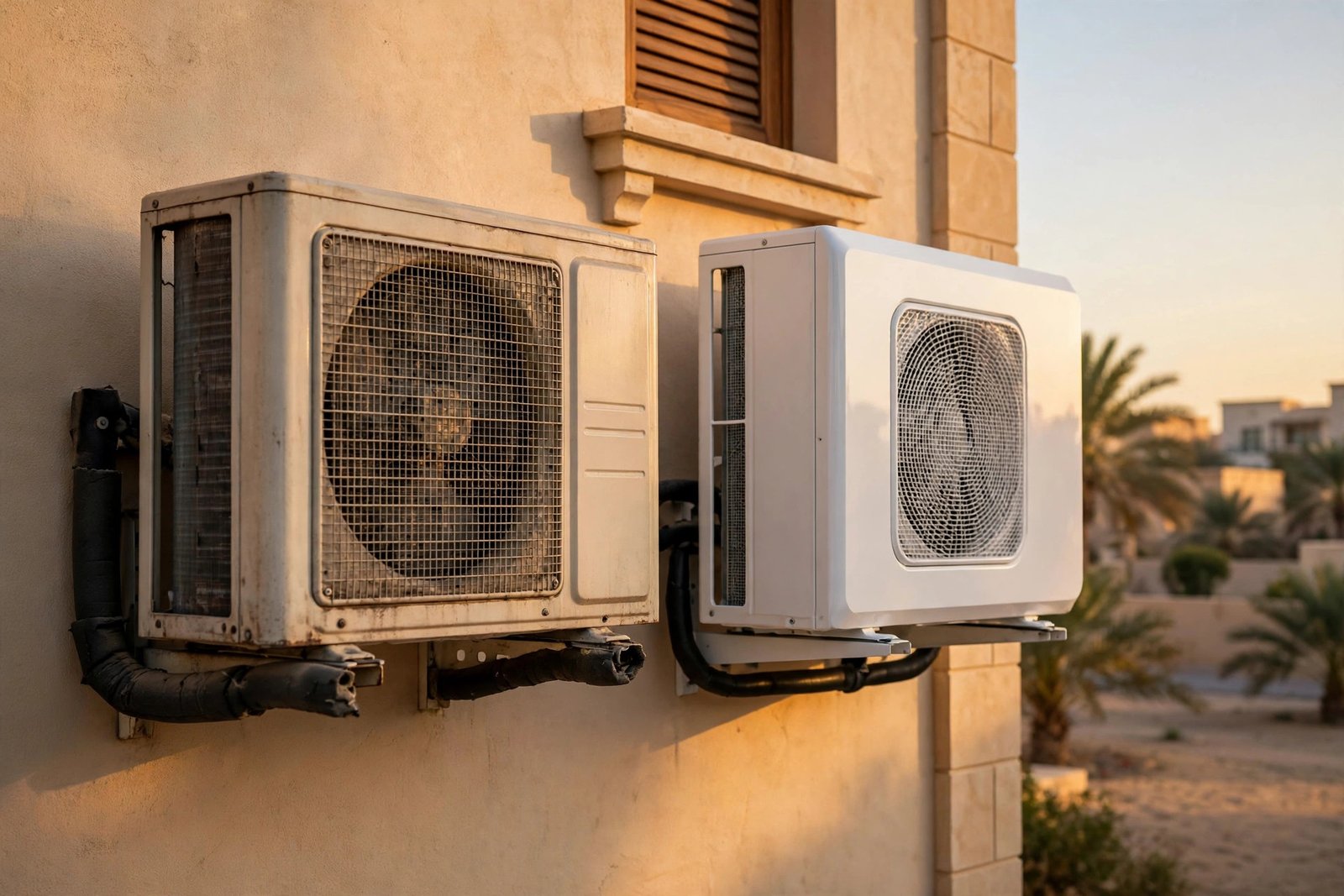
Choose an inverter split AC if the room is used daily (bedrooms, living rooms, home offices), if you value steady comfort and quiet nights, or if you plan to stay in the home long enough for the electricity savings to pay back the premium. In Riyadh’s climate, that is most main living spaces.
Choose a non-inverter split AC if the room is used rarely (guest rooms, storage rooms), if your budget is tight right now, or if you simply want the cheapest unit that cools. A well-installed, well-maintained non-inverter beats a neglected inverter every time. Whichever you buy, get the sizing right, so read our split AC installation guide before you shop.
Conclusion: Our Recommendation for Riyadh Homes
If you are still torn in the inverter vs non inverter split ac debate, here is the short version from technicians who service both types daily in Riyadh. For rooms you cool every day, the inverter’s lower bills, steadier cooling, quieter nights, and longer compressor life make it the smarter buy despite the higher price tag. For rarely used rooms, save your money and buy non-inverter.
And whatever type you own, keep it serviced. A yearly deep chemical wash and quick diagnostics check cost far less than a compressor replacement, and they keep either type running strong through Riyadh’s toughest months. Call SheelTalab at 0570328344 or 0570328344, we dispatch in 45 minutes, 24/7, with a 30-day golden warranty.