If your washing machine gives you a mild tingle when you touch it, your lights flicker for no clear reason, or your breakers keep tripping, the culprit may not be the appliance at all. It could be your home’s earthing. That is exactly why the home earthing problem tests our electricians perform in Riyadh always start with your symptoms, not just your wiring.
Earthing, also called grounding, gives stray electrical current a safe path straight into the ground. In Riyadh’s dry, sandy soil, earth resistance can climb silently over time as ground rods corrode and inspection pits dry out, which quietly weakens that safety path. A failed earth connection will not always announce itself until someone gets a shock or a fault destroys expensive equipment.
At SheelTalab, our certified electricians run five professional home earthing problem tests during every earthing inspection visit. Each test checks a different link in the safety chain, from the soil around your villa to the trip time of your safety switches. Here is what we test, why each test matters, and exactly what we do when one of them fails.
Warning Signs Your Villa’s Earthing May Be Failing
Most homeowners only think about earthing after something goes wrong. Catch these red flags early and you can fix the problem before it becomes dangerous:
- Mild shocks or tingling from metal appliances, taps, or shower fittings
- Breakers that trip again and again with no obvious overload (read our guide to circuit breaker tripping in Riyadh for the full picture)
- Lights that flicker or dim when large appliances switch on
- A burning smell near sockets or the distribution board
- Corroded, damaged, or dry earth inspection pits visible outside the villa
If you notice any of these, treat it as urgent. Faulty earthing is a genuine safety hazard, and our electricians in Riyadh are available 24/7 to inspect it the same day you call.
The 5 Home Earthing Problem Tests We Perform in Riyadh
Each of these five tests answers a different question about your earthing system. Together they give a complete verdict on whether your home is properly protected.
1. Earth Ground Resistance Test
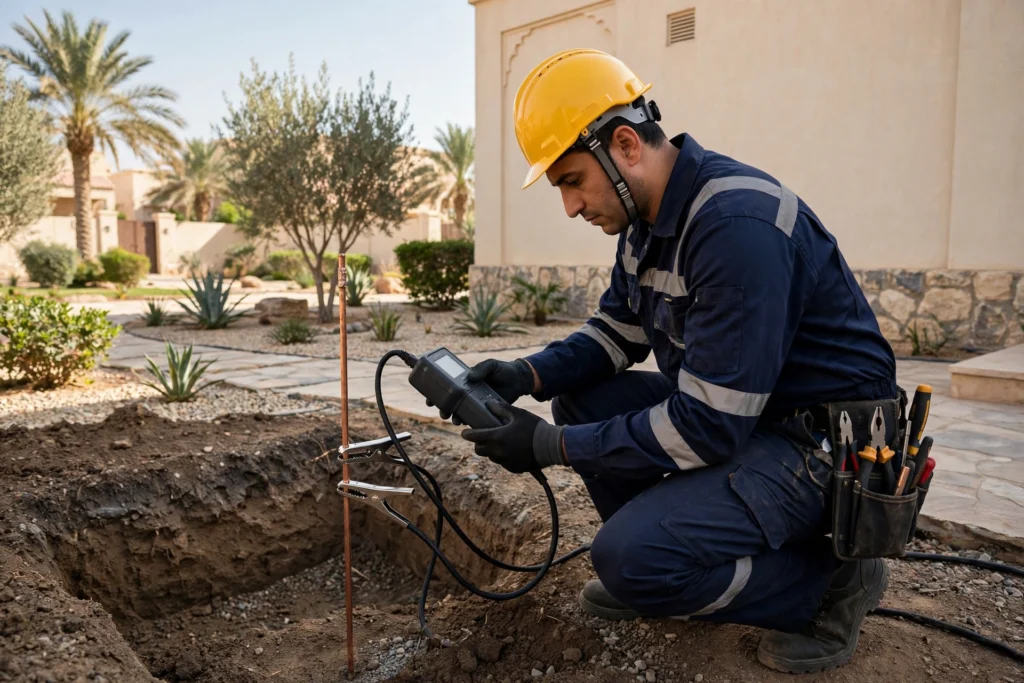
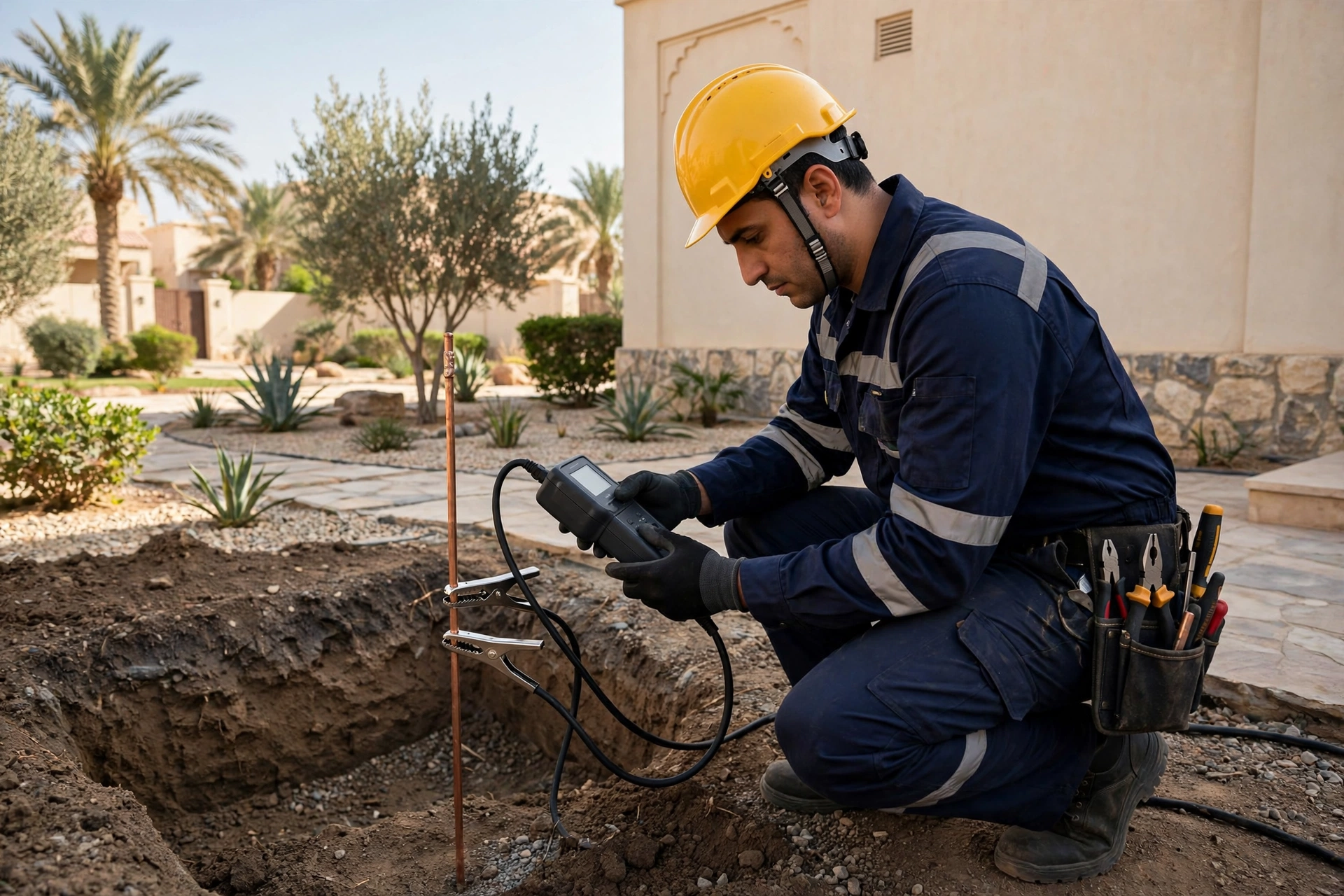
This is the single most important check. Using a digital earth resistance tester and the fall-of-potential method, we measure the actual resistance between your earth electrode and the surrounding soil. For a home, the reading should generally stay below 5 ohms. In Riyadh, readings often come back high because the dry desert soil and corroded rods resist current flow, which is precisely why an earthing system that was fine five years ago can be unsafe today. If the resistance is too high, fault current cannot clear fast enough and metal parts can stay live during a fault.
2. Earth Continuity and Loop Impedance Check
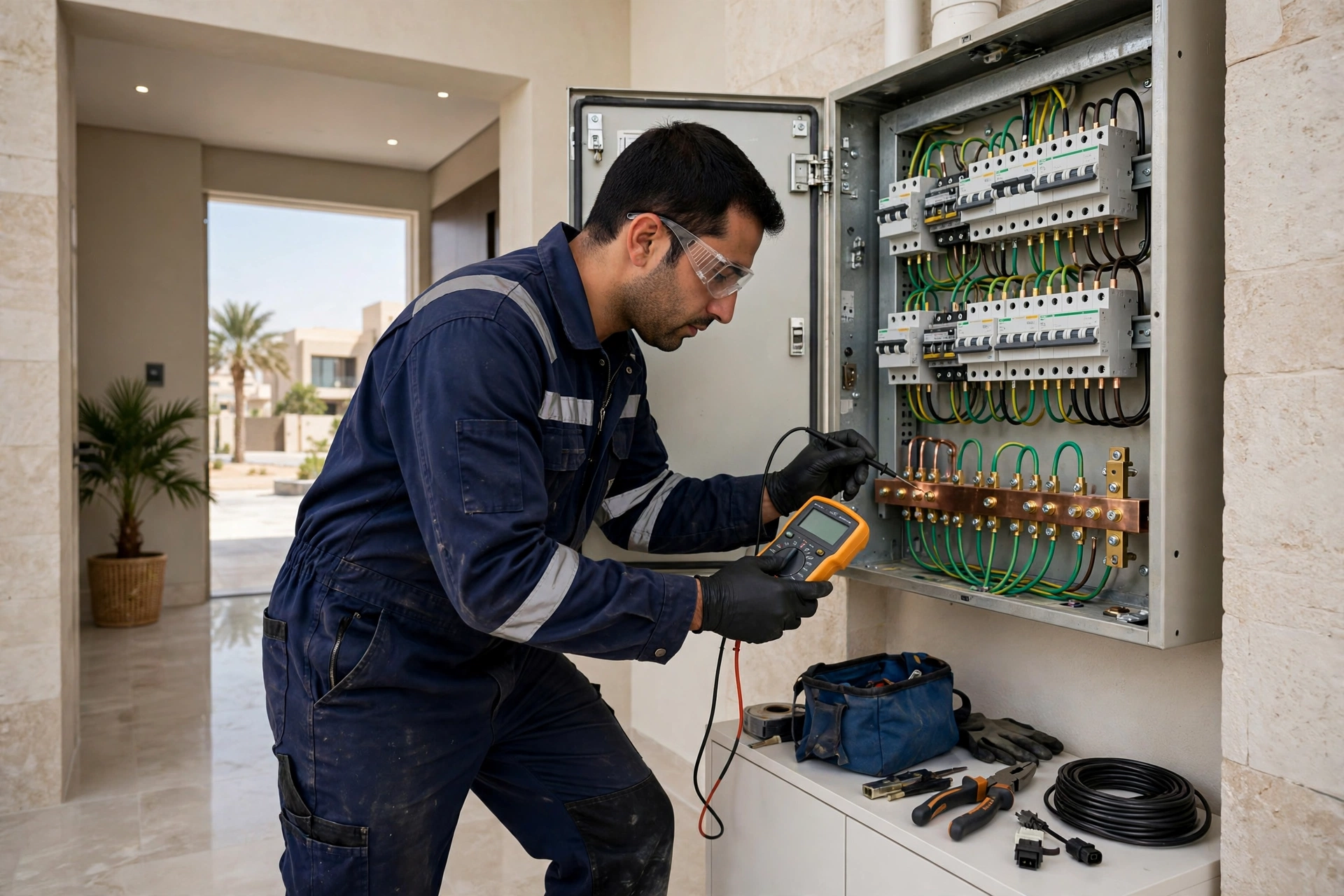
A good earth rod is useless if the wire connecting it to your sockets is broken. With a low-resistance ohmmeter we verify continuity from the main earth bar in your distribution board to every socket, appliance point, and metal fixture. We also check earth fault loop impedance, which confirms that enough fault current will flow to trip your breaker within the required fraction of a second. Loose terminations and DIY rewiring are the most common failures we find here.
3. Soil Resistivity Measurement
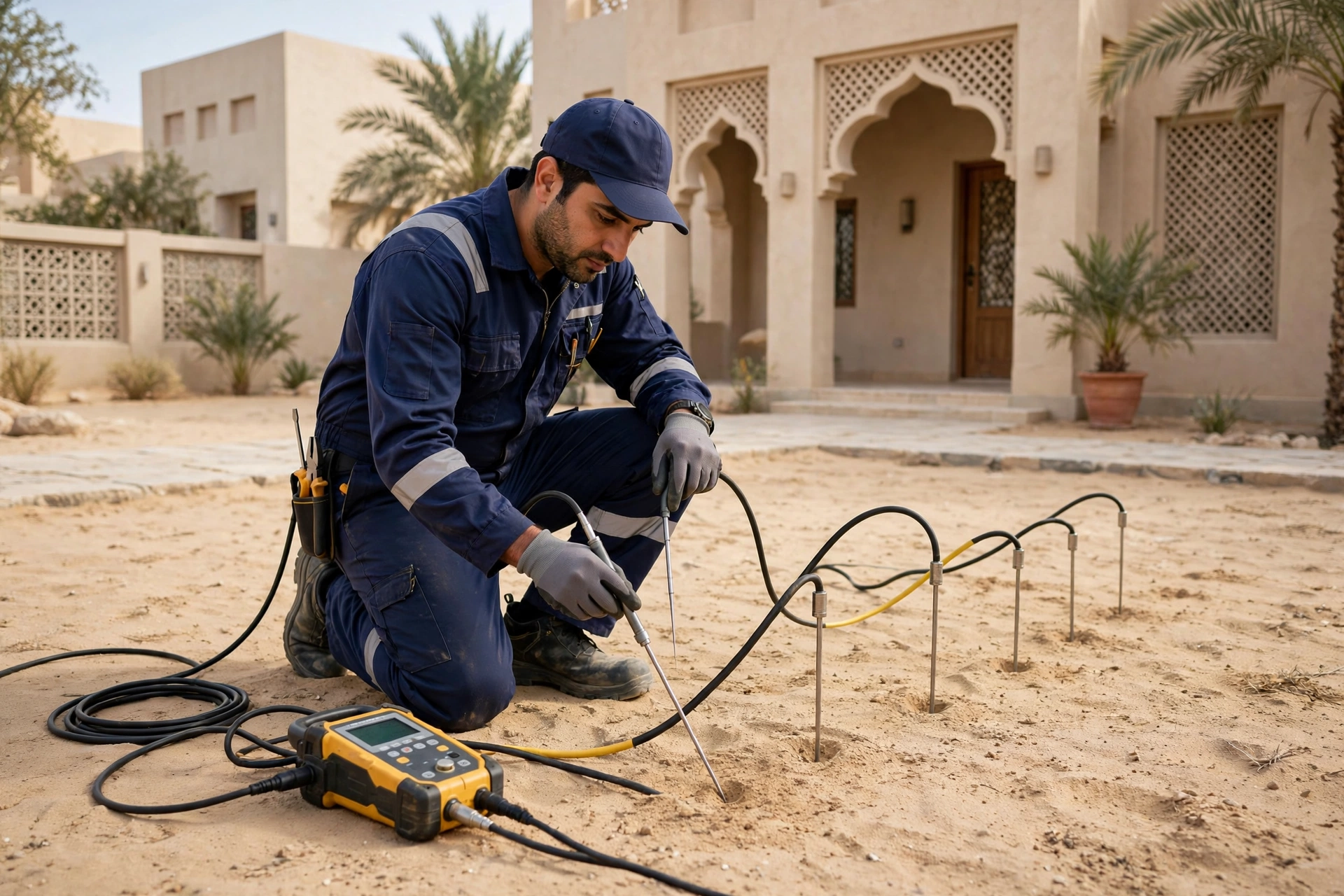
When ground resistance reads high, we need to know whether the soil or the electrode is to blame. Using the four-pin Wenner method, we measure the resistivity of the soil around your villa at several depths. Riyadh’s sandy, rocky ground is naturally high-resistivity, and the result tells us exactly where to drive additional rods or install chemical earthing so the fix works the first time instead of through trial and error.
4. Earth Pit and Electrode Visual Inspection
We open every earth inspection pit on the property and examine the electrode, clamps, and connections directly. We look for corroded copper rods, loose or rusted clamps, cracked pit covers, dried-out backfill material, and pits that have been buried under landscaping or paving. Riyadh’s summer heat bakes the moisture out of earth pits, so a pit that passed inspection two years ago can easily fail today.
5. RCD and Earth Fault Trip Test
Your residual current device, also called an ELCB or safety switch, is the last line of defense. We simulate an earth fault and measure exactly how fast it trips. A healthy 30mA RCD must trip within 300 milliseconds at its rated current and within 40 milliseconds at five times that current. Many older Riyadh villas either have no RCD at all or have one that has seized up from years without testing. A dead RCD combined with weak earthing is one of the most dangerous combinations we encounter.
What We Do When a Test Fails
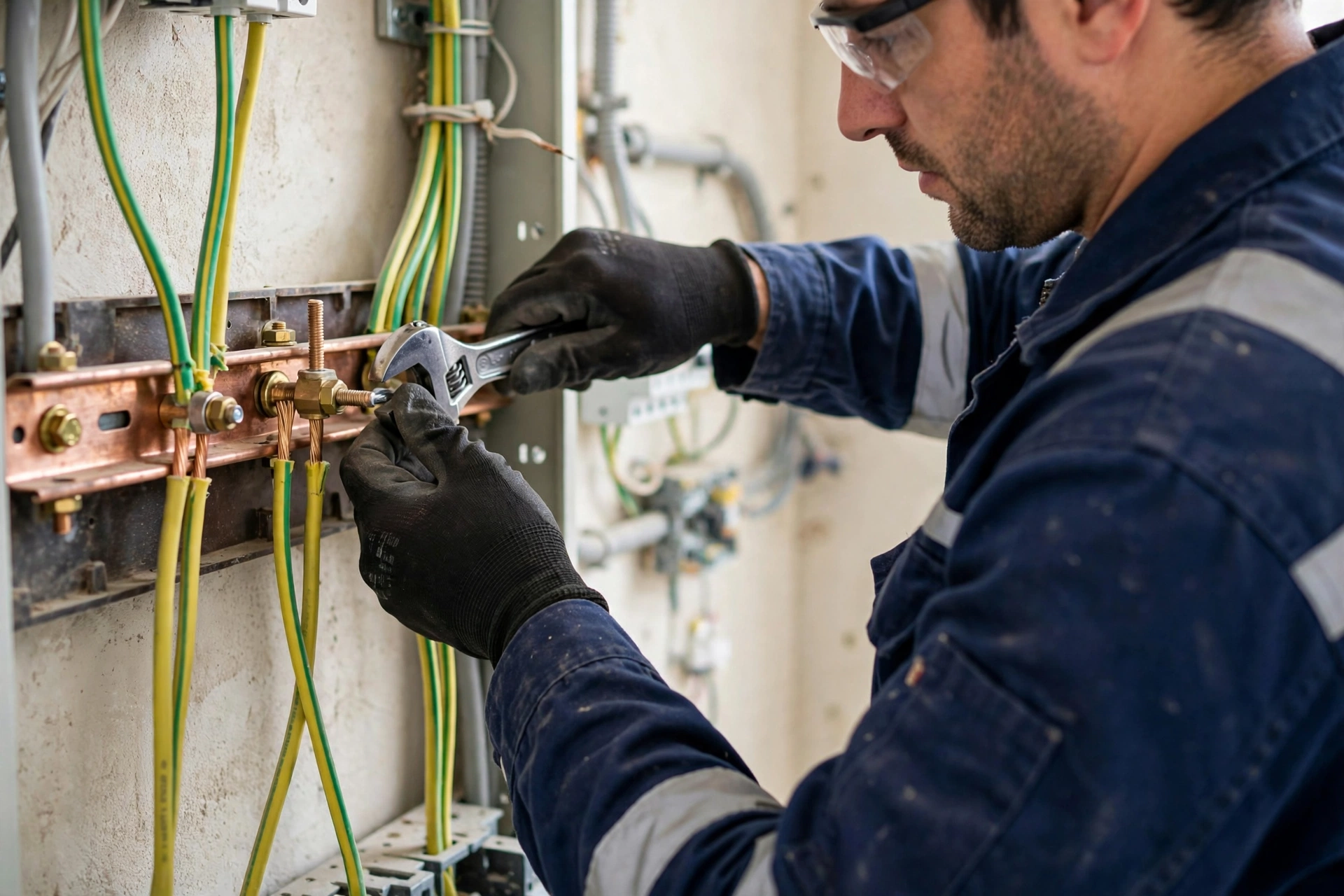
A failed test is the start of the fix, not the end of the visit. Depending on what we find, we replace corroded ground rods, drive additional electrodes at the spots our soil readings identified, install chemical earthing with moisture-retaining backfill, re-run damaged earth conductors, tighten every termination at the earth bar, and fit or replace RCD protection where it is missing or faulty. Every repair is tested again on the spot so you see the passing readings yourself. For urgent faults such as live metalwork or burning smells, our emergency electrician in Riyadh reaches you fast, day or night.
Home Earthing Test Cost in Riyadh
A full earthing inspection covering all five home earthing problem tests costs 150 SAR (was 190) for labor, with any materials such as new rods, conductors, or RCDs billed separately at cost. Every visit includes our 45-minute rapid dispatch anywhere in Riyadh, genuine parts, certified technicians, and our 30-day golden warranty. Our work holds a 4.9/5 rating from more than 18,500 completed jobs. Call 0570328344 or 0570328344 any time, we answer 24/7.
Booking the five home earthing problem tests takes less than an hour of your day and gives you documented proof that your villa’s electrical safety system actually works. Given how quickly Riyadh’s soil and heat degrade earth electrodes, we recommend retesting every two to three years, or immediately if you notice any of the warning signs above. Do not wait for a shock to tell you something is wrong.