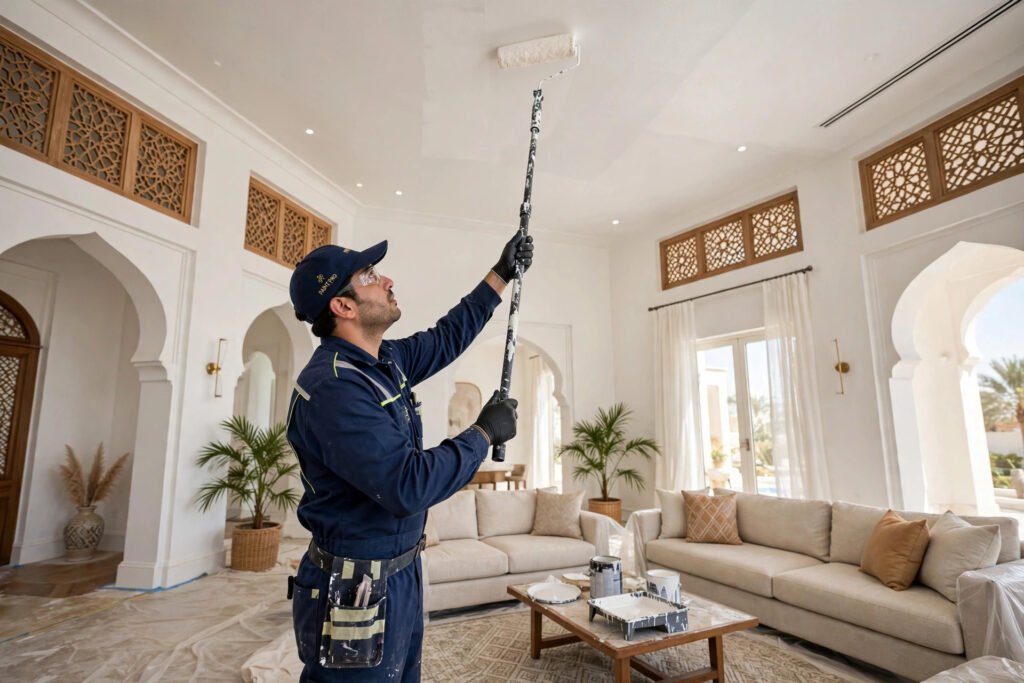
Ceilings are the hardest surface in any home to paint well. Light from windows and fixtures hits a ceiling at an angle, so every flaw in your technique shows the moment the coat dries. Professional painters rely on a handful of proven ceiling painting techniques that turn this tricky job into a smooth, uniform finish.
In this guide, SheelTalab’s painters walk you through the ceiling painting techniques we use daily in Riyadh villas and apartments: the right roller patterns, how to cut in edges, keeping a wet edge, and which tools matter. We also compare every technique in a finish quality table, so you can pick the right method or call a professional.
Whether you are refreshing one bedroom ceiling or repainting an entire villa, these methods save time, paint, and frustration. Prefer to skip the ladder work? Our painters handle ceilings across Riyadh with a 30-day golden warranty.
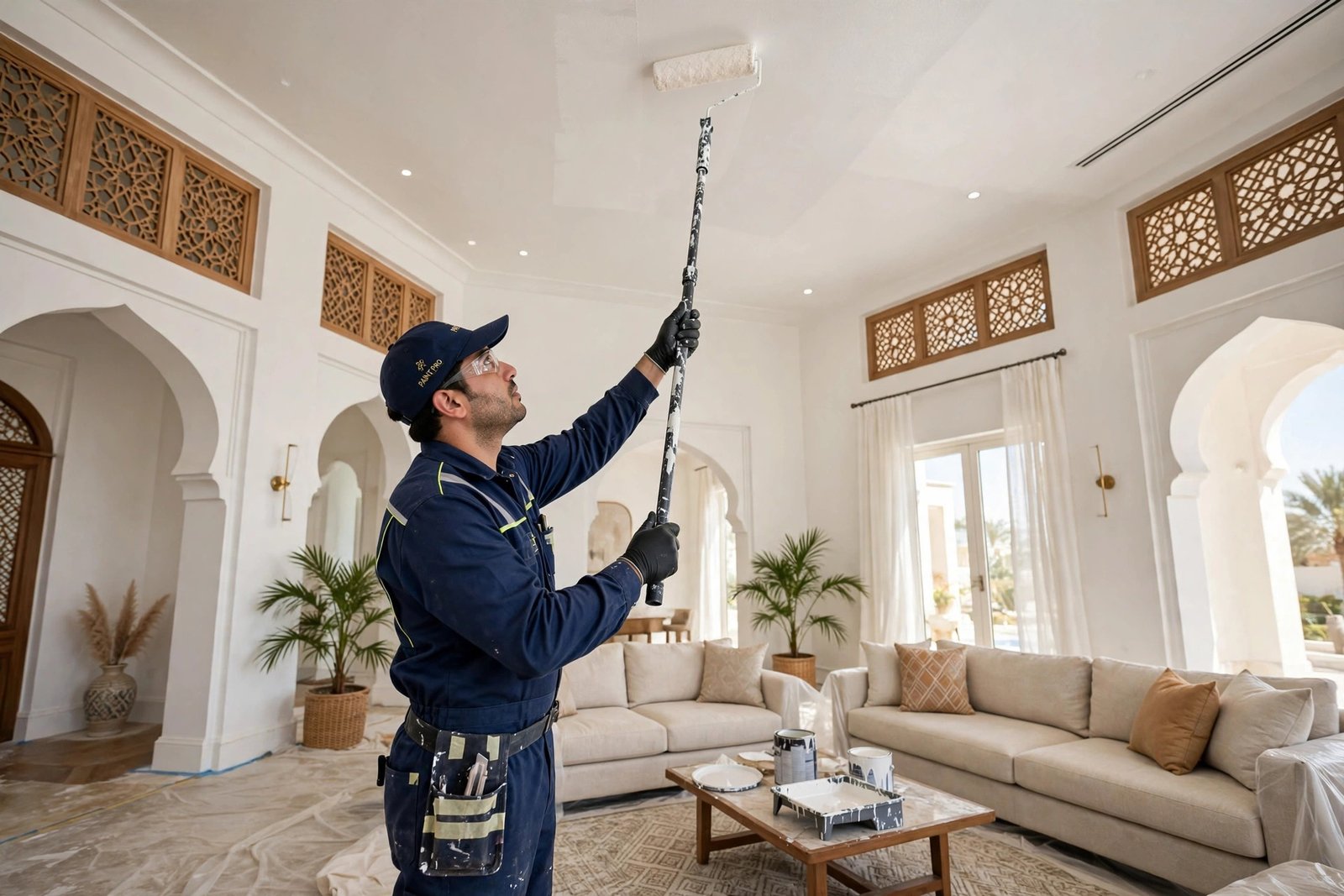
Why Ceilings Are the Hardest Surface to Paint
A wall is forgiving. A ceiling is not. Gravity works against you, your neck tires fast, and light rakes across the surface at an angle. A tiny ridge or dried lap line that you would never notice on a wall becomes a visible stripe across the ceiling.
Riyadh homes add their own challenges. Many villas have 3 to 4 meter ceilings, so preparation matters more in our dusty climate, and recessed spotlights cast shadows that make any unevenness look patched.
So professional ceiling work comes down to three things: consistent paint thickness, a wet edge at all times, and the right tools. Get those right and the result looks flawless from every angle.
7 Ceiling Painting Techniques for a Streak-Free Finish
Here are the ceiling painting techniques our painters use on every Riyadh ceiling job, in working order, because sequence matters as much as technique.
1. Cut In the Edges First
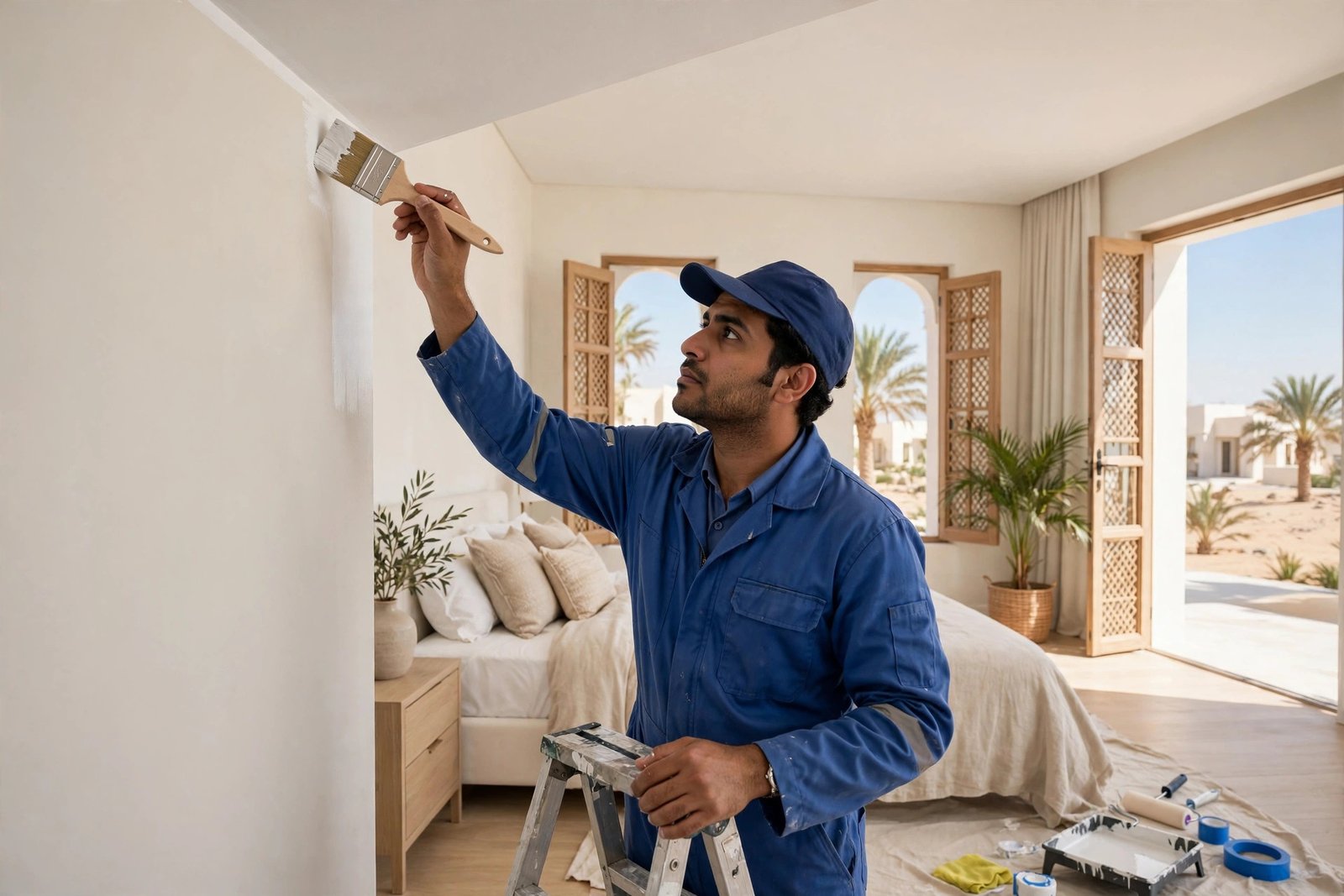
Paint a 5 to 8 cm strip around the entire ceiling perimeter with an angled brush before rolling: this is called cutting in. Keep the edge wet and roll immediately while it is damp. If the brushed edge dries first, you will see a darker outline called a picture frame effect.
2. Roll in a W Pattern
Load the roller and paint a W shape about one meter wide, then fill it in with straight, overlapping strokes. This spreads paint evenly instead of pushing thick lines at the start and end of each stroke. Start each section about 15 cm from the previous one and roll back into it, so every pass blends into the last.
3. Keep a Wet Edge at All Times
The single most important rule: always roll over wet paint, never over a dry edge. Work in sections about one meter wide and move across the ceiling without stopping. In Riyadh’s dry climate paint dries fast, so work briskly and keep windows closed to avoid drafts over the fresh paint.
4. Apply Two Thin Coats, Never One Thick Coat
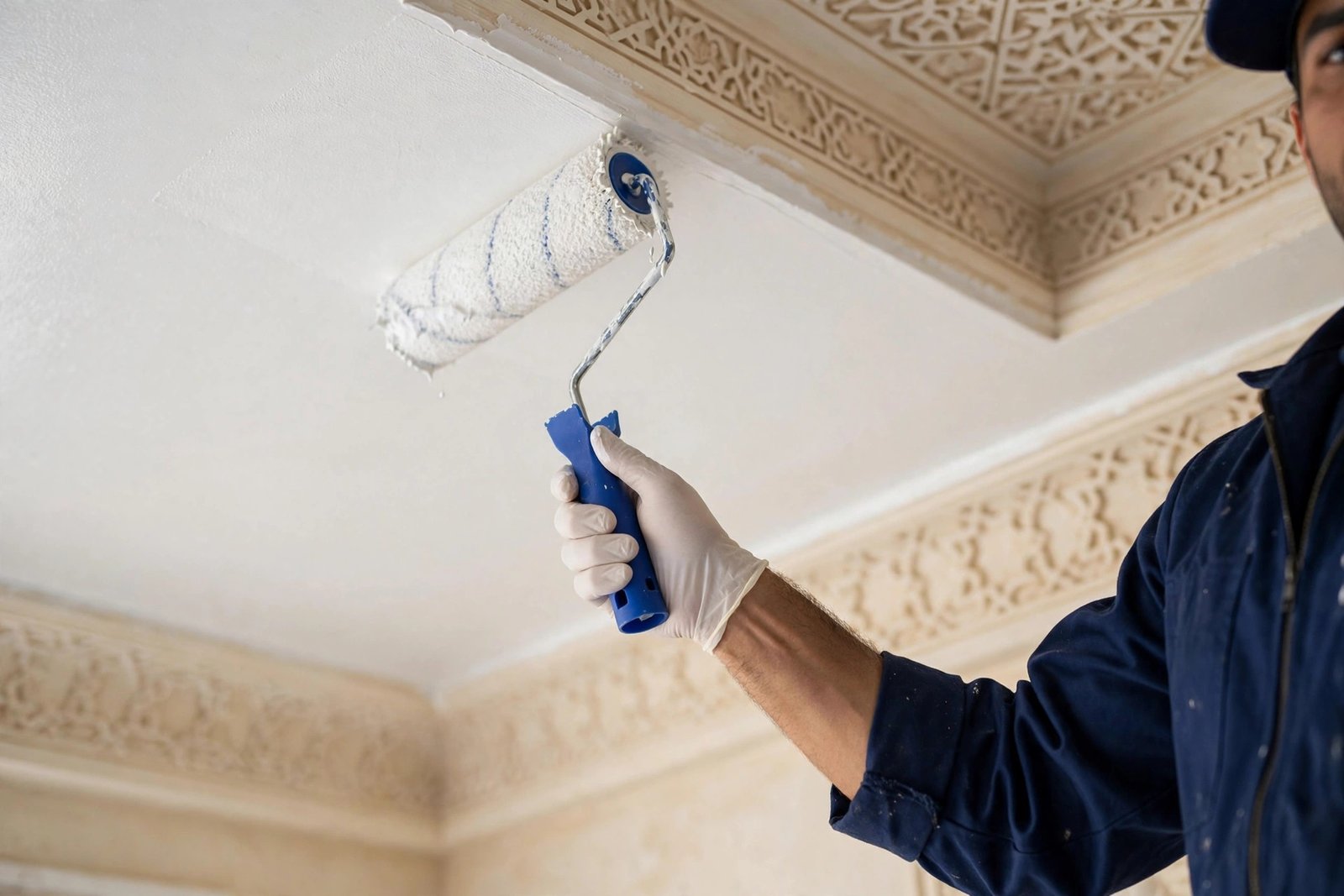
One thick coat is the number one cause of lap marks and drips. Two thin coats give even coverage, better hiding power, and a smoother texture. Let the first coat dry fully (2 to 4 hours), then roll the second coat at a right angle to the first.
5. Use a Microfiber Roller With the Right Nap
For smooth ceilings, use a 9 mm (3/8 inch) microfiber roller sleeve. Thick naps leave heavier texture and cheap foam rollers leave bubbles. A quality microfiber sleeve on an 18-inch frame covers large villa ceilings faster than a standard 9-inch frame. Use a sturdy extension pole for steady, even pressure from the floor.
6. Paint in Small, Manageable Sections
Divide the ceiling into grids of about one square meter. Complete one grid fully, then move to the next, always blending into the previous section while it is wet. This prevents the classic DIY disaster: one side of the room drying before you reach the other. On large ceilings, a second person cutting in ahead of the roller keeps the wet edge going.
7. Spray and Back-Roll for the Flawless Finish
For large villa ceilings, professionals spray the paint with an airless sprayer and immediately roll over the wet spray with a dry roller, a method called back-rolling. The spray lays down a perfectly even film with no roller lines, and the back-roll presses it in for strong adhesion. It is the fastest route to a factory-smooth ceiling, though it needs full masking of walls, floors, and fixtures.
Ceiling Painting Techniques Compared: Finish Quality at a Glance
Not every technique gives the same result. This table compares the ceiling painting techniques above by finish quality, speed, and best use.
| Technique | Finish quality | Speed | Best for |
|---|---|---|---|
| W-pattern rolling | Smooth, minimal lap marks | Medium | Bedrooms, living rooms |
| Cut-in + immediate rolling | Clean edges | Medium | Every ceiling job |
| Two thin coats | Uniform, best hiding | Slower | Color changes, stains |
| Microfiber roller, 9 mm nap | Fine, even texture | Fast | Smooth gypsum ceilings |
| Small-section method | No dry lap lines | Medium | Hot, dry rooms |
| Spray + back-roll | Flawless | Very fast | Large ceilings, new builds |
Mistakes That Cause Streaks and Lap Marks
The most common mistake is rolling over a dried edge, which leaves a visible darker line where wet paint overlaps dry paint. The fix is simple: keep your sections small and your pace steady.
The second mistake is overloading the roller: a dripping roller pushes thick ridges that dry as raised lines. Load the roller evenly and roll off the excess in the tray. The third is skipping primer on repaired patches, since fresh filler absorbs paint differently and leaves dull spots that show through two coats.
Sherwin-Williams publishes a detailed guide on how to paint a ceiling on roller selection and cutting in. Their advice matches professional practice in Riyadh, especially on low-nap rollers for smooth ceilings.
Choosing the Right Paint for Riyadh Ceilings
Always use flat or matte ceiling paint, never eggshell or satin. Flat paint hides imperfections and does not reflect light, which is exactly what you want overhead. Use a quality interior acrylic with good hiding power, and spot-prime water stains from old AC leaks with a stain-blocking primer first.
For the walls framing your fresh ceiling, our guide on interior villa painting in Riyadh has pro color and finish tips. A crisp white ceiling with well-chosen wall colors makes rooms feel taller and brighter.
Professional Ceiling Painting Cost in Riyadh
SheelTalab’s painting service costs 25 SAR per meter (down from 40 SAR), covering labor, preparation, and quality materials. Full villa ceilings are quoted by measurement after a free inspection. Every job includes 45-minute rapid dispatch anywhere in Riyadh, 24/7 availability, and our 30-day golden warranty, backed by a 4.9/5 rating from more than 18,500 completed jobs.
For a full breakdown of villa painting costs per square meter, see our guide on villa painting cost in Riyadh. Call 0570328344 or 0570328344 any time for a free quote.
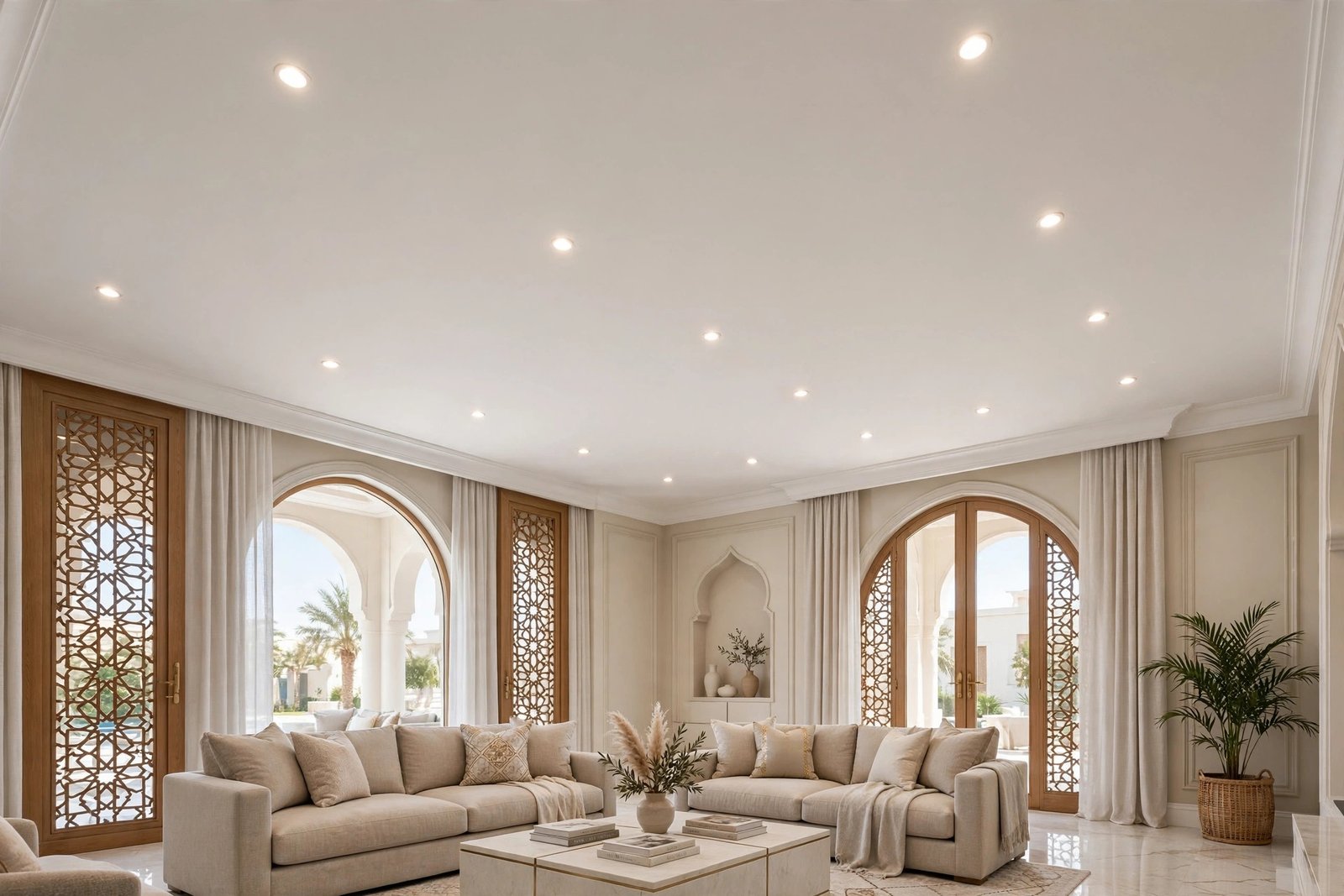
A smooth, streak-free ceiling comes down to method, not luck. With the right ceiling painting techniques, cut in the edges while they are wet, roll in a W pattern, keep a wet edge across small sections, and finish with two thin coats. For large villa ceilings, spray and back-roll delivers the flawless result that is nearly impossible by roller alone. If the job is bigger than your weekend, SheelTalab’s certified painters are one call away, with professional results guaranteed in writing.