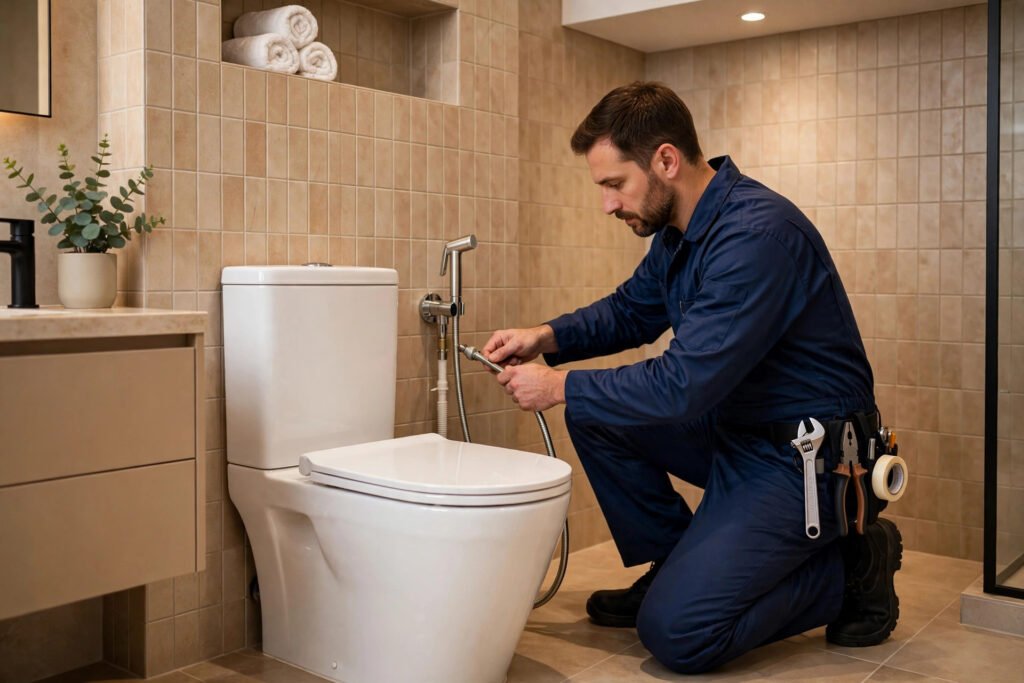
A shattaf is one of those small bathroom upgrades that makes a big difference in daily comfort, but a sloppy install can turn into drips, weak pressure, or a flooded bathroom. If you follow the right shattaf installation tips riyadh plumbers actually use, the whole job takes under an hour and the result feels like it came from the factory.
In Riyadh, hard water and high mains pressure add extra challenges you will not face in softer water cities. Mineral buildup eats cheap valves, and a pressure spike can burst a low quality hose overnight. That is why choosing the right kit and fitting it properly matters more here than most people expect.
Below are five pro tips drawn from real bathroom jobs across Riyadh, from compact apartments in Al Malaz to villas in Al Yasmin. Follow them in order and you will get a clean, leak free shattaf installation on the first try.
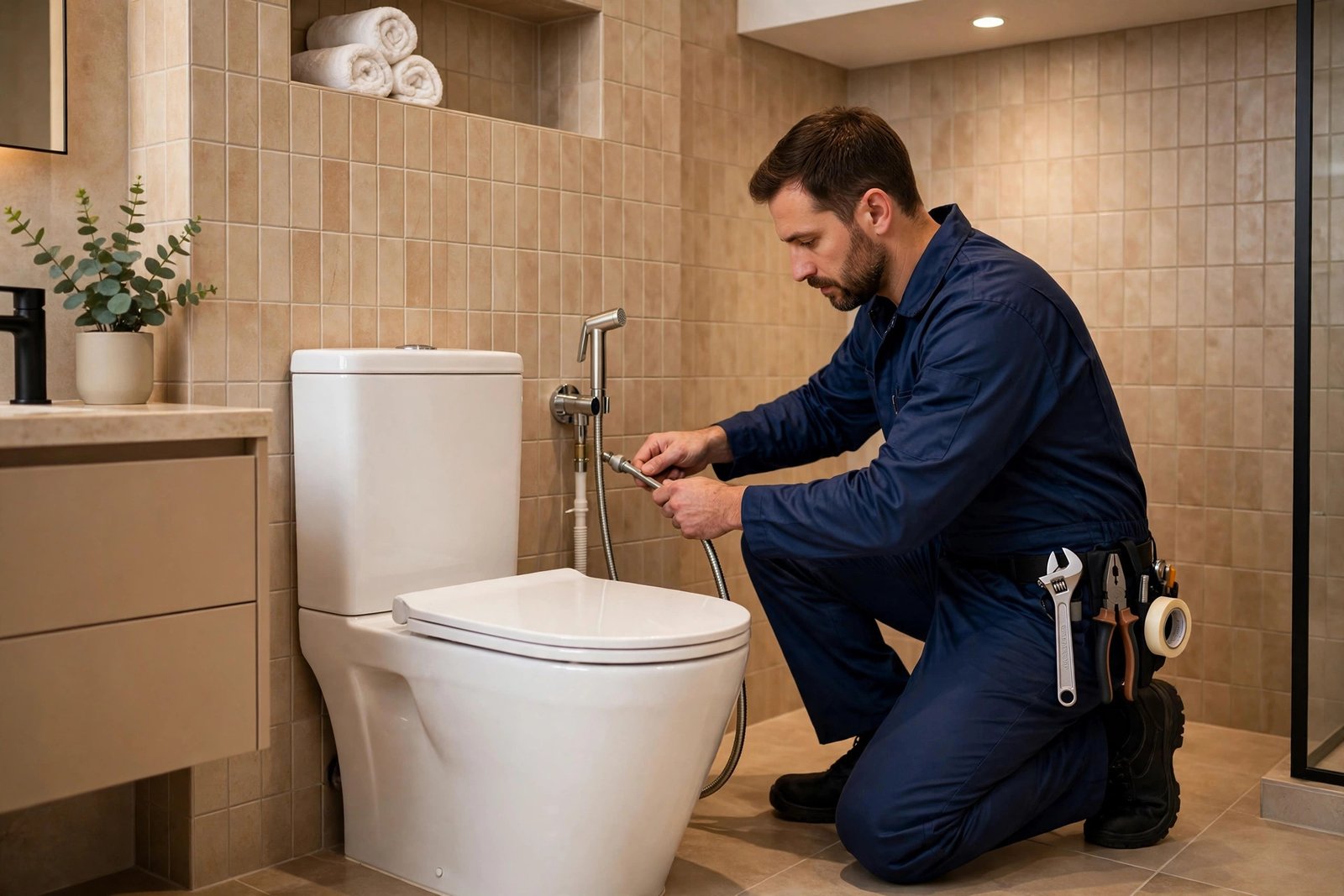
5 Pro Shattaf Installation Tips Riyadh Plumbers Recommend
These five tips cover the full process, from picking the kit to the final pressure test. Each one prevents a specific problem we see weekly on callouts: leaking valves, cracked hoses, wobbly holders, and pressure that is either a dribble or a fire hose.
Tip 1: Choose the Right Shattaf Kit for Riyadh Water Conditions
Not all shattaf kits are equal. In Riyadh, look for a kit with a stainless steel braided hose (not plain plastic), a solid brass T-valve with a shut off lever, and a sprayer head with adjustable pressure. The braided hose handles Riyadh’s mains pressure far better, and the brass valve resists the mineral buildup that eats cheap chrome plated plastic.
Check the connector sizes before you buy. Most Saudi toilet tanks use a standard 7/8 inch fill valve inlet, and most kits include adapters, but older tanks can differ. A quick photo of your tank connection, compared with the kit’s parts list, saves a wasted trip to the hardware store. If your home already struggles with low water pressure, mention it to the supplier, because some sprayer heads need minimum pressure to work well.
Tip 2: Shut Off the Water and Drain the Tank First
This sounds obvious, yet it is the step most DIY installers rush. Turn the shut off valve behind the toilet fully clockwise, then flush to empty the tank. Keep a towel and a small bucket under the connection point, because a little residual water always escapes when you loosen the supply line.
If the shut off valve itself is stiff or dripping when you turn it, stop and do not force it. A failing angle valve is a sign you need a proper water leak detection check, not more torque. Forcing a corroded valve can snap it and flood the bathroom, which turns a 150 SAR job into a much bigger repair.
Tip 3: Wrap Every Thread With Teflon Tape, Then Tighten Gently
The single most important of all shattaf installation tips riyadh homeowners can learn is this: seal the threads properly. Wrap 4 to 6 turns of Teflon (PTFE) tape clockwise around every male thread before connecting: the T-valve to the tank, the supply line to the T-valve, and the hose to both the valve and the sprayer head. Press the tape into the threads so it sits flat, then hand tighten firmly and give only a quarter turn with a wrench.
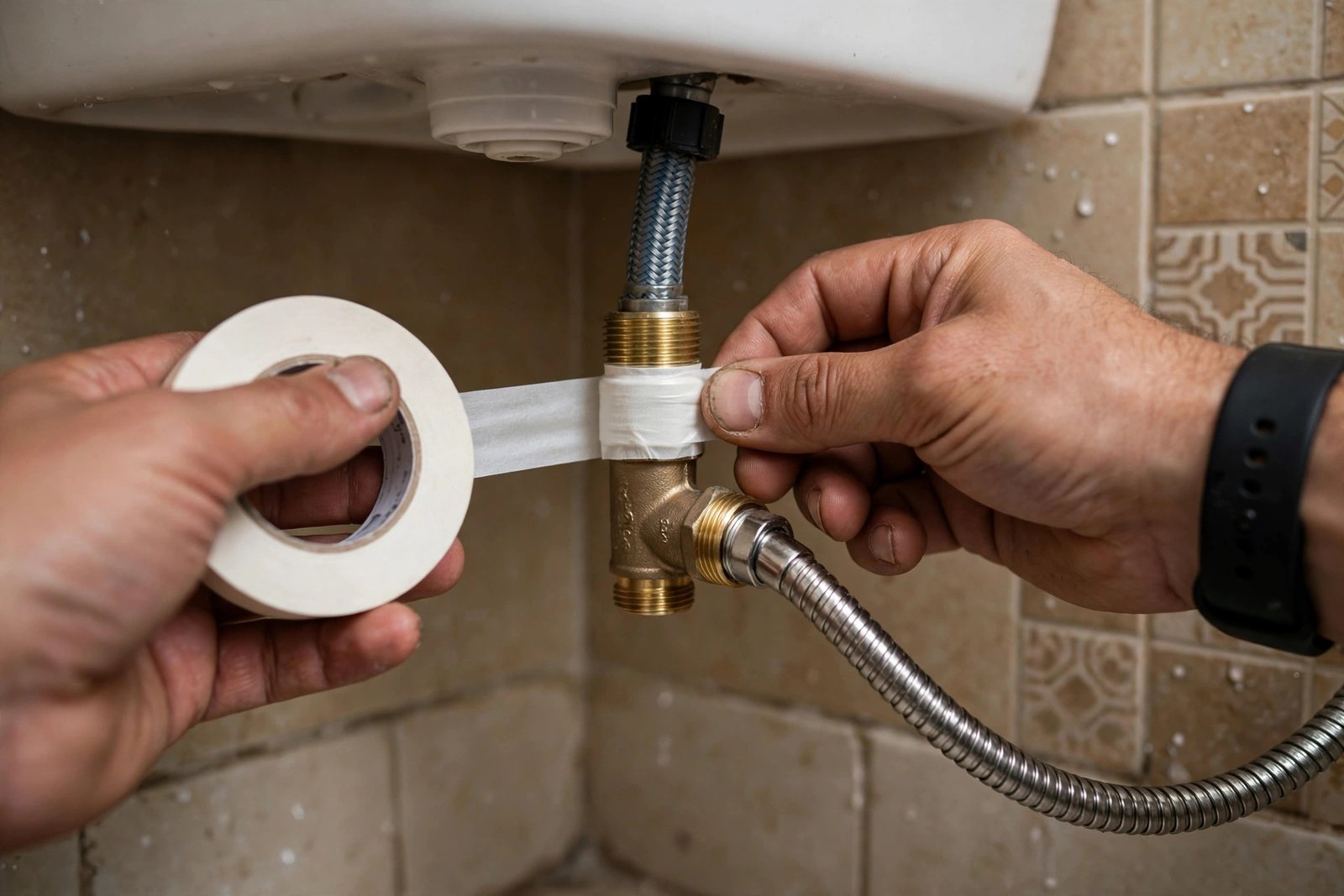
Over tightening is the number one cause of cracked plastic nuts and stripped threads. If a connection still weeps after gentle tightening, undo it, rewrap the tape, and reconnect. Never use thread sealant paste on plastic fittings, because many pastes attack plastic and create leaks that show up days later.
Tip 4: Mount the Holder at a Comfortable, Reachable Height
Plan the holder position before you drill a single hole. Sit on the toilet (or imagine doing so) and place the holder where your dominant hand reaches naturally, usually about 15 to 20 cm above the tank rim on the same side as the water line, so the hose hangs without kinks.
For tiled walls, use a masonry bit and wall plugs, and drill slowly to avoid cracking the glaze. Renters and anyone who prefers no holes can use the toilet tank mounted hook that comes with most kits, which simply slides under the tank lid. Either way, make sure the sprayer clicks firmly into the holder, because a sprayer that falls out under pressure becomes an indoor fountain.
Tip 5: Pressure Test Every Connection Before You Call It Done
Turn the water supply back on slowly and watch every connection for a full minute: the T-valve ports, both hose ends, and the sprayer head joint. Run the sprayer into the bowl at full pressure for 30 seconds, then drop it to a gentle stream and check again. Leaks sometimes appear only under full pressure, which is why a quick glance is not enough.
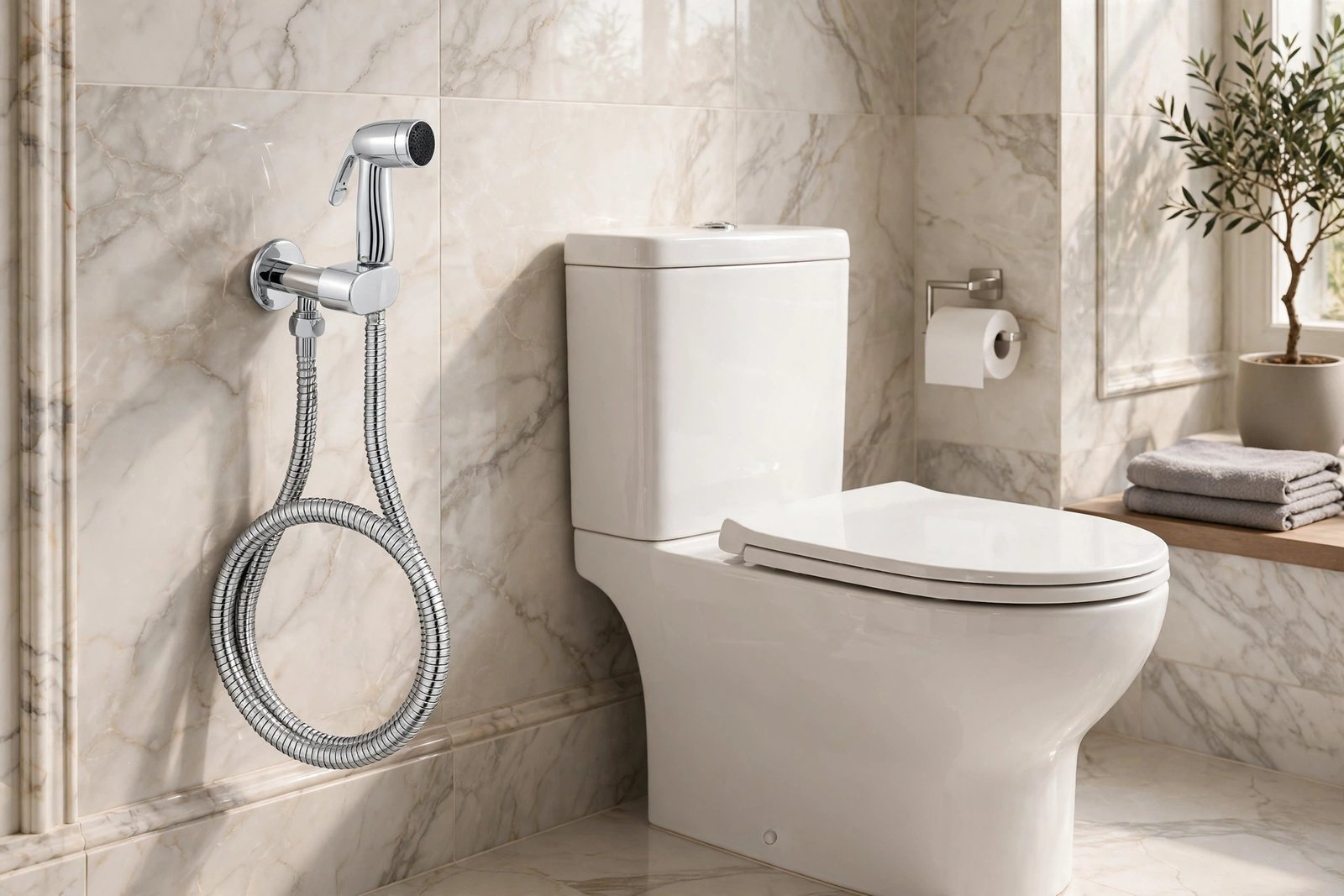
Get into one good habit that manufacturers recommend: after each use, close the T-valve lever or ease off the sprayer trigger completely. Constant mains pressure sitting on the hose and head shortens their life, and in Riyadh’s summer heat, a weakened hose can split while nobody is home.
Common Shattaf Installation Mistakes to Avoid
Even careful DIYers trip on the same few errors. The most common is reusing an old, hardened rubber washer instead of the fresh ones in the kit, which guarantees a slow drip. Another is mounting the holder too far from the toilet, forcing the hose to stretch and kink. A kinked hose under pressure wears through at the bend and bursts without warning.
A subtler mistake is ignoring the condition of the existing plumbing. If your bathroom already shows slow drains or damp patches around fittings, installing a shattaf on top of tired plumbing just adds stress to weak joints. Fix the underlying issues first, then add the shattaf, and the whole bathroom will serve you far longer.
When to Call a Professional Plumber in Riyadh
DIY is fine for a standard toilet with accessible fittings, but call a professional when the shut off valve is stuck or leaking, the tank connection is corroded, the toilet is a concealed cistern or wall hung model, or you simply do not have the right tools. These situations are where a small mistake causes real water damage.
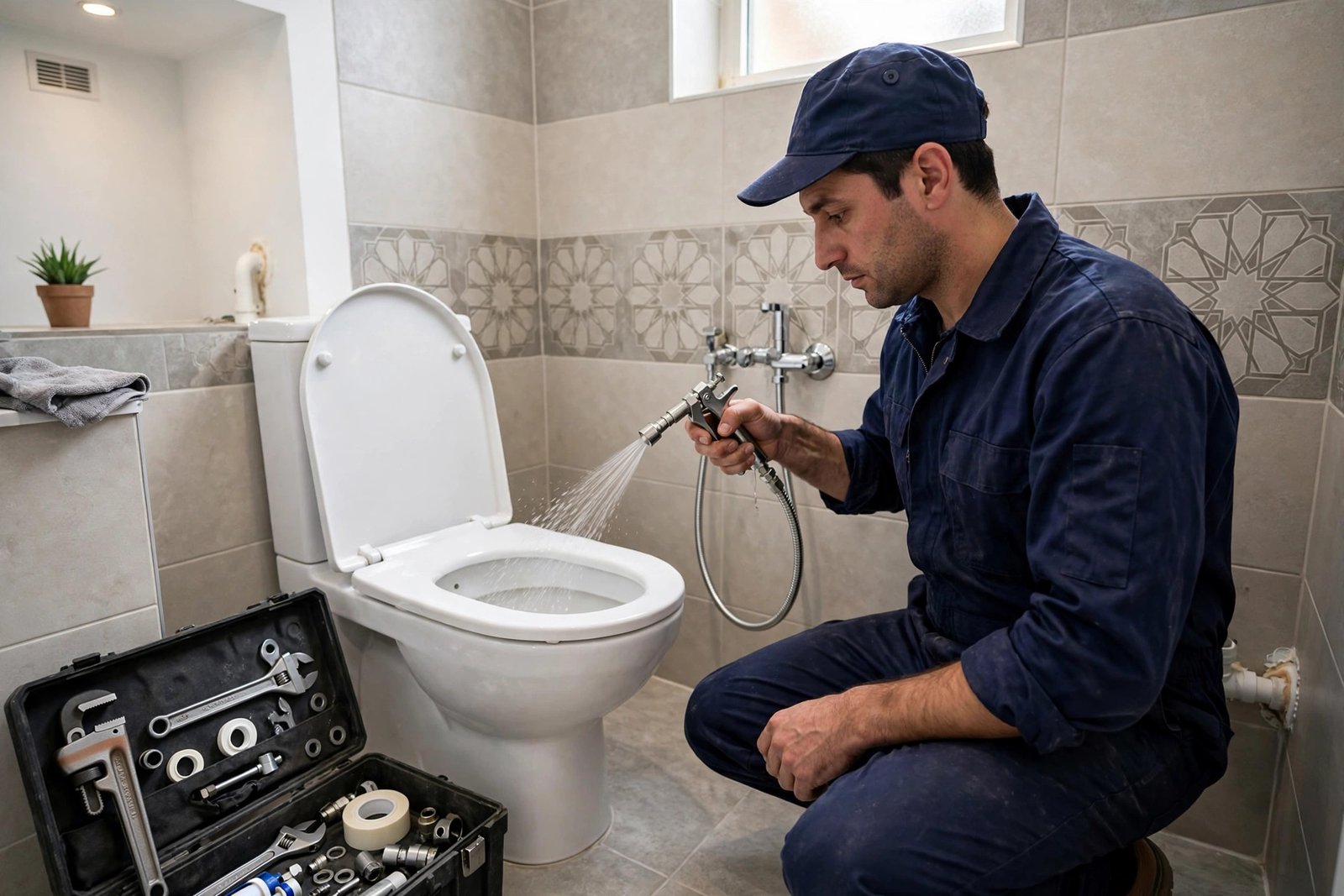
A professional also makes sense when you want the job guaranteed. SheelTalab’s plumbing service is 150 SAR (was 180, labor only) and covers the full installation plus a 30 day golden warranty. With 45 minute rapid dispatch anywhere in Riyadh, 24/7 availability, and certified technicians rated 4.9/5 from over 18,500 jobs, you get a leak free fit the first time. For a step by step manufacturer style walkthrough, this handheld shattaf installation guide is also a useful reference alongside these tips.
Conclusion: A Perfect Shattaf Installation Is Worth Doing Right
These shattaf installation tips riyadh homeowners can apply today come down to five habits: pick a quality brass and braided steel kit, shut off and drain before you start, seal every thread with Teflon tape, mount the holder within easy reach, and pressure test every connection. Do all five and your shattaf will run leak free for years.
If you would rather skip the tools and the trial and error, SheelTalab’s certified plumbers install shattafs across Riyadh daily. One call to 0570328344 or 0570328344 gets you 45 minute dispatch, a 30 day golden warranty, and a finish you never have to think about again.