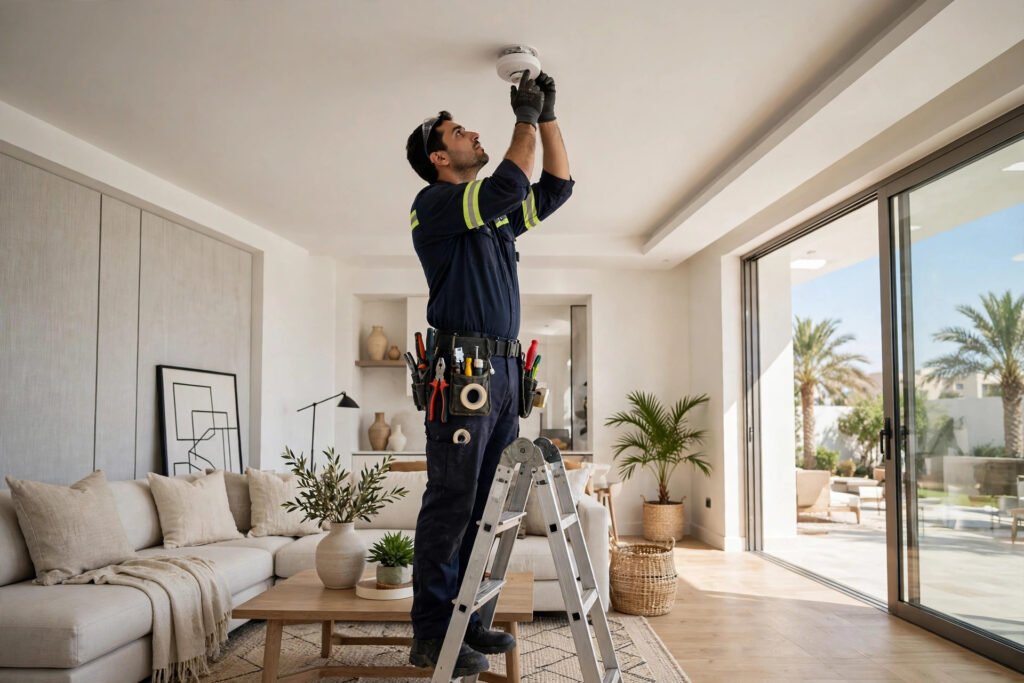
A smoke detector is only as good as its location. An alarm tucked behind a bedroom door or overwhelmed by cooking steam can stay silent during the first critical minutes of a fire, and that is exactly why following proven smoke detector placement rules matters so much. In Riyadh, where many families live in multi-level villas with majlis areas, maids rooms and heavy AC use, a single alarm in the hallway is rarely enough.
In this guide, we break down six safety rules for placing smoke detectors in a Riyadh home, room by room. You will learn the right ceiling height, how far to stay from the kitchen, what to do about stairways and majlis areas, and how to test and replace your alarms. If you would rather have a certified electrician install or check your detectors, SheelTalab dispatches in 45 minutes anywhere in Riyadh, with a 30-day golden warranty on labor.
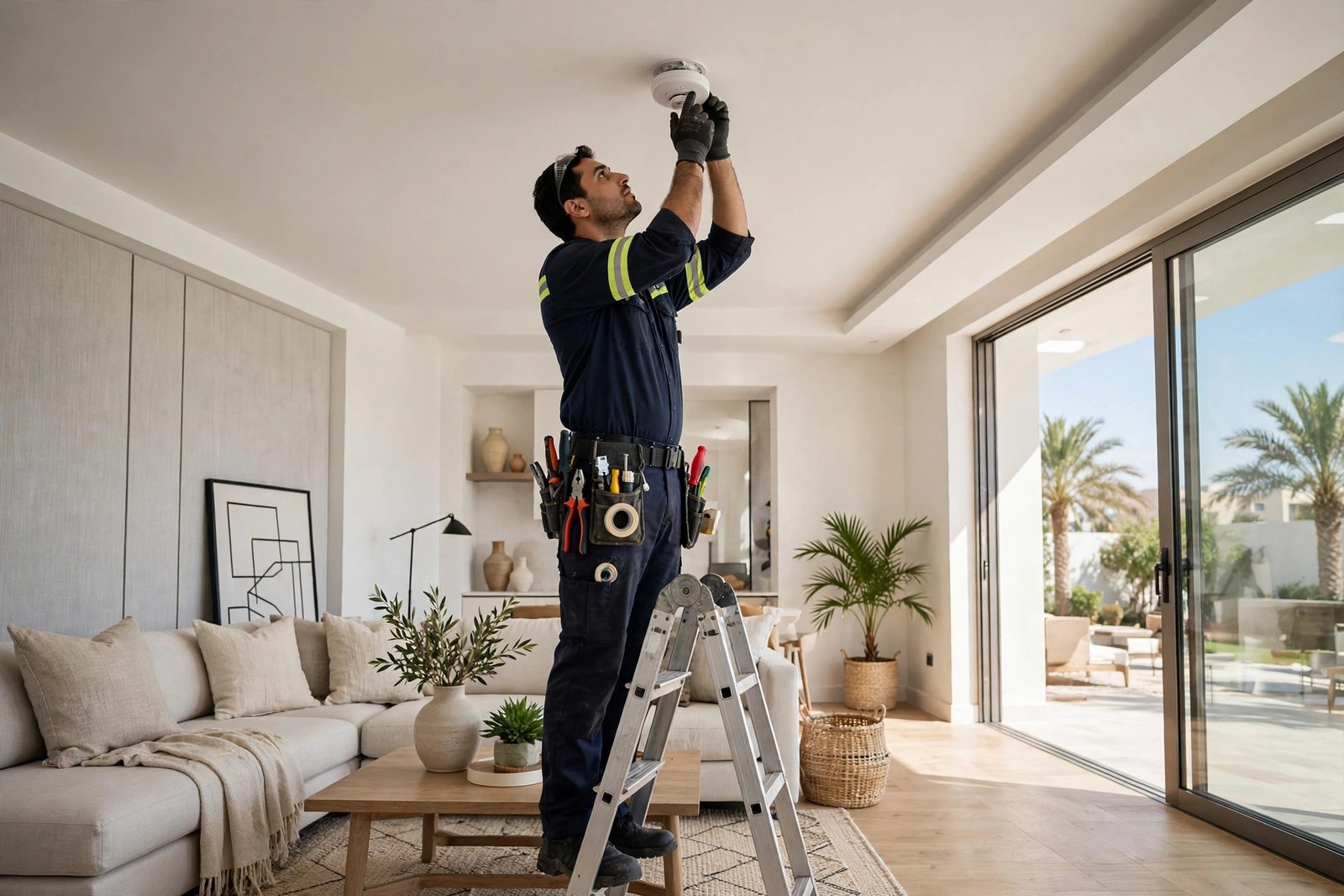
Why Smoke Detector Placement Rules Matter in Riyadh Homes
Smoke rises, so a detector catches it first only when it sits where smoke travels. The US National Fire Protection Association reports that working alarms in the right spots can cut the risk of dying in a home fire by half, but an alarm in the wrong spot delivers late warning or constant false alarms.
Riyadh homes make placement trickier than a simple apartment. Villas often have two or three floors, closed bedrooms kept shut for the AC, a majlis where guests smoke sheesha, a driver or maids room on the ground floor, and kitchens that run heavy cooking twice a day. Each of those spaces changes where smoke goes and where an alarm needs to be.
Getting placement wrong has a real cost. A detector inside the kitchen will cry wolf every time you fry something, and a household that ignores alarms is a household in danger. Worse, a detector mounted too low or trapped behind a closed door may never see the smoke at all. If you already suspect something is off with your home wiring, read our guide to warning signs your home needs an electrician before you start drilling holes.
Smoke Detector Placement Rules: The 6 Safety Rules for Riyadh Homes
These six rules follow international fire safety guidance and fit the way Riyadh villas and apartments are actually built. Apply all of them and your alarms will work as one early warning system.
Rule 1: Put One Detector Inside Every Bedroom
When you sleep, your sense of smell drops, so you may not wake up from the smell of smoke alone. A loud alarm inside the room is the only reliable way to wake you. Mount it on the ceiling near the center of the room, which gives it the best chance of catching smoke drifting in from any direction.
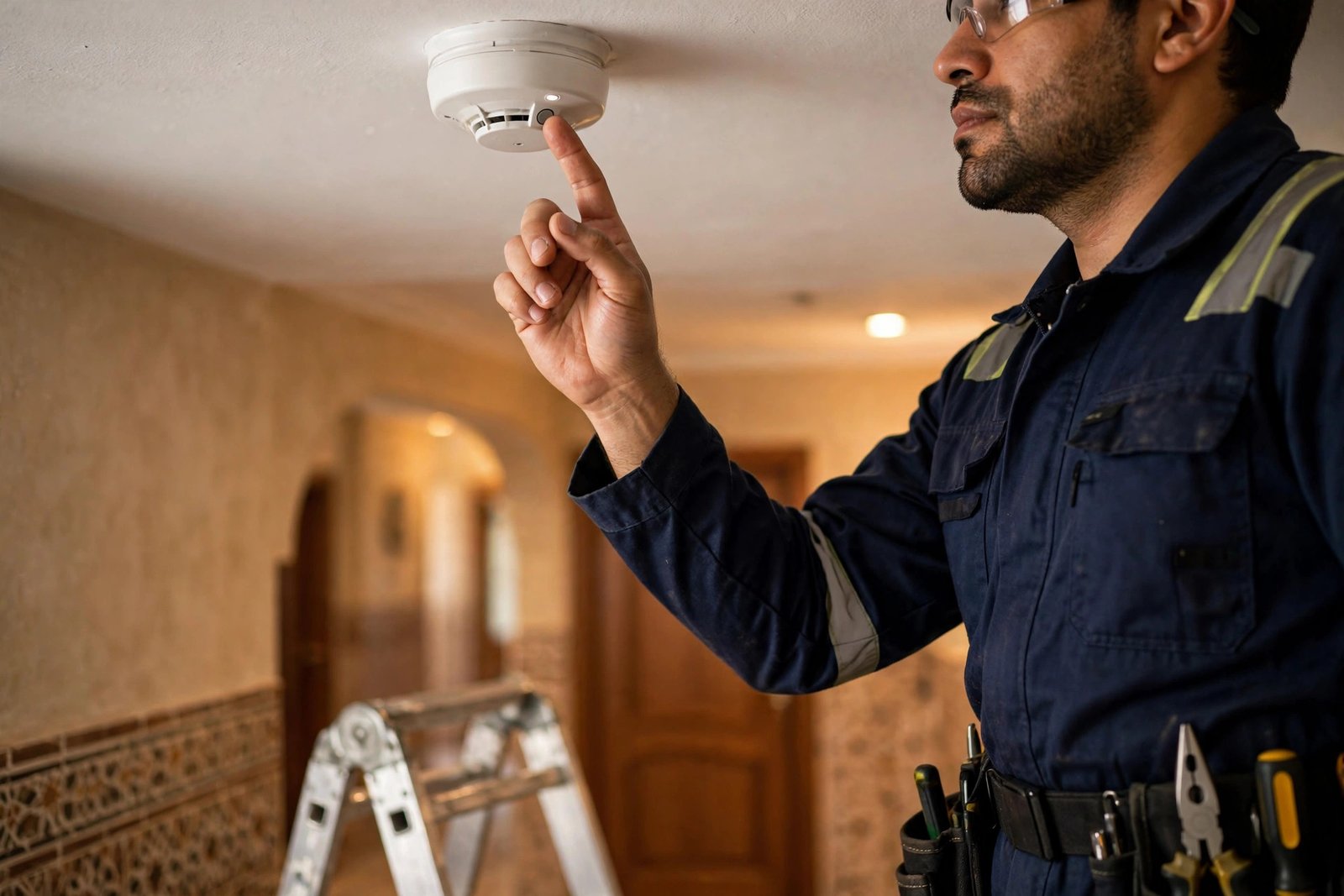
Rule 2: Place One Detector Outside Every Sleeping Area
One alarm per hallway outside the bedrooms covers the approach to every sleeping room. In a typical Riyadh villa, that means a detector in the corridor serving the upstairs bedrooms, and another in the corridor serving the ground floor rooms if anyone sleeps there, such as the driver or house help.
Rule 3: Install at Least One Detector on Every Floor
Smoke on the ground floor does not reliably reach an alarm upstairs before the stairway fills with smoke. Cover every level: ground floor, each upper floor, the rooftop room if you have one, and the majlis if it is a separate building or a closed annex. Stairways themselves are good spots too, since they are the escape path you need to keep clear.
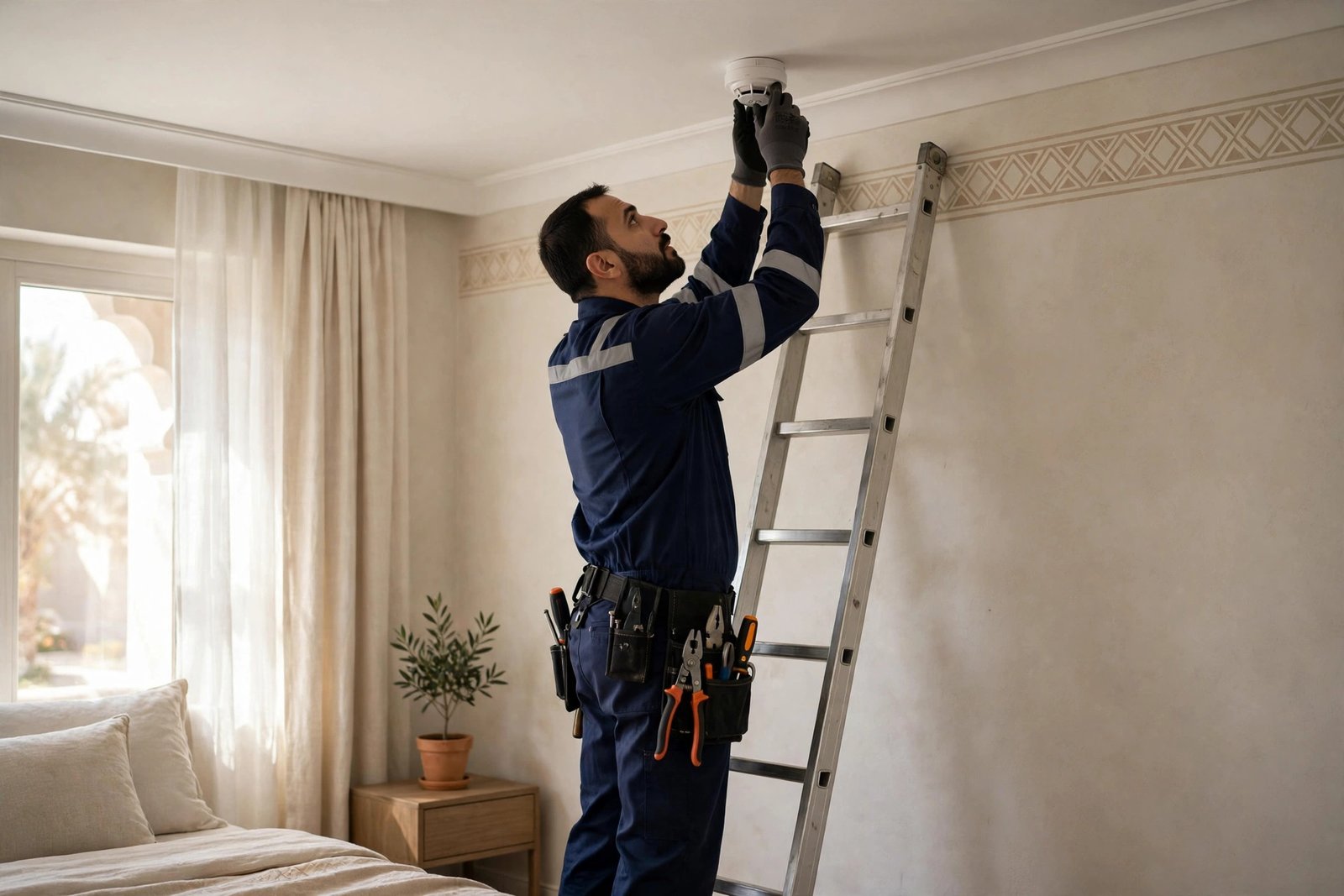
Rule 4: Mount Detectors on the Ceiling or High on the Wall
Because smoke rises, the ceiling is the prime spot. Mount the unit at least 4 inches away from the wall to avoid dead air pockets that collect in corners. If you must mount on a wall, keep the top of the alarm between 4 and 12 inches below the ceiling. For rooms with a sloped or pitched ceiling, place the detector near the highest point, where smoke gathers first.
Rule 5: Keep Detectors at Least 10 Feet from Cooking Appliances
Riyadh kitchens work hard, and a detector too close to the stove will go off during normal cooking. Keep alarms at least 10 feet (about 3 meters) from the cooking area to cut false alarms. Never silence a nuisance alarm by removing the battery. Use the hush button, open a window, and let the kitchen clear. A certified electrician can also wire hardwired models onto a dedicated circuit so kitchen appliance faults never knock them out; see our guide on circuit breaker tripping causes and fixes if your breakers trip often.
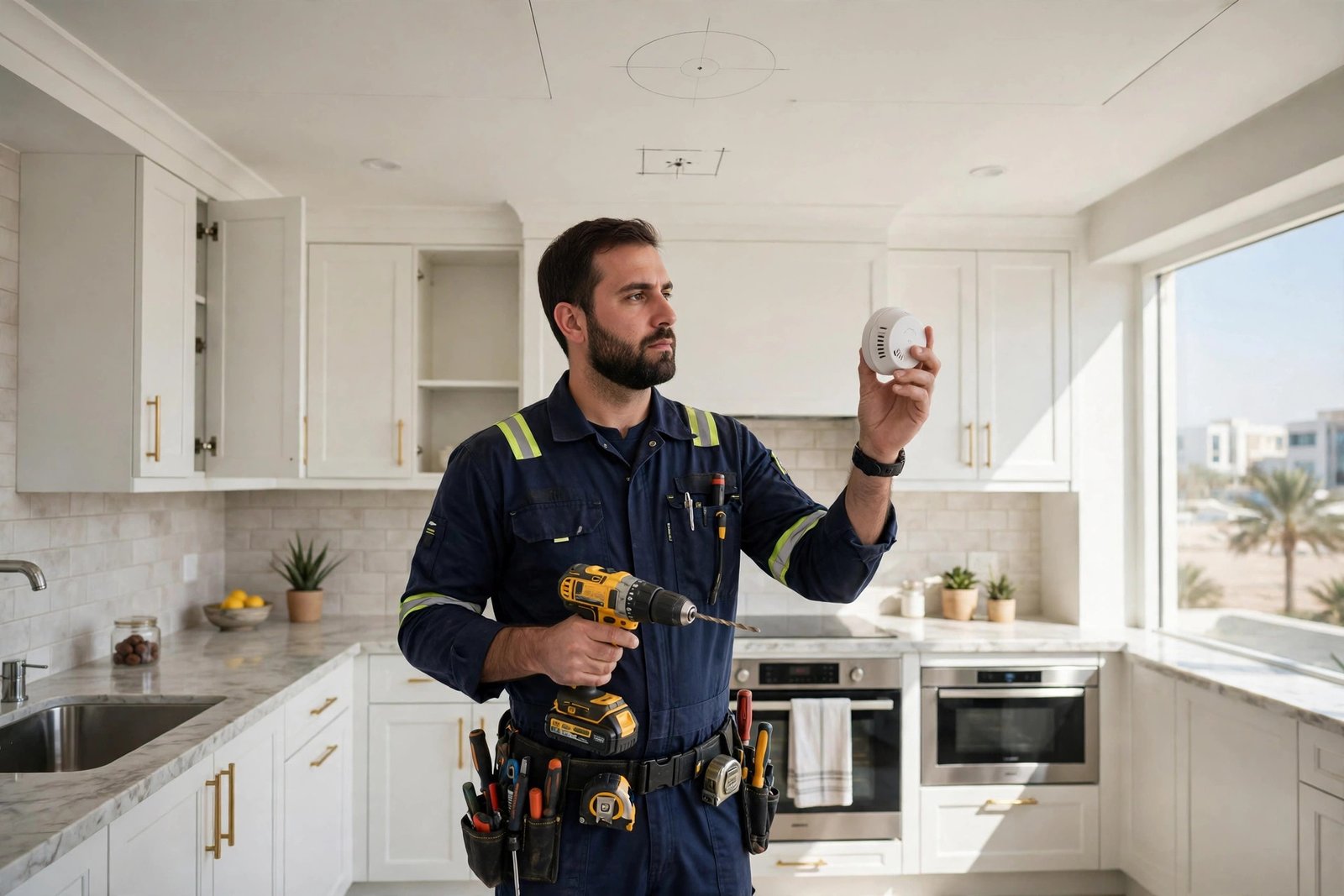
Rule 6: Interconnect Your Detectors So They All Sound Together
In a large villa, nobody hears a single alarm two floors away. Interconnected detectors fix that: when one senses smoke, every alarm in the house sounds. Many modern models connect wirelessly, so you do not need to chase wires through finished walls. If you are upgrading old alarms, this is the single best improvement you can make.
Where Smoke Detectors Do NOT Belong
Smoke detector placement rules also tell you where alarms do not belong. Skip bathrooms, where shower steam causes false alarms, and skip the kitchen itself, garages, dusty storerooms and unventilated roof spaces where heat or dust will either trigger the alarm or damage it. Keep detectors away from ceiling fans, AC supply vents and windows, because drafts can blow smoke away from the sensor and delay detection.
As a quick reference, the NFPA smoke alarm guidance confirms the same room by room placement: inside every bedroom, outside each sleeping area, on every level, mounted high and kept clear of kitchens and bathrooms.
Testing, Cleaning and Replacing Your Smoke Detectors
Even perfect smoke detector placement rules cannot save you if the alarm has a dead battery. Press the test button once a month and listen for the loud triple beep. A single chirp every 30 to 60 seconds means the battery is low, so replace it right away. Vacuum the unit gently twice a year, because dust from Riyadh sandstorms can clog the sensor. Finally, replace every alarm 10 years after its manufacturing date, even if it still tests fine, since the sensor itself wears out.
If an alarm keeps chirping after a battery change, or goes silent when tested, call a professional instead of ignoring it. Our emergency electrician team handles urgent electrical safety fixes around the clock, and a standard electrician visit starts at 150 SAR for labor, with 45-minute dispatch and a 30-day golden warranty.
Conclusion
These six smoke detector placement rules take only an afternoon to apply, and they give your family the early warning that matters most in a fire. Put an alarm inside every bedroom, outside every sleeping area and on every floor, mount it high, keep it clear of the kitchen, and interconnect the units so the whole villa hears it. Test monthly, clean off the dust, and replace every unit at 10 years. For safe professional installation anywhere in Riyadh, call SheelTalab on 0570328344 or 0570328344, any hour of the day.