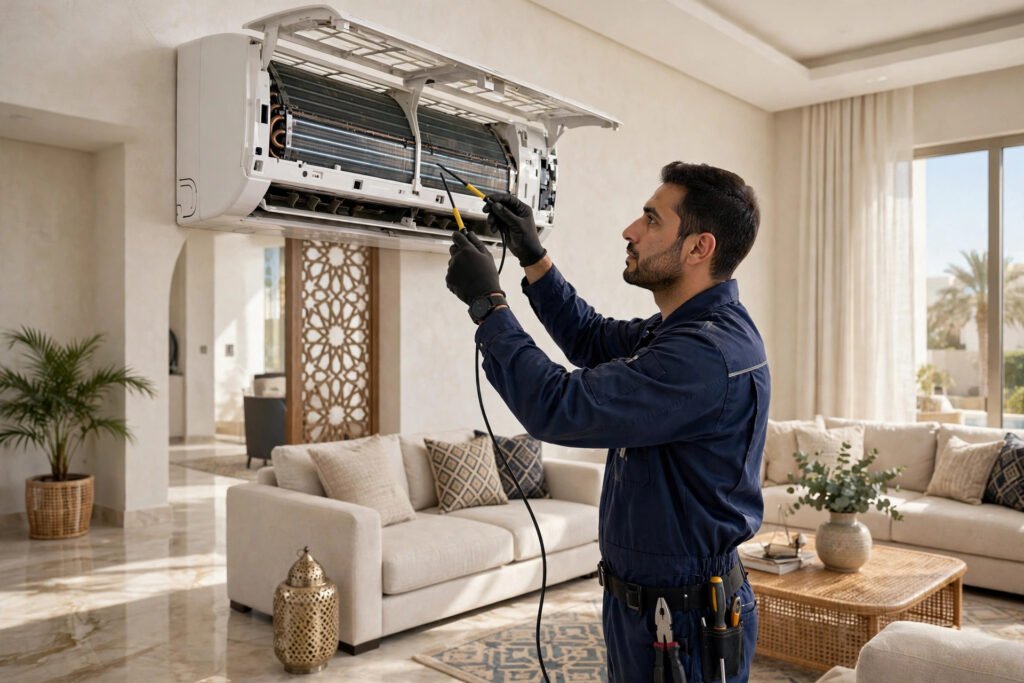
If your split AC keeps acting strange in the Riyadh heat, you might assume the compressor is failing. But the real culprit is often much smaller and cheaper to fix. These AC sensor problem symptoms are commonly mistaken for major breakdowns, when all that is wrong is a tiny component sending the wrong temperature reading.
Every split AC relies on two small thermistor sensors that act like tiny thermometers: one measures the air around the indoor unit, the other monitors refrigerant temperature on the evaporator coils. The control board uses their readings to start and stop the compressor, set fan speed, and cycle the unit off. When a sensor sends wrong data, the whole system makes wrong decisions.
Riyadh’s long, brutal summers are especially hard on these parts. Heat, dust, and corrosion damage or loosen sensors much faster here than in milder climates, which is why AC sensor problem symptoms show up in so many homes across the city. The good news: a faulty sensor is one of the cheapest AC repairs you can get. Here are the five warning signs to watch for.
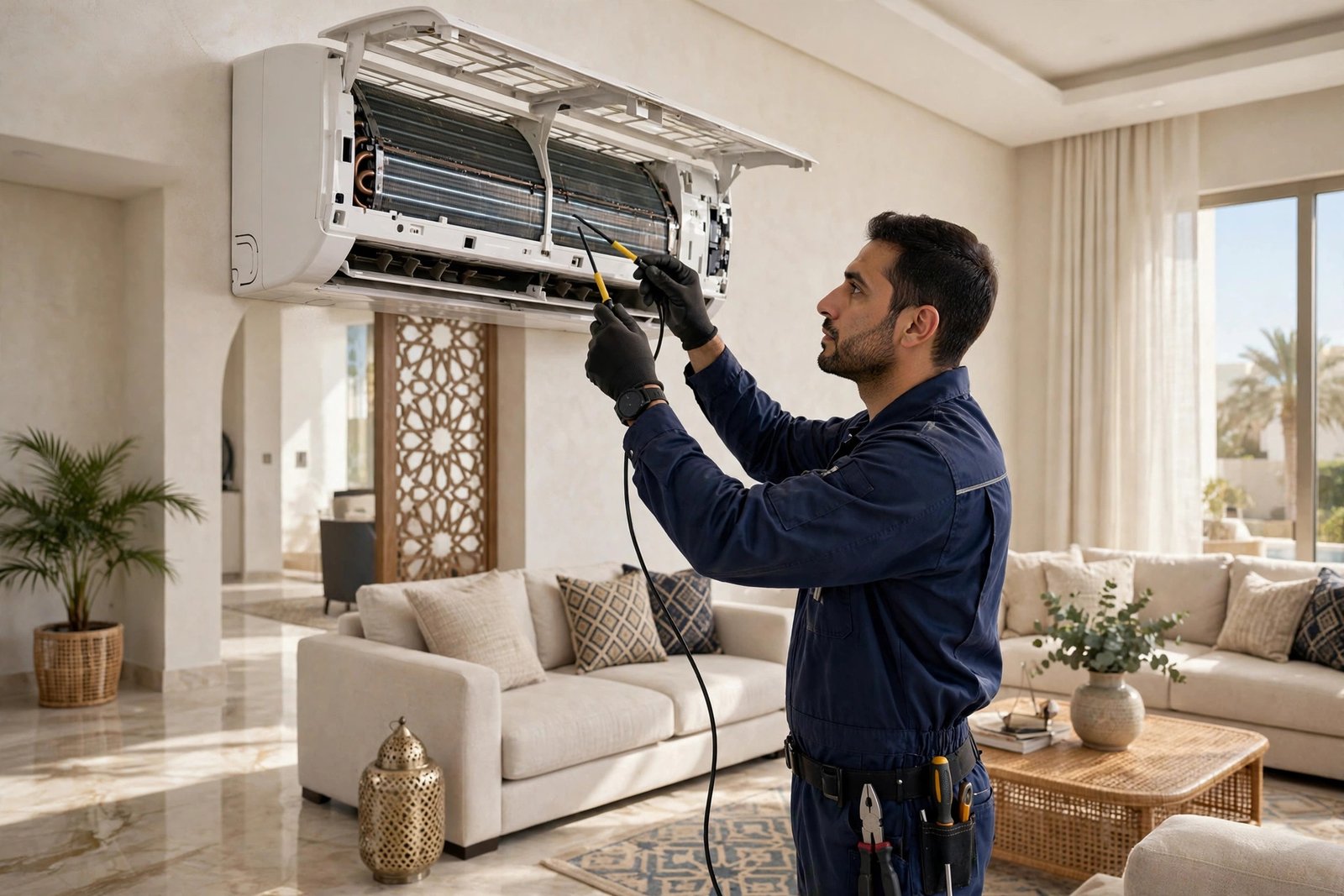
The 5 AC Sensor Problem Symptoms Every Homeowner Should Know
A bad sensor rarely announces itself with smoke or noise. Instead, it produces confusing behavior that looks like a bigger fault. If you notice any of these five AC sensor problem symptoms, a quick diagnostic visit is all it usually takes to confirm the cause.
1. Your AC Runs but Barely Cools the Room
The most common of all AC sensor problem symptoms is weak cooling from a unit that seems to be running normally. The room sensor sits near the return air intake, and if it misreads the temperature, it can tell the control board the room is already 22 degrees when it is actually 29. The compressor then idles down or shuts off early, and your room never gets cold. This is often confused with low Freon, but a sensor fix costs a fraction of a gas refill. If weak cooling is your main complaint, also read our guide on split ACs that stop cooling in Riyadh to rule out the other usual suspects.
2. The AC Turns On and Off Every Few Minutes
Short cycling, where the compressor starts and stops every few minutes instead of running steady cycles, is a classic sign of a failing coil sensor. The sensor falsely reports that the coils are freezing up, so the control board kills the compressor to protect it, then restarts it minutes later. Besides being annoying, this constant stop-start wears out the compressor and spikes your electricity use. A technician can test the sensor’s resistance with a multimeter in minutes to confirm whether it is lying.

3. The AC Never Reaches the Temperature You Set
You set the remote to 20 degrees, but the unit keeps running and the room stays at 26. A drifting sensor can get “stuck” at a wrong reading, so the control board thinks its target is reached (or never thinks so, and runs forever). Unlike a dirty filter, this symptom does not respond to cleaning. If your AC runs nonstop without ever satisfying the thermostat, sensor calibration is the first thing a professional should check.
4. Your Electricity Bill Suddenly Jumps
Faulty readings force the compressor to run longer or harder than necessary, and in a Riyadh summer that mistake shows up fast on your Saudi Electricity Company bill. Many homeowners pay two or three inflated bills before connecting the spike to their AC, because the unit “seems fine” otherwise. These AC sensor problem symptoms are invisible on your monthly statement, but a 120 SAR diagnostic visit can find a 50 SAR sensor that is costing you hundreds in wasted power. For a full breakdown of what fixes cost, see our article on AC repair costs in Riyadh.
5. Error Codes Flash on the Display
Modern split ACs self-diagnose sensor faults and display error codes. On Gree units, F1 usually means an indoor room temperature sensor fault and F2 points to the indoor coil sensor. Other brands use E1, E2, H6, or similar codes for the same faults. These codes are the clearest of all AC sensor problem symptoms, but do not reset the unit and ignore them: a code that clears and returns is confirming a real hardware fault, not a software glitch. The U.S. Department of Energy’s air conditioner maintenance guide notes that addressing sensor and control issues early prevents the far more expensive compressor damage that follows neglected faults.
What Causes AC Sensor Problems in Riyadh Homes
Sensors are fragile by design, and Riyadh’s environment is hard on them. Dust insulates the thermistor from the air it must measure, corrosion from condensation eats at the tiny contacts, and a sensor knocked out of its holder during a careless cleaning reads the warm metal casing instead of the room air. Thermistors also age: after several summers of 45 degree plus heat, their resistance drifts outside the correct range, and replacement is the only fix.
How SheelTalab Technicians Diagnose and Fix Sensor Faults
A proper sensor diagnosis takes about 15 minutes. Our technician measures the sensor’s resistance with a digital multimeter against the manufacturer’s chart for the current room temperature. If the reading is off, they check whether the sensor slipped out of position (a free fix) or failed electrically. Failed sensors are replaced with genuine parts, and the unit is retested at the vent to confirm the output matches the set temperature.
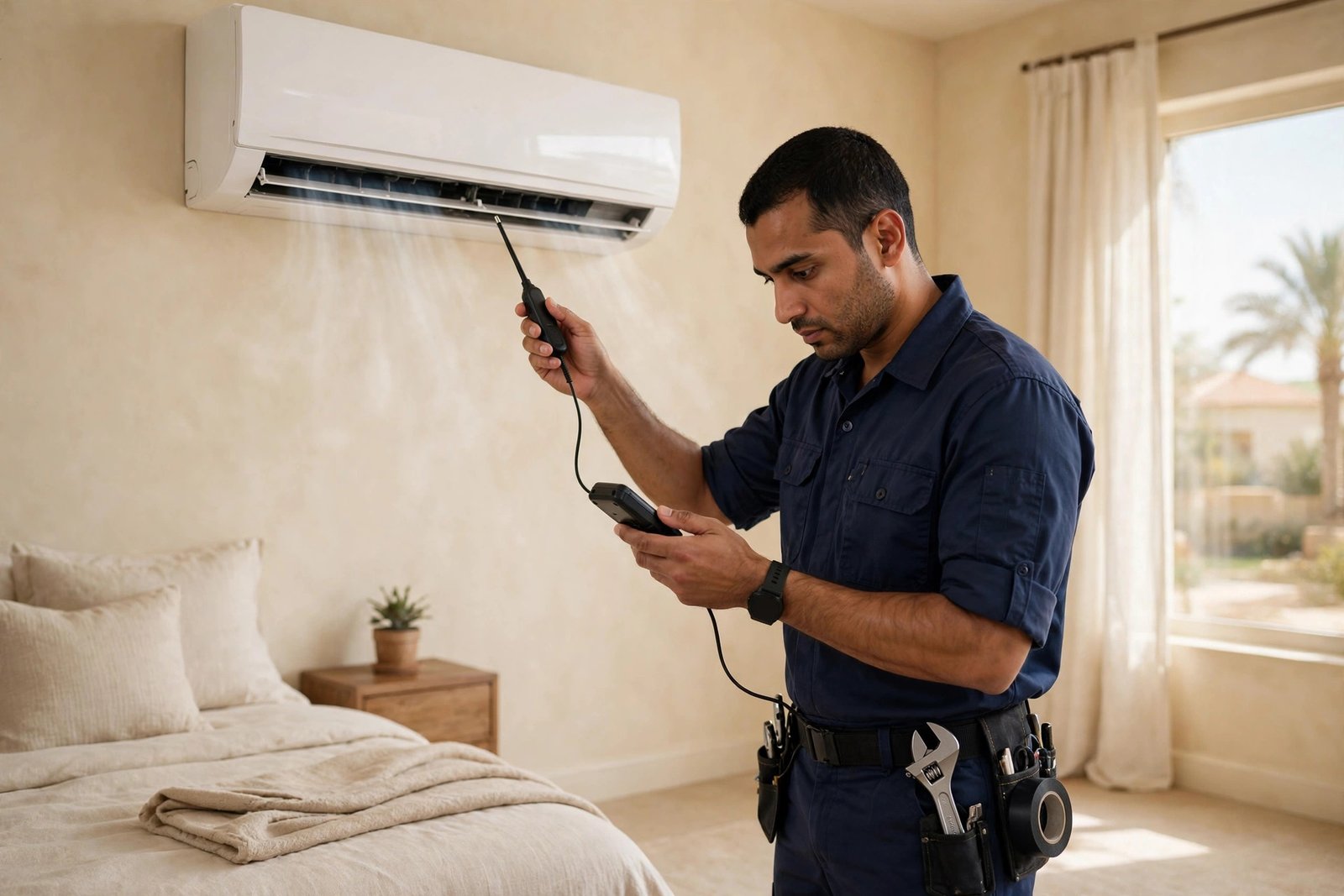
Sensor diagnostics are included in our AC Diagnostics & Rapid Repair visit at 120 SAR (was 180), with 45-minute rapid dispatch anywhere in Riyadh, 24/7 availability, certified technicians, and a 30-day golden warranty on the repair. Our service holds a 4.9/5 rating from more than 18,500 completed jobs.
Sensor Problem or Compressor Problem? How to Tell
Because the symptoms overlap, many homeowners fear the worst and assume they need a new compressor. The key difference: sensor problems come and go or respond to restarts, while compressor faults are consistent (no cold air at all, loud noises, tripped breakers). A sensor fix also costs a fraction of compressor work. Never approve a compressor replacement before a diagnostic rules out the sensors. If the compressor truly is the issue, our guide to AC compressor repair in Riyadh explains the repair-versus-replace decision and costs.
When to Call a Professional Instead of Waiting
Unlike a dirty filter, a faulty sensor never fixes itself. Every day of wrong readings means wasted electricity, extra wear on your compressor, and another uncomfortable night in the Riyadh heat. If you have spotted any of the five symptoms above, a 120 SAR diagnostic visit is the fastest way to get a certain answer. Call 0570328344 or 0570328344 and a certified SheelTalab technician can be at your door within 45 minutes, day or night.
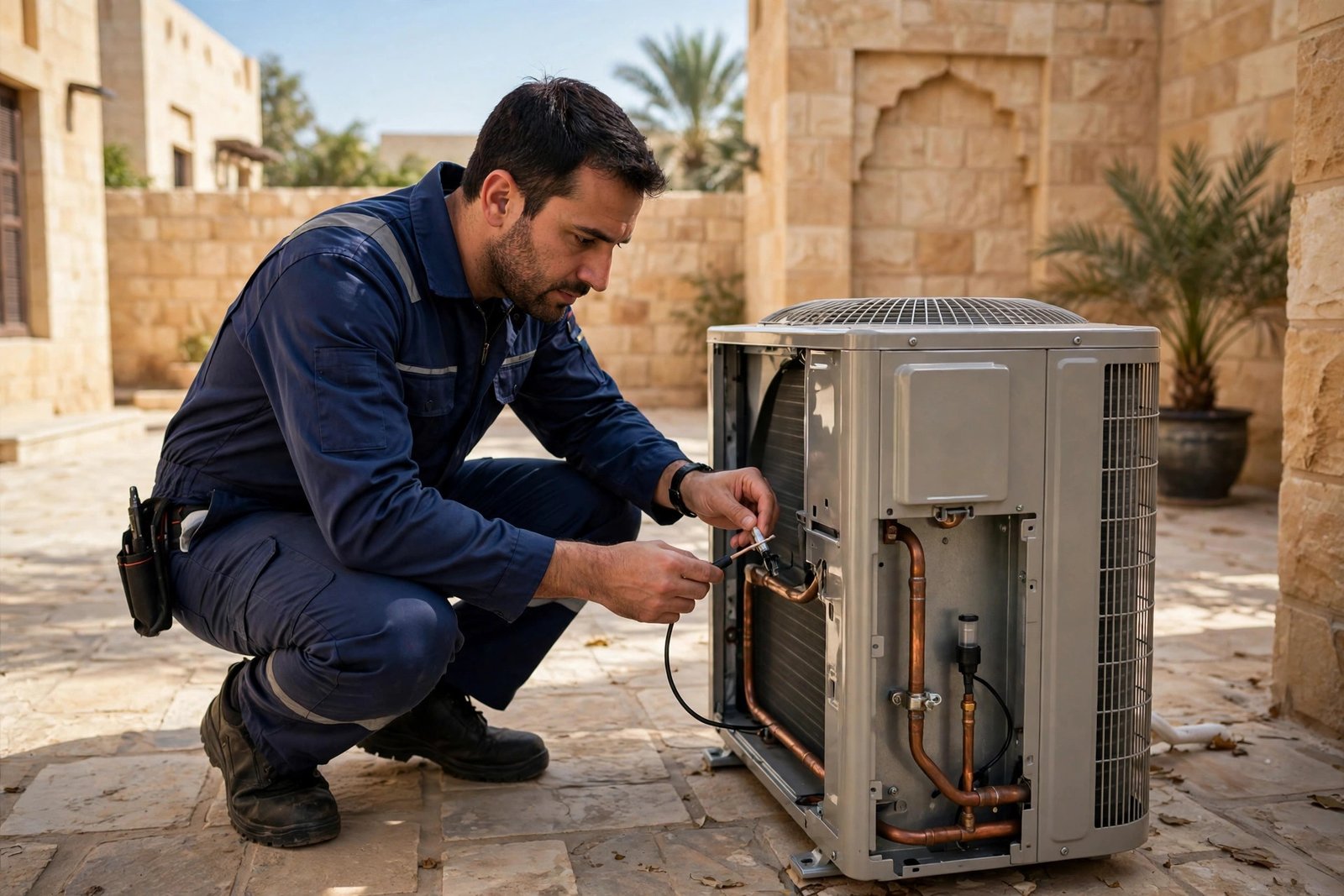
AC sensor problem symptoms are the AC world’s false alarms: small, cheap to fix, but costly to ignore. A single diagnostic visit finds the faulty reading, replaces the sensor with a genuine part, and gets your cooling back under control, all backed by our 30-day golden warranty. Do not pay another inflated electricity bill for a small failing sensor. Book your repair today.