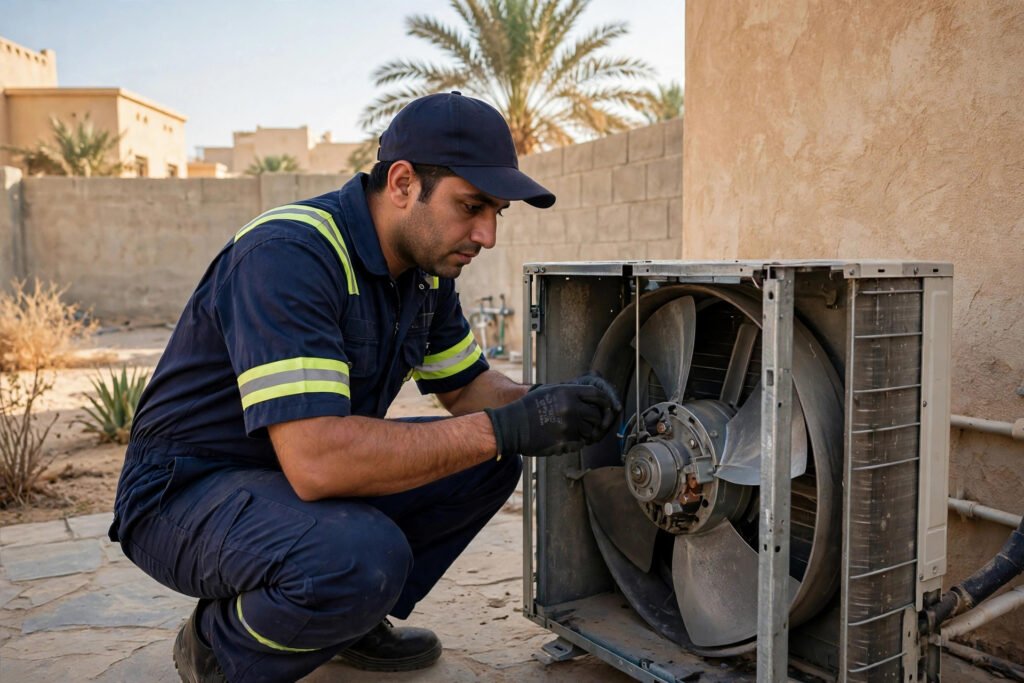
An ac fan motor not working is one of the most common reasons an air conditioner stops cooling in Riyadh. The fan motor is what pulls hot air out of your home through the outdoor condenser unit and pushes cool air through your indoor unit. When it fails, the compressor overheats, cooling drops fast, and your unit may shut down completely to protect itself.
In Riyadh’s extreme heat, a failed fan motor is more than an inconvenience. With outdoor temperatures pushing past 45 degrees, your AC runs harder than anywhere else in the Kingdom, and the fan motor carries much of that load. The good news is that most fan motor problems are fixable, and many do not require replacing the entire unit.
This guide walks you through the 6 most common causes, what you can safely check yourself, and when to call a technician. Knowing the likely cause also helps you avoid overpaying, since some fixes take under an hour.
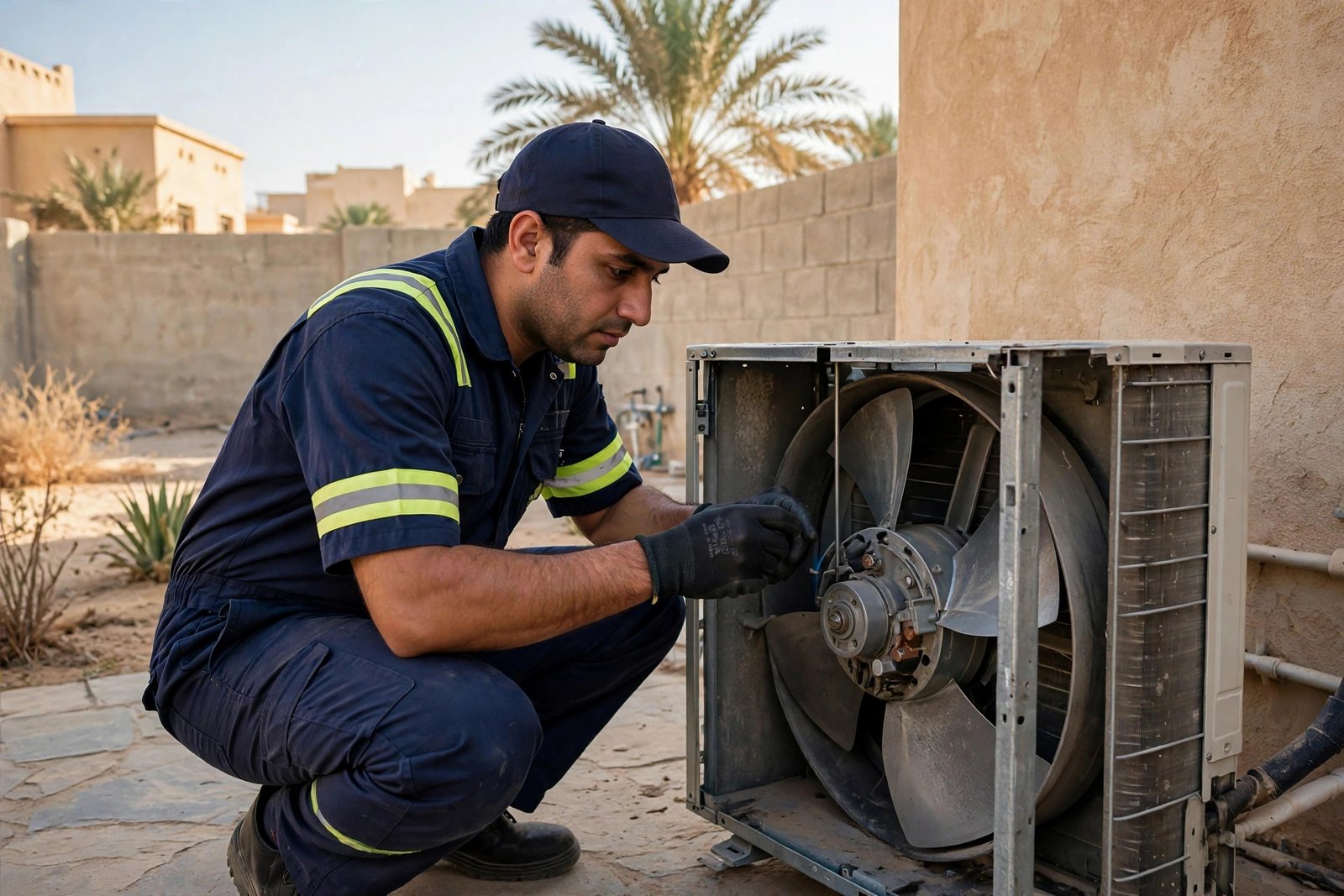
Why an AC Fan Motor Not Working Stops the Whole System
Your AC relies on two fan motors: one in the outdoor condenser unit and one in the indoor evaporator unit. The outdoor fan pulls air across the hot condenser coils, releasing heat outside. The indoor fan (blower) pushes cool air through your rooms. When either ac fan motor stops working, heat has nowhere to go, pressures climb, and the system either blows warm air or shuts itself off as a safety measure.
Typical symptoms include a humming sound from the unit with no fan movement, the outdoor fan spinning slowly or stopping and starting, a split AC not cooling even though the compressor runs, or the breaker tripping repeatedly when the AC starts. Spotting the exact symptom helps a technician diagnose the cause faster, which saves you time and money.
The 6 Causes of an AC Fan Motor Not Working, and How We Fix Each One
Most of the time, an ac fan motor not working comes down to a small, replaceable part rather than a dead motor. Here are the six causes we see most often in Riyadh homes, from the most common to the least.
1. Failed Run Capacitor (Most Common)
The run capacitor gives the fan motor the electrical jolt it needs to start spinning and keep spinning. In Riyadh’s heat, capacitors wear out fast: heat literally bakes them until they bulge or leak. Signs include a fan that hums but never spins, or one that starts only if you nudge it with a stick. This is the first thing we test when an ac fan motor not working is reported, and replacing a capacitor is usually a quick, affordable fix.
2. Tripped Breaker or Blown Fuse
Sometimes the motor itself is fine, but it is getting no power. A breaker trips or a fuse blows when the circuit is overloaded, which can happen when the fan motor draws extra current on a scorching afternoon. If the AC breaker has tripped once, resetting it may work. If it trips again immediately, do not keep resetting it, because that repeated surge can damage the motor and the wiring. A technician should find out why the overload happened before powering the unit again.
3. Seized Bearings From Dust and Heat
Riyadh’s fine dust gets everywhere, including inside outdoor fan motors, where it wears down bearings and dries out lubrication. A motor with worn bearings often makes a grinding or squealing noise before it seizes completely. If caught early, the motor can sometimes be cleaned and re-lubricated. Once the bearings are fully seized, the motor needs replacing. Regular servicing is the simplest way to prevent this, which is why our AC technicians check motor bearings during every maintenance visit.
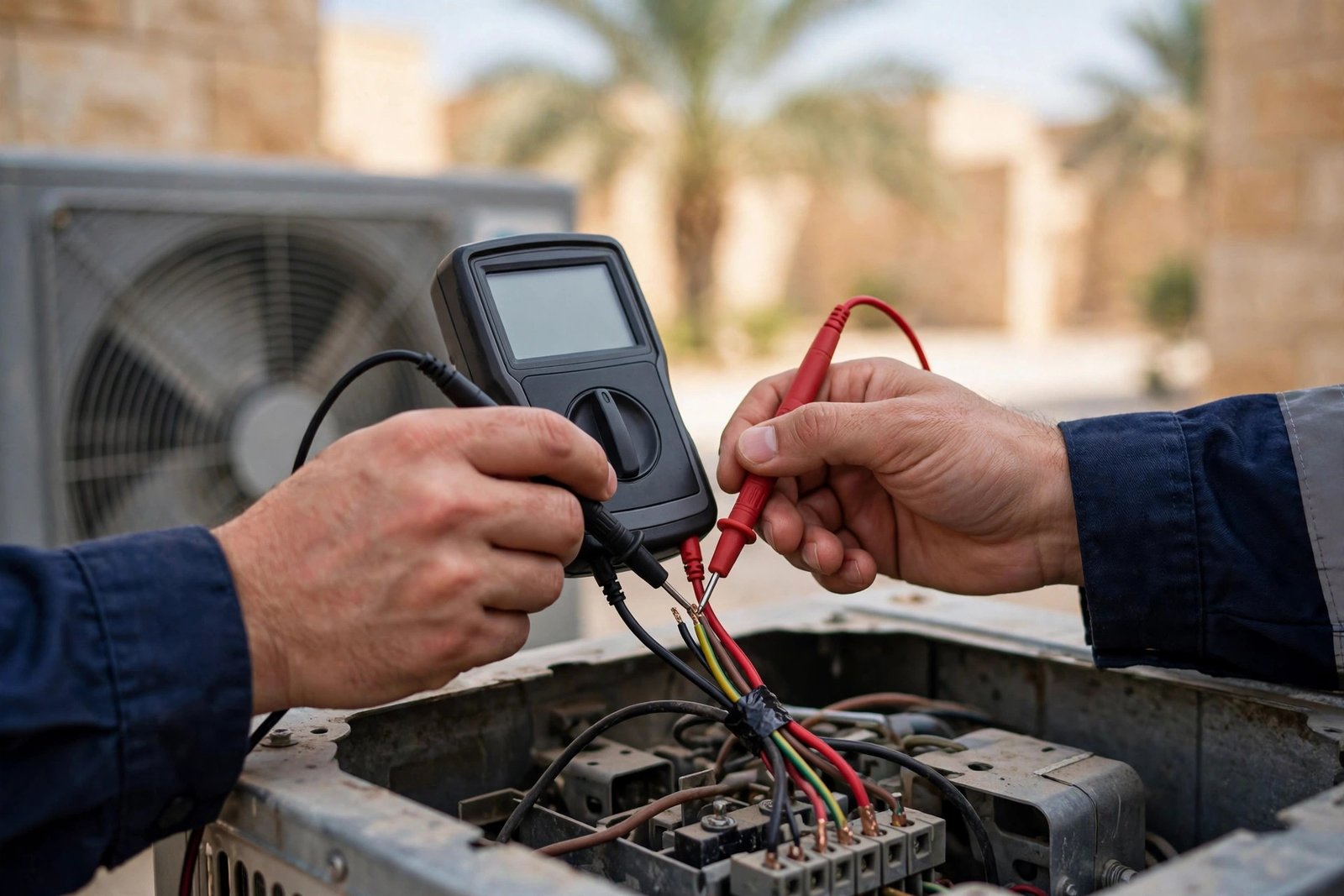
4. Faulty Contactor or Control Board
The contactor is an electrical switch that tells the fan motor when to start. Pitted or burnt contacts can stop the signal from getting through, so the motor never turns on even though it is healthy. Control boards can fail the same way, especially after power surges during Riyadh’s summer storms. We test the contactor and board with a multimeter: if power goes in but nothing comes out, the switch is the problem, not the motor.
5. Overheating From Dirty Coils and Blocked Airflow
A fan motor that runs hot will shut itself down through its built-in thermal overload protection. The most common reason it runs hot in Riyadh is dirty condenser coils and blocked airflow: dust, leaves, and plastic bags choke the outdoor unit, forcing the motor to work harder. This is also why proper air conditioner maintenance matters so much here. A deep chemical wash of the coils (200 SAR, was 250) restores airflow and takes the strain off the fan motor before it fails.
6. Broken Fan Blades or Jammed Debris
Cracked, bent, or missing fan blades throw the motor off balance and can jam it completely. Windblown debris, from sand buildup to a stray plastic bag, can also wedge into the fan housing and stop it from turning. A bent blade can usually be replaced on its own, and clearing debris is a quick job, but the motor should be tested afterward to make sure the jam did not burn it out.
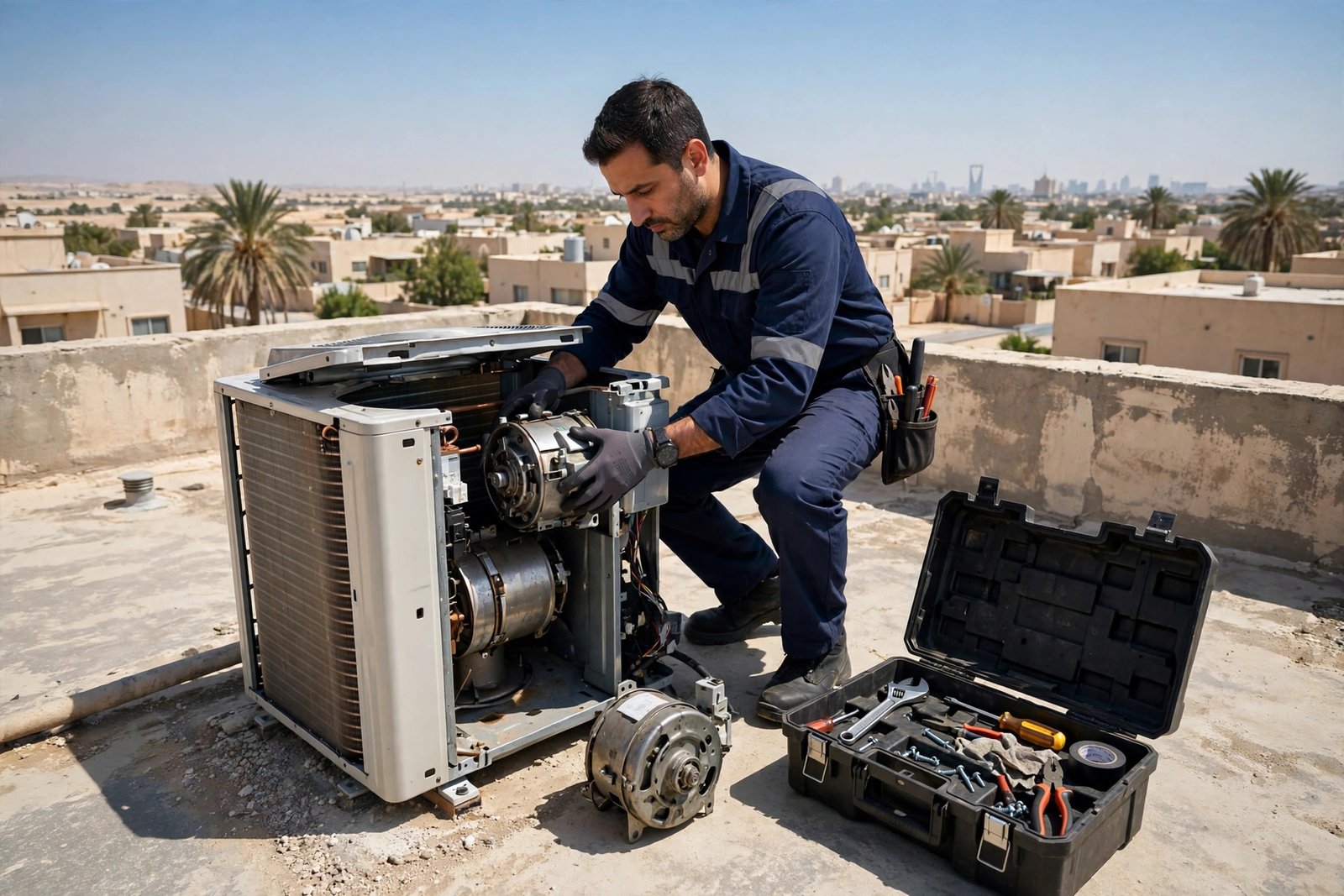
Cause vs Fix: Quick Reference Table
Use this table to match what you are seeing with the likely cause and the standard fix. It helps you describe the problem clearly when you call, and it helps you understand what the technician will do.
| Cause | Fix |
|---|---|
| Failed run capacitor (humming fan that never spins) | Test and replace the capacitor, then verify the fan starts on its own |
| Tripped breaker or blown fuse | Reset the breaker once, investigate the overload cause if it trips again |
| Seized or worn bearings from dust and heat | Clean and re-lubricate if caught early, or replace the motor if seized |
| Faulty contactor or control board | Test with a multimeter and replace the failed switch or board |
| Overheating from dirty coils and blocked airflow | Deep clean the condenser coils, clear debris around the outdoor unit |
| Broken fan blades or jammed debris | Remove obstructions, replace bent or cracked blades, then test the motor |
Safe DIY Checks Before You Call a Technician
There are a few checks you can safely do yourself. First, look at the breaker panel: if the AC breaker has tripped, you can reset it once and see if the fan runs. Second, with the unit turned off, look into the outdoor unit for obvious obstructions like plastic bags, leaves, or sand packed against the fan. Clear anything blocking it, and make sure there is at least 60 centimeters of clear space around the unit for airflow.
Third, check your air filter. A badly clogged filter chokes airflow through the whole system and can push the motor toward overheating. Rinse or replace it, then restart the unit. What you should NOT do is open the electrical panel, touch the capacitor, or try to spin the fan by hand while the power is on. Capacitors store a charge even with the power off, and a spinning fan can injure fingers. If the fan still does not start after these checks, it is time for a professional.
When to Call a Professional (and What It Costs)
Call a technician if the breaker trips more than once, if you hear grinding or burning smells, or if the fan motor is hot to the touch. These are signs of electrical or mechanical failure that need proper tools and genuine parts. SheelTalab offers AC Diagnostics and Rapid Repair for 120 SAR (was 180), which covers a full inspection of the fan motor, capacitor, contactor, and airflow, with certified technicians arriving anywhere in Riyadh within 45 minutes, 24/7, backed by a 30-day golden warranty and a 4.9 out of 5 rating from more than 18,500 jobs.
If your ac fan motor not working continues after the basic checks above, do not keep running the unit. A stalled fan lets the compressor overheat, and replacing a compressor costs far more than fixing a fan motor. Reach us on 0570328344 or 0570328344 and we will have your cooling back fast.