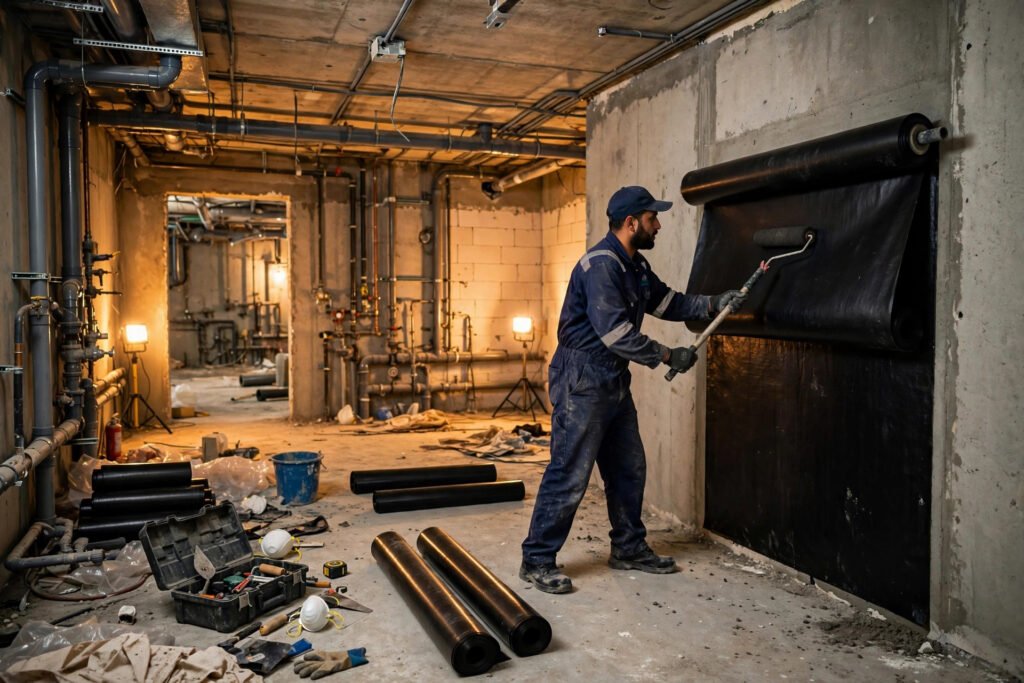
A damp basement in a Riyadh villa is more than a nuisance. Water seeping through foundation walls damages stored belongings, feeds mold in air ducts, weakens concrete over time, and creates the musty smell that buyers and tenants notice instantly. Choosing the right basement waterproofing methods makes the difference between a one-time fix and a recurring repair bill.
Riyadh’s conditions make basements surprisingly vulnerable. Occasional heavy winter rains overwhelm poor site drainage, high groundwater tables in some districts push moisture through concrete pores, and irrigation around villa landscaping keeps soil against foundation walls wet for months. The good news is that modern waterproofing offers proven solutions for every situation, from hairline cracks to full hydrostatic pressure.
In this guide, we compare seven professional basement waterproofing methods used by certified technicians in Riyadh, explain when each one is the right choice, and show what waterproofing actually costs. SheelTalab’s certified team applies every one of these methods across Riyadh with 45-minute rapid dispatch, 24/7 availability, and a 30-day golden warranty.
Basement Waterproofing Methods: The 7 Proven Options
Not every basement leak needs the same treatment. A hairline crack behind a stairwell calls for a different fix than groundwater pressing up through a slab. Below are the seven basement waterproofing methods professionals rely on, with honest notes on where each shines and where it falls short.
1. Exterior Sheet Membranes
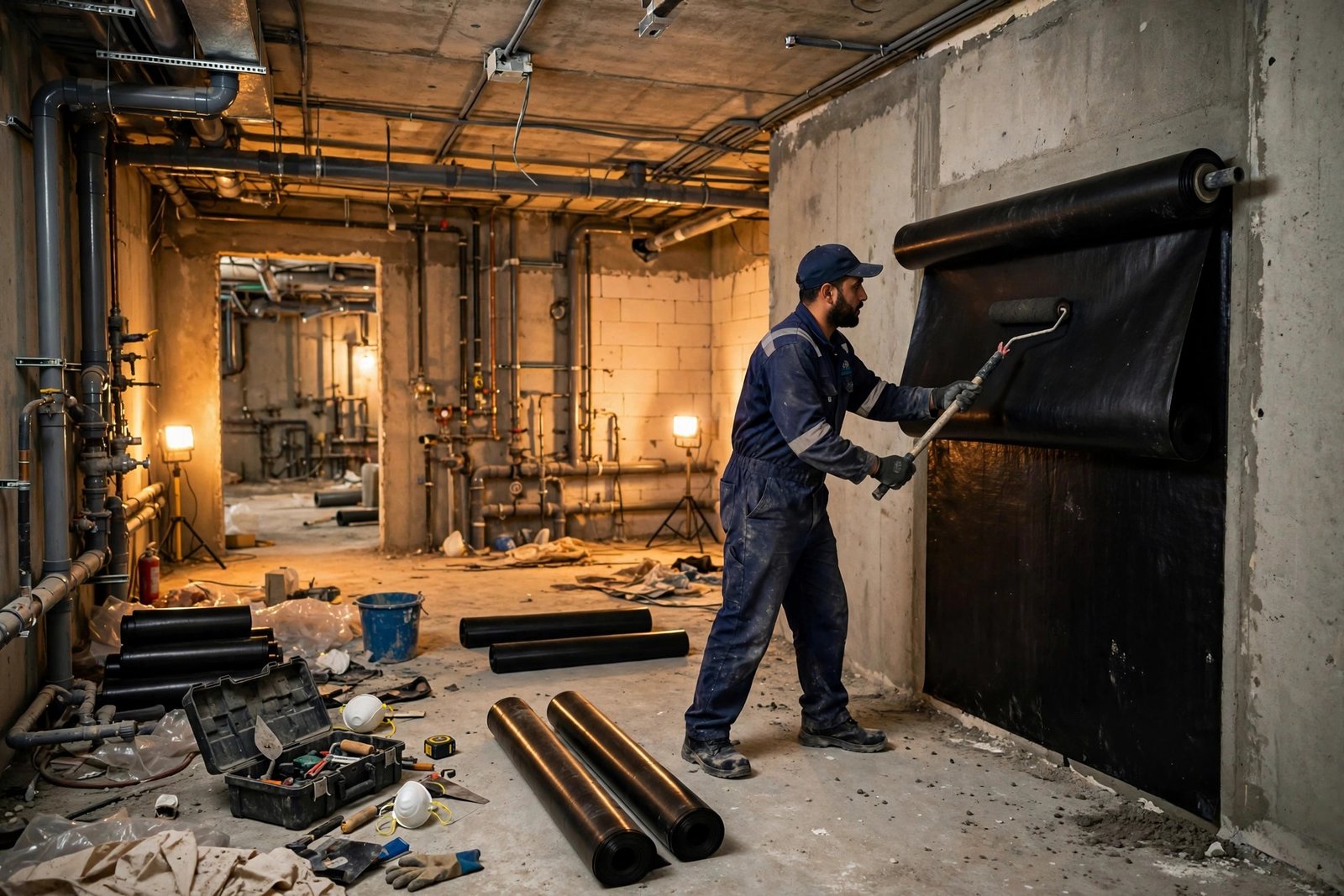
Exterior sheet membranes are the gold standard for new construction and major renovation. Workers excavate down to the foundation footing, clean the wall, and apply self-adhering or torch-on membrane sheets that bond fully to the concrete. A protection board and drainage mat go over the membrane before backfilling. Because the barrier sits on the water-facing side, hydrostatic pressure pushes it tighter against the wall instead of lifting it off. This is the most durable option available, often lasting the life of the building, but it requires excavation access, which makes it impractical for finished villas with tight side yards.
2. Liquid-Applied Coatings
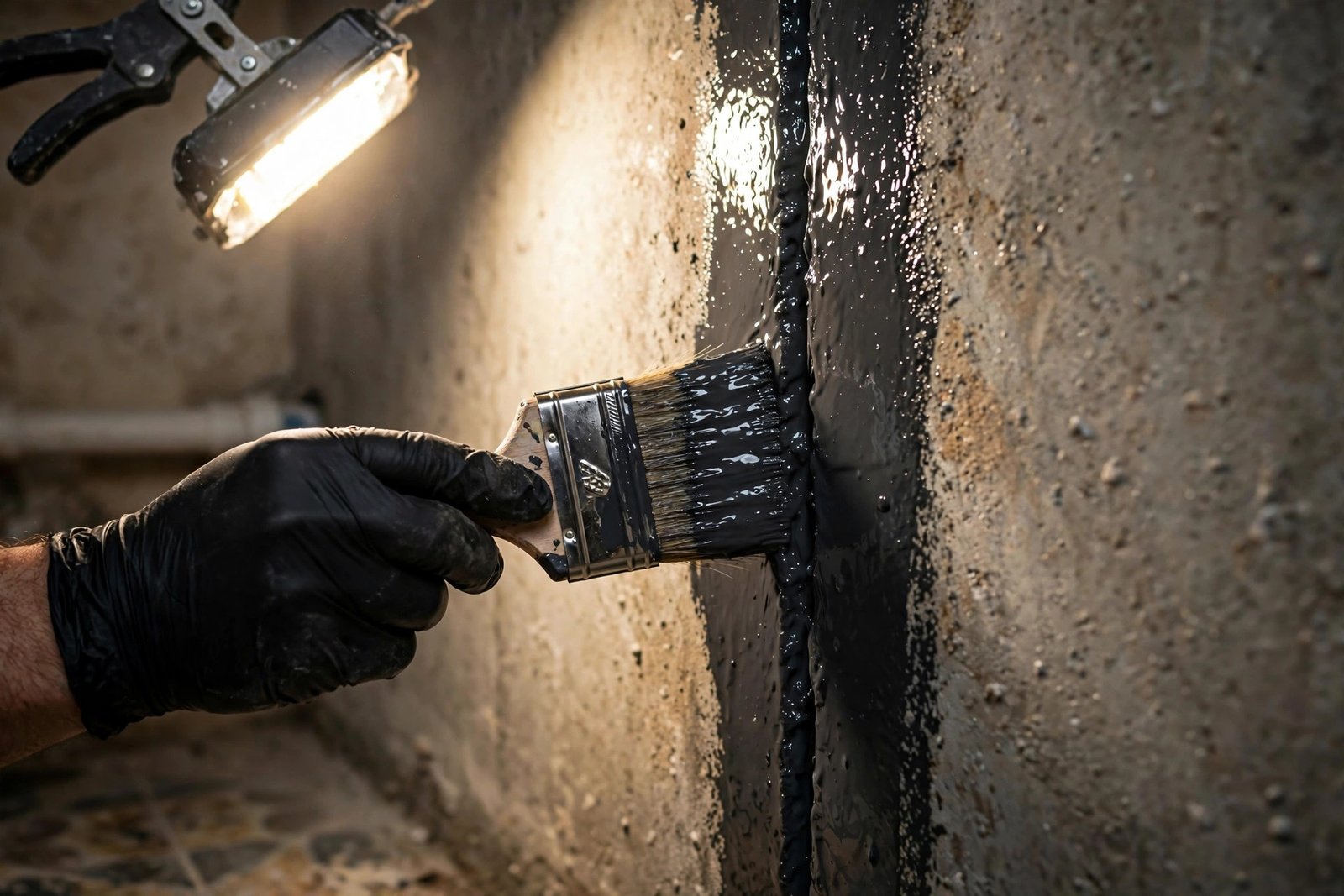
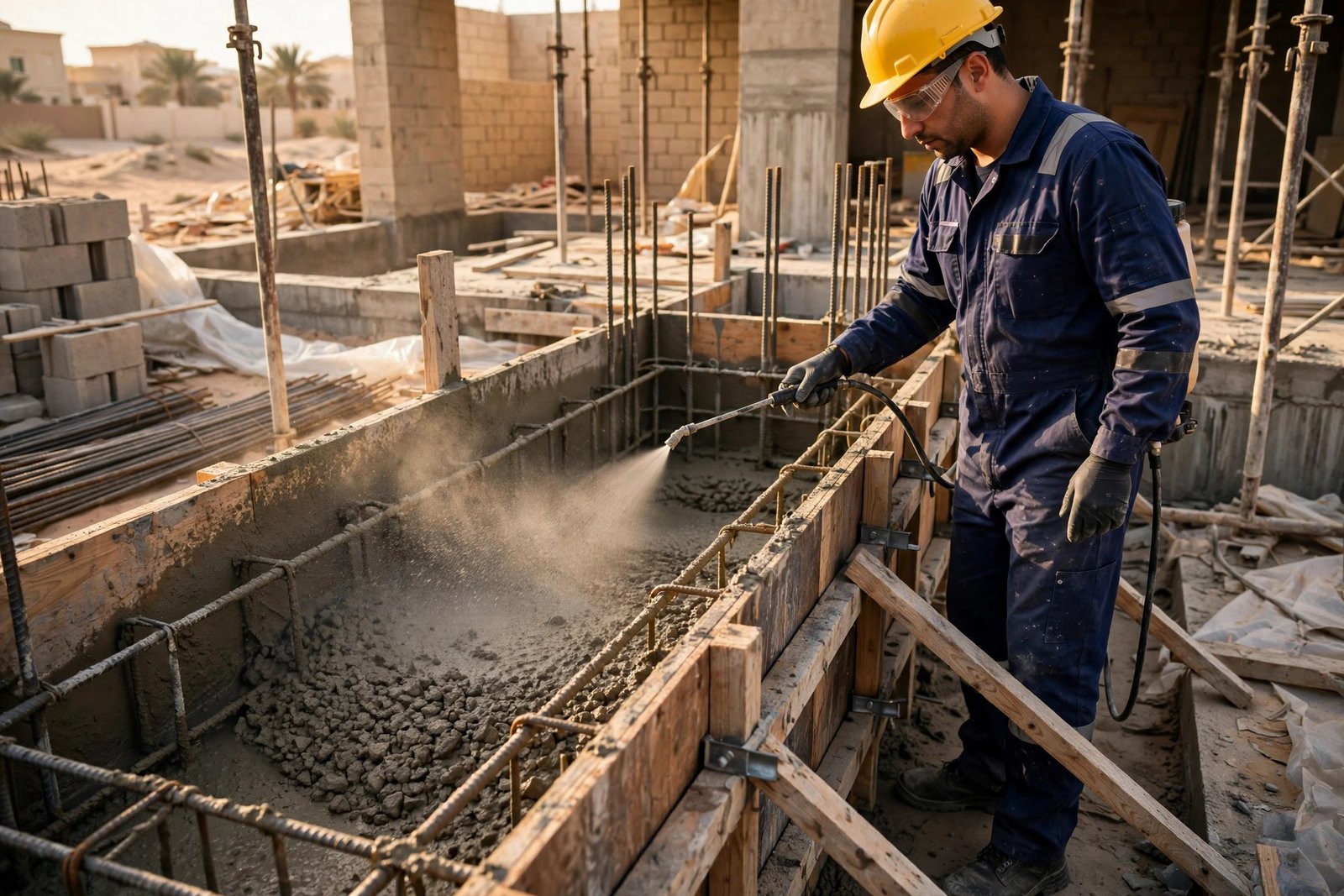
Liquid-applied coatings, typically polyurethane or rubberized bitumen, are brushed, rolled, or sprayed onto concrete to form a seamless elastic skin. With no seams to fail, they handle minor wall movement and bridge hairline cracks well. They cure into a flexible film that stretches as concrete expands in Riyadh’s heat. These coatings work on both exterior and interior faces, though interior application fights water on the negative side and should be paired with drainage. A quality coating job lasts 10 to 15 years with proper surface preparation, which is the step most DIY attempts skip.
3. Crystalline Waterproofing Admixtures
Crystalline products work from inside the concrete itself. Applied as a slurry or mixed into fresh concrete, special chemicals react with moisture and cement particles to grow insoluble crystals inside the concrete pores and capillaries. The concrete essentially waterproofs itself, and the crystalline action reactivates whenever new moisture arrives, self-sealing hairline cracks up to about 0.4 mm. This makes it ideal for water tanks, raft slabs, and basement walls under construction. Independent technical sources on negative-side waterproofing confirm crystalline coatings are the most common approach when the water pressure comes from the side you cannot reach, as explained in Building Green’s guide to negative-side basement waterproofing.
4. Cementitious Coatings
Cementitious waterproofing is a simple mix of cement, sand, and waterproofing additives trowelled or brushed onto damp concrete. It is easy to apply, affordable, and works well in permanently wet areas such as lift pits and basement bathrooms. However, it is rigid, so it cracks if the structure moves, and it has no crack-bridging ability. Think of it as a solid basic option for low-pressure seepage and damp patches rather than a heavy-duty solution for serious leaks. Our technicians often use it as part of bathroom waterproofing in Riyadh where the water exposure is predictable and constant.
5. Bentonite Clay Panels
Bentonite is a natural clay that swells up to many times its dry volume when it contacts water, forming a dense, self-healing gel barrier. Installed as panels or blankets against the exterior of foundation walls before backfilling, it seals itself around small punctures and imperfections automatically. Because bentonite must stay confined and needs moisture to activate properly, it suits new construction and foundation extensions rather than repairs on finished villas. When paired with exterior drainage, it is one of the longest-lived passive systems available.
6. Interior French Drains and Sump Pumps
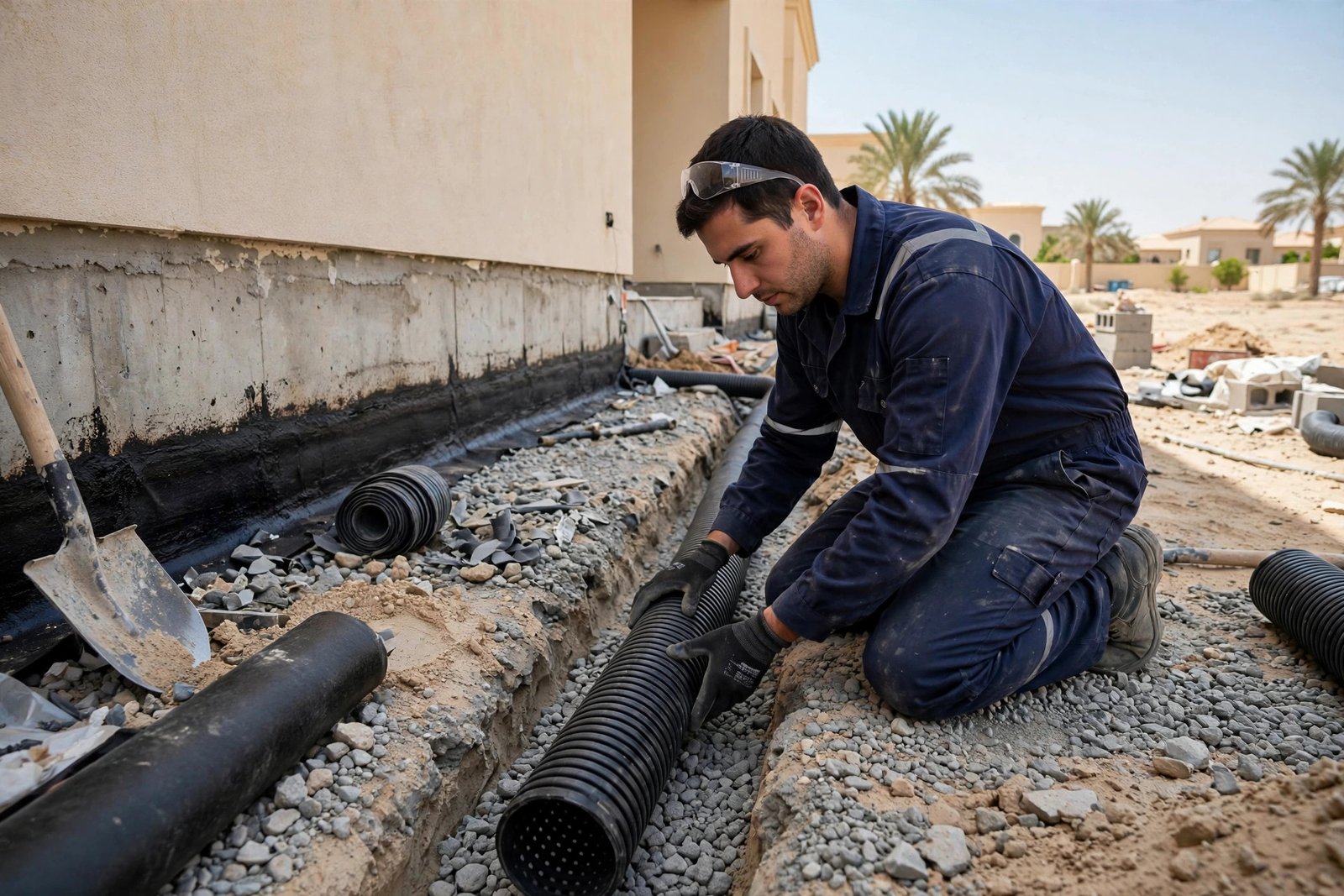
An interior French drain system manages water after it enters rather than blocking it at the wall. A channel is cut around the basement floor perimeter, perforated pipe is bedded in gravel, and collected water flows to a sump basin where an automatic pump discharges it outside. This approach relieves hydrostatic pressure under the slab, which is often the real cause of recurring leaks, and it can be installed inside a finished basement without excavation. The trade-off is that it needs power and occasional pump maintenance, and it manages water rather than keeping walls bone dry.
7. Epoxy and Polyurethane Crack Injection
For targeted leaks through specific cracks, injection is the fastest and least invasive repair. Technicians drill small ports along the crack and inject low-viscosity epoxy or expanding polyurethane under pressure. Epoxy restores the wall’s structural strength and is used for dry, stable cracks, while flexible polyurethane foam is better for active leaks because it expands to fill the void and stays flexible. A single crack can be sealed in a few hours with no excavation. Injection does not, however, fix widespread seepage or pressure from multiple entry points, so a professional inspection should confirm the crack is the only problem.
Basement Waterproofing Methods Compared Side by Side
Use this comparison to shortlist the right option before a technician visits. Durability figures assume professional installation with proper surface preparation.
| Method | Best For | Durability |
|---|---|---|
| Exterior sheet membranes | New builds, full foundation rebuilds | 25+ years |
| Liquid-applied coatings | Minor cracks, flexible seamless protection | 10 to 15 years |
| Crystalline admixtures | New concrete, water tanks, negative-side pressure | Lifetime of concrete |
| Cementitious coatings | Damp patches, lift pits, low-pressure seepage | 5 to 10 years |
| Bentonite clay panels | New foundations, self-healing passive barrier | 25+ years |
| Interior French drains + sump pump | High water tables, finished basements | 15 to 20 years (pump serviced) |
| Epoxy / polyurethane injection | Single cracks, fast targeted repairs | 10+ years per crack |
How to Choose the Right Method for Your Villa
Matching the method to the moisture source matters more than picking the strongest product. Start by identifying where the water comes from. Wall seepage after rain points to exterior issues like poor grading or failed membranes, while water rising through floor joints suggests a high water table that a French drain and sump pump will handle best. Damp patches with no visible flow usually respond to crystalline or cementitious treatments.
Access is the second deciding factor. If the foundation exterior is reachable, an exterior membrane or bentonite panel gives the most permanent result. If the villa is finished and landscaped, interior methods such as coatings, crystalline slurries, drains, and injection keep the work inside with minimal disruption. When in doubt, a proper diagnosis beats guessing: SheelTalab technicians use moisture meters and pressure checks to find the true source before recommending any of these basement waterproofing methods, and a leak-detection visit pairs naturally with our hidden water leak detection service in Riyadh.
Basement Waterproofing Cost in Riyadh
SheelTalab’s waterproofing service starts at 50 SAR per meter, down from 70, which covers professional-grade coatings and membrane application by certified technicians using genuine materials. Targeted crack injection is priced per crack based on length and depth, while interior drain systems are quoted per project after a free inspection of the basement layout and water table conditions. Every waterproofing job carries our 30-day golden warranty, 45-minute rapid dispatch anywhere in Riyadh, and 24/7 booking on 920084252 or 0570328344. For above-ground protection on the same villa, see our guide to roof waterproofing in Riyadh.
Keep Your Basement Dry for Good
The best basement waterproofing methods are the ones matched to your villa’s actual water problem, installed by technicians who prepare the surface properly and back the work with a warranty. Whether your basement needs a quick crack injection, a full interior drain system, or a crystalline treatment during construction, acting early keeps a small damp patch from becoming structural damage. SheelTalab’s 4.9 out of 5 rating across more than 18,500 jobs in Riyadh means your basement is in proven hands. Message us on WhatsApp or call 0570328344 today for a fast inspection and a clear, honest quote.