Choosing between bitumen vs liquid waterproofing is one of the most common decisions villa owners in Riyadh face when their roof starts leaking. Both systems protect your home from water damage, but they work in very different ways, cost different amounts, and suit different roof types.
Riyadh roofs take a serious beating: summer temperatures above 45°C, intense UV radiation, winter rain, and dust storms. The wrong waterproofing choice can mean leaks returning within a single year, along with damaged paint, swollen doors, and mold inside your home. This guide breaks down 7 practical differences so you can pick the right system the first time.
At SheelTalab, we install and repair both bitumen and liquid waterproofing systems across Riyadh. Our waterproofing service costs 50 SAR per meter (was 70 SAR), backed by our 30-day golden warranty, 45-minute rapid dispatch, and a 4.9/5 rating from 18,500+ completed jobs. Call 0570328344 or 0570328344 for a free roof inspection.
Bitumen vs Liquid Waterproofing: The Quick Explanation
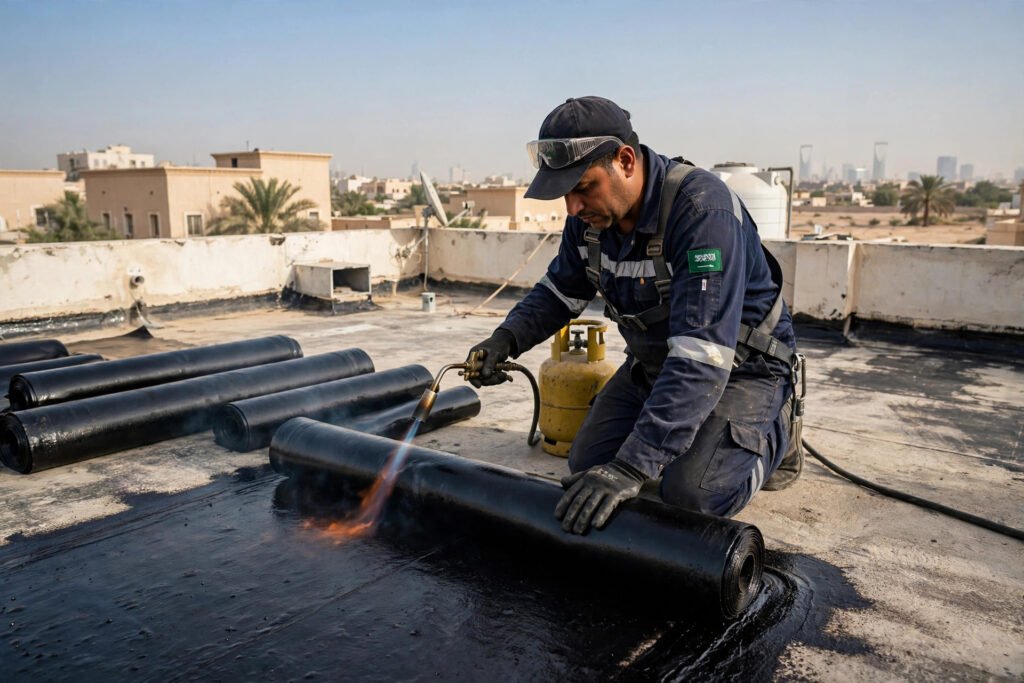
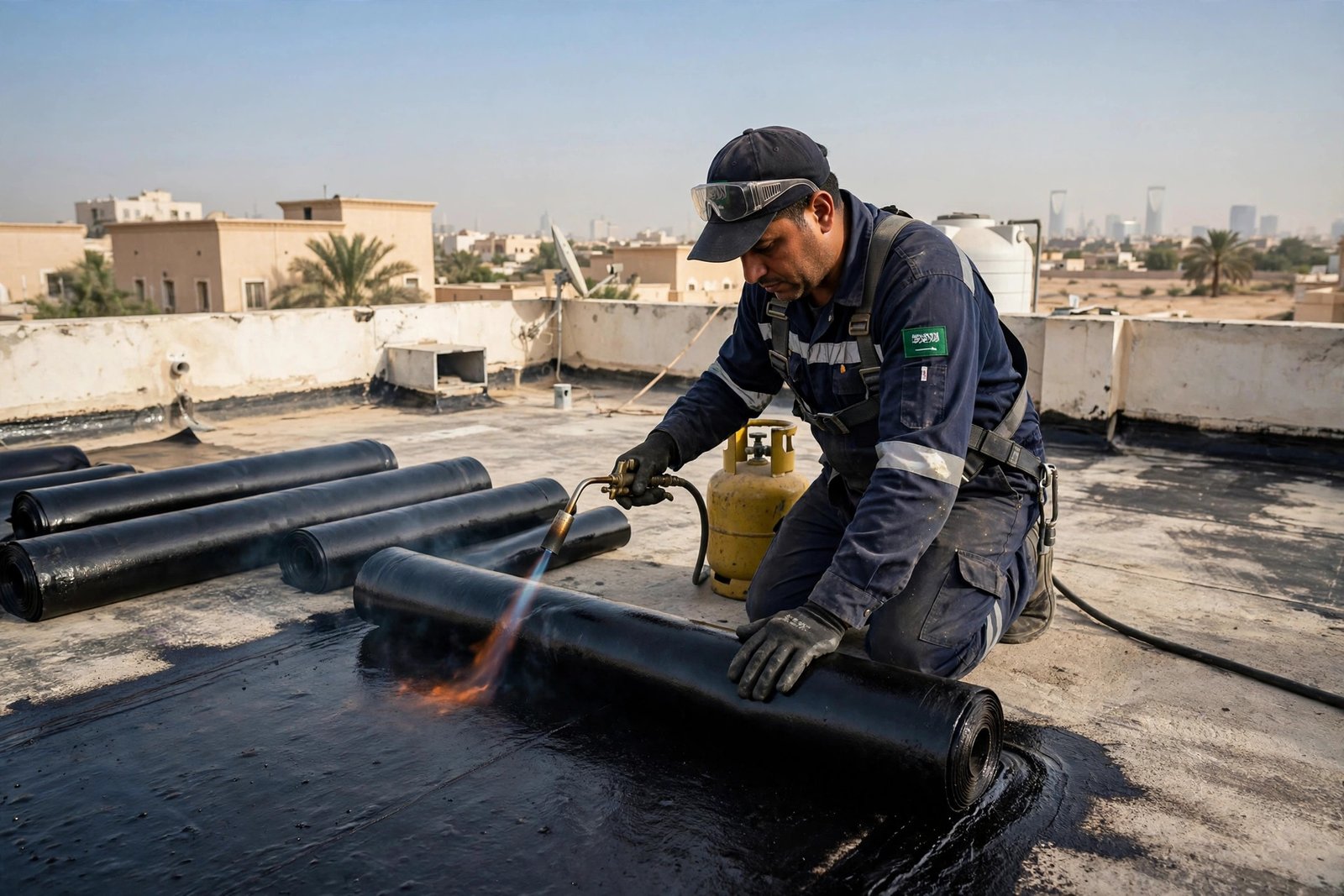
Bitumen waterproofing uses thick, pre-made sheets (called membranes) made from modified asphalt. They are rolled out over the roof and sealed together with heat from a gas torch, forming a continuous black barrier. Liquid waterproofing, on the other hand, is a thick paint-like coating (usually polyurethane or acrylic based) that is brushed, rolled, or sprayed onto the surface, where it cures into a seamless rubber-like skin.
Both are proven systems. The right choice depends on your roof shape, your budget, and how much maintenance you are willing to do. If you want a full overview of protecting your roof, start with our guide to roof waterproofing in Riyadh before you decide.
Difference 1: How They Are Applied
Application is the biggest practical difference. Bitumen membranes are heavy sheets, usually 3 to 4 millimeters thick, that must be positioned carefully and heat-welded at every overlap with a torch. This is skilled, labor-intensive work, and it requires an open flame on your roof, so it should always be done by trained professionals with proper safety equipment.
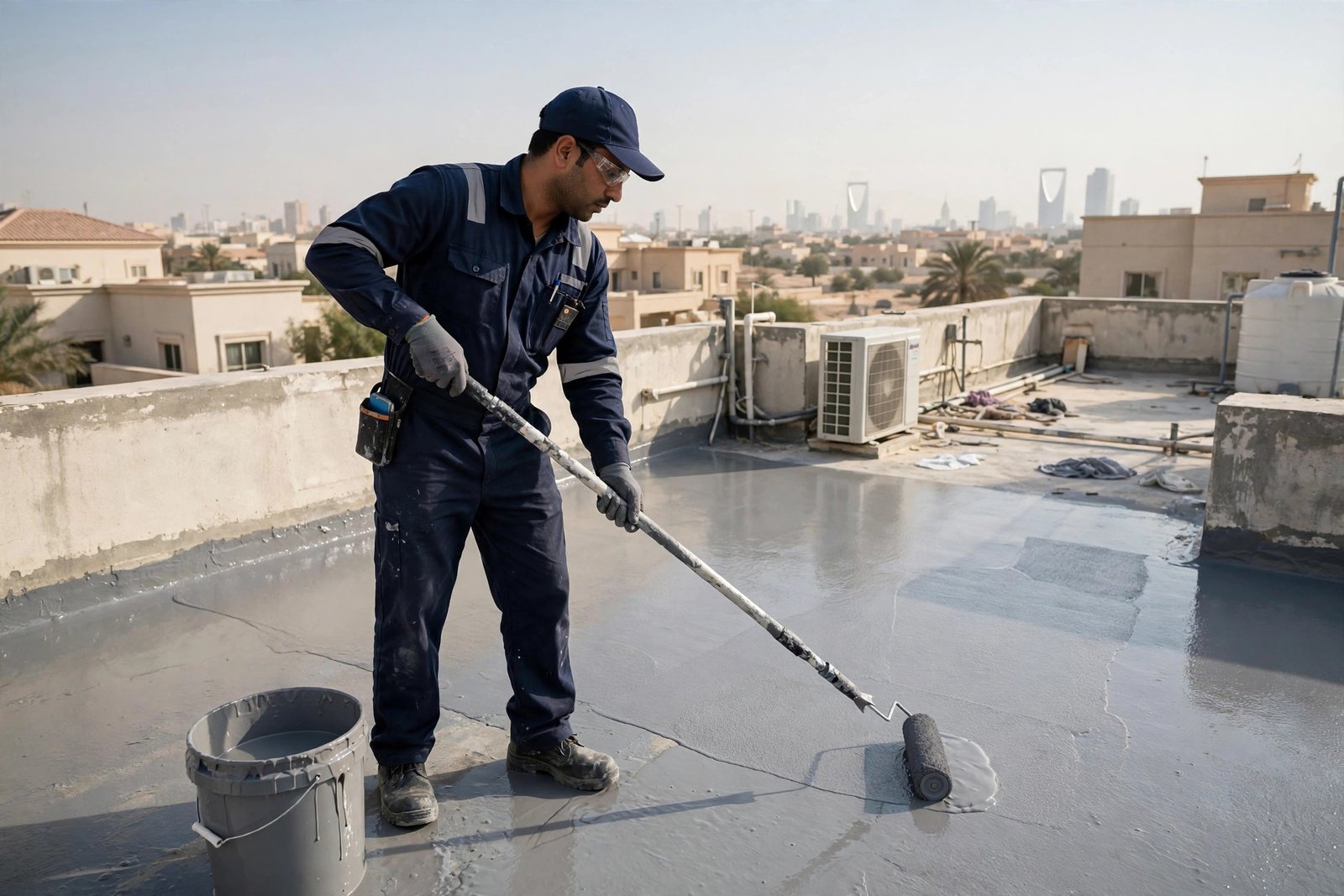
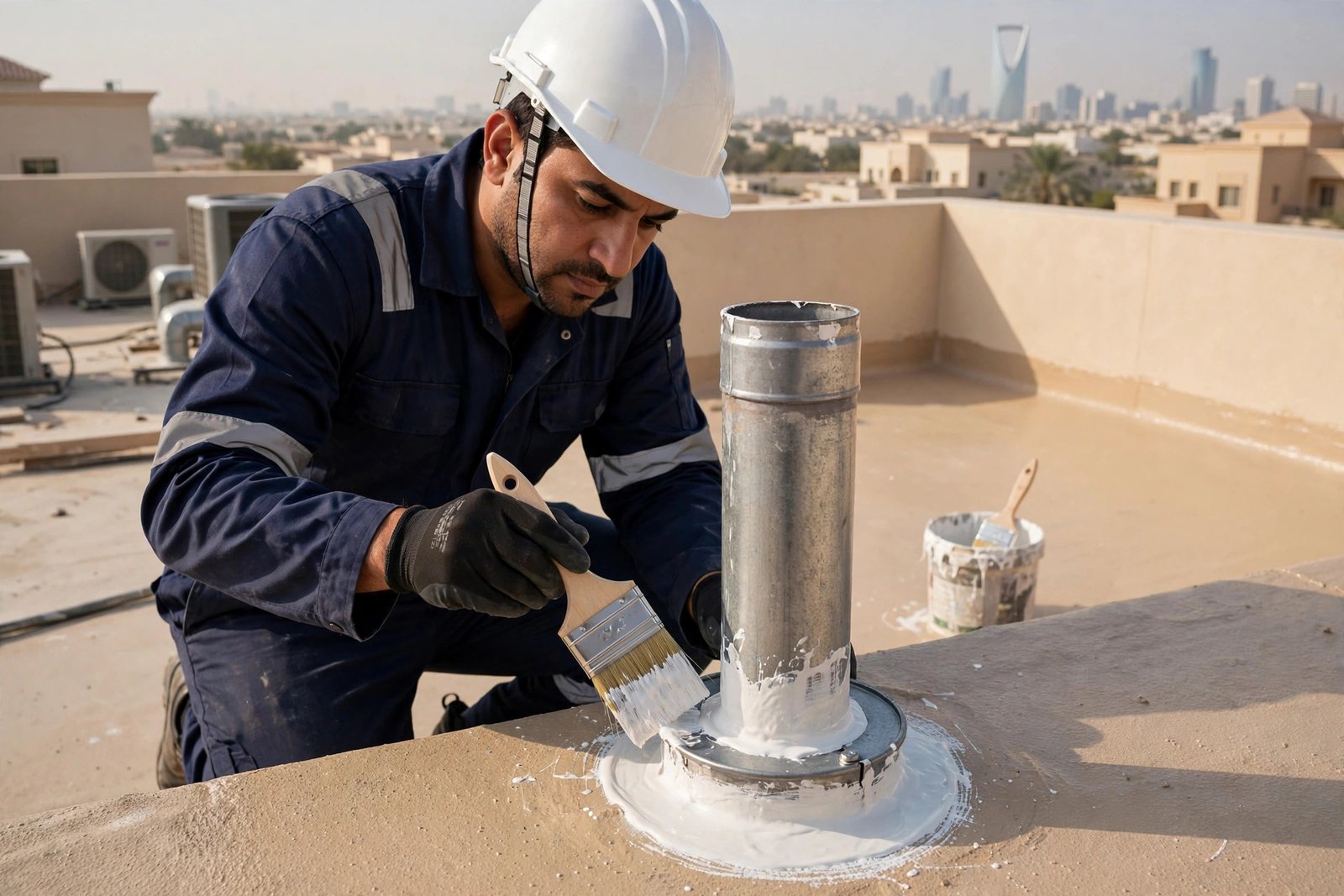
Liquid waterproofing is far simpler to apply. A technician primes the surface, then builds up two or three coats with a brush, roller, or spray machine. The liquid flows into small cracks and around pipes, drains, and corners on its own, creating one seamless layer with no joints at all. On complex roofs with lots of details, liquid coatings are usually faster to install.
Difference 2: Upfront Cost Per Square Meter
Bitumen membrane systems generally cost more upfront. The sheets themselves are a manufactured product, and torch application demands certified labor, so material plus installation adds up. In Riyadh, full bitumen membrane systems with proper overlaps and edge detailing typically sit at the higher end of the market.
Liquid waterproofing coatings are usually cheaper per square meter because the material goes further and application is quicker. For large open roofs with few details, the savings can be significant. SheelTalab waterproofing starts at 50 SAR per meter (was 70 SAR), and we will always quote you both options so you can compare honestly, with no hidden extras.
Difference 3: Lifespan in Riyadh’s Climate
A properly installed bitumen membrane system can last 15 to 20 years. The sheets are thick and tough, and they handle foot traffic well, which matters on roofs with AC units and water tanks that need servicing. Their main enemy is direct UV exposure, so good systems are protected with a layer of gravel, tiles, or a reflective coating.
Liquid coatings typically last 10 to 15 years, depending on the product quality and the number of coats applied. Cheaper acrylic coatings degrade faster under Riyadh’s UV, while high-quality polyurethane systems hold up much better. Most liquid systems need a fresh top coat every 5 to 7 years to reach their full lifespan, so factor maintenance into your decision.
Difference 4: Handling Cracks, Joints, and Details
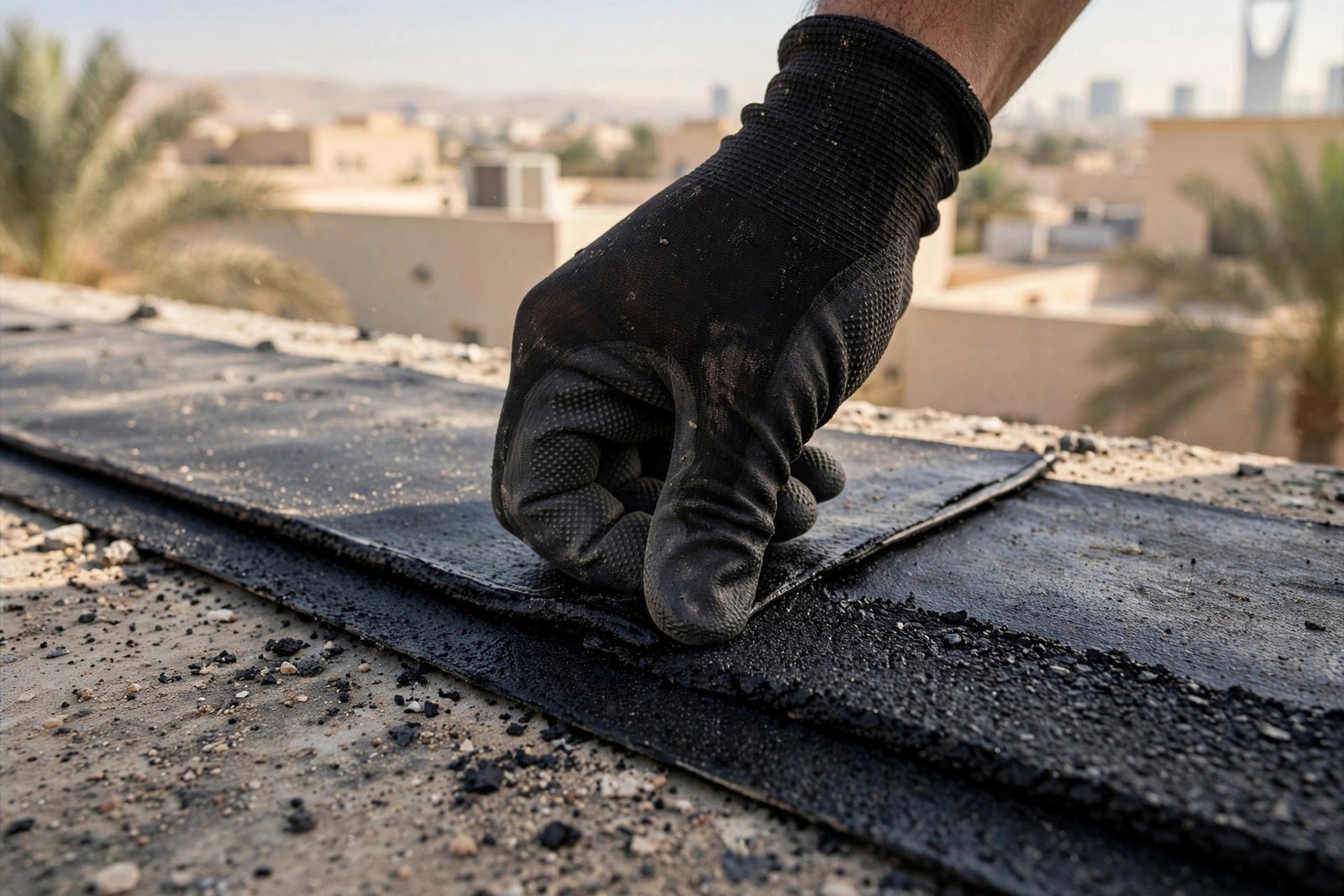
Every roof has weak points: pipe penetrations, drainage outlets, expansion joints, and the junction where the roof meets the parapet wall. Bitumen membranes handle these with cut pieces and extra torch-welded patches, which works well but creates more seams, and every seam is a potential weak point if the workmanship is poor.
This is where liquid waterproofing shines. Because it is applied as a fluid, it wraps around every detail in one continuous film with zero seams. For roofs with many AC drains, skylights, or odd shapes, liquid coatings often give a more reliable seal. See how we handle complex wet areas in our bathroom waterproofing guide, where detailing matters just as much.
Difference 5: UV and Heat Resistance
Riyadh’s sun is brutal on roofing materials. Standard black bitumen absorbs heat and degrades under UV unless it is protected. That is why quality bitumen jobs include a protective layer: aluminum-faced membranes, a reflective coating, or a screed of concrete or tiles on top. Without protection, the membrane’s lifespan drops sharply.
Many modern liquid coatings are formulated with UV-stable resins and reflective pigments, so they can be left exposed without extra protection. White or light-colored coatings even reflect heat, keeping the roof cooler and reducing the load on your AC. If you want to learn more about how waterproofing works (the general science), this overview of waterproofing explains the principles behind both systems.
Difference 6: Repairs and Maintenance
When a bitumen membrane is damaged, repair means cutting out the damaged section and torch-welding in a new patch. It is a reliable fix, but it needs the same skilled torch work as the original installation, and finding the exact leak point under a membrane can take some detective work.
Liquid coatings are far easier to repair: clean the area and brush on a new coat, which bonds to the old layer with no special equipment needed. The trade-off is maintenance: liquid systems need a fresh top coat every 5 to 7 years to stay at full strength, while a protected bitumen membrane can be largely left alone. Either way, an annual roof check after the rainy season is smart. Our water tank waterproofing service follows the same inspection-first approach.
Difference 7: Best Use Cases
Bitumen membranes are the best choice for large, flat, open roofs, new construction, and roofs that get regular foot traffic from maintenance staff. They are also the standard for foundations and basements, where the membrane can be buried and protected from the sun completely.
Liquid waterproofing wins on complex roofs with many details, on balconies and terraces, and for renovation jobs where removing the old surface is not practical. It is also ideal as a quick, cost-effective fix for an aging roof that is leaking now but will be fully redone in a few years.
Quick Comparison Table: Bitumen vs Liquid Waterproofing
Here is everything side by side, so you can compare at a glance before you call us for a quote.
| Feature | Bitumen Membrane | Liquid Waterproofing |
|---|---|---|
| Application method | Torch-welded sheets, skilled labor, open flame | Brush, roller, or spray, no special equipment |
| Upfront cost | Higher (material plus certified torch labor) | Lower (material goes further, faster to apply) |
| Typical lifespan | 15 to 20 years when UV-protected | 10 to 15 years with periodic recoating |
| Seams and details | Welded overlaps, more seams around details | Seamless, wraps pipes and corners perfectly |
| UV and heat resistance | Needs protective layer or reflective coating | Many formulas are UV-stable and heat-reflective |
| Foot traffic tolerance | Excellent, very puncture-resistant | Good, but thinner film needs care |
| Repair difficulty | Cut and torch-patch, needs skilled labor | Easy, clean and recoat |
| Best for | Large flat roofs, new builds, high traffic | Complex roofs, balconies, quick renovations |
Which One Should You Choose for Your Riyadh Home?
Still weighing bitumen vs liquid waterproofing? If your roof is large, flat, and you want the longest-lasting fix with minimal maintenance, go with a bitumen membrane system plus UV protection. If your roof has lots of pipes, drains, and odd shapes, or you need a fast and budget-friendly solution, liquid waterproofing is the smarter pick.
Still not sure? That is exactly what our free inspection is for. A SheelTalab technician will visit your villa, check the roof condition, measure the area, and recommend the system that fits your roof and your budget, with a clear quote before any work starts. We cover all of Riyadh with 45-minute rapid dispatch, 24/7 service, and every job is backed by our 30-day golden warranty.
The Bottom Line
The debate of bitumen vs liquid waterproofing has no single winner: bitumen offers maximum durability and puncture resistance, while liquid coatings offer seamless detailing, easier repairs, and lower upfront cost. What matters most is honest assessment of your roof, quality materials, and skilled installation. Get those three right, and either system will keep your home dry for years. Call SheelTalab at 0570328344 or 0570328344 today, and let our certified technicians handle the rest.