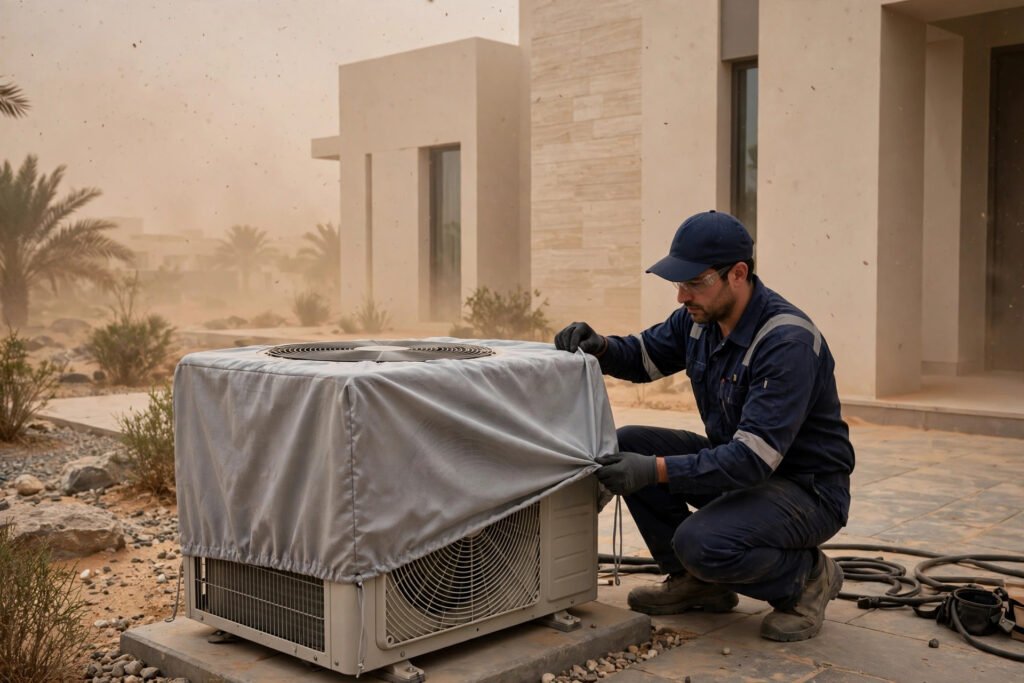
Riyadh’s shamal winds can turn a clear afternoon into a wall of dust in minutes. When that happens, your outdoor AC unit becomes the hardest working and most vulnerable machine on your property. Following proven dust storm ac protection steps keeps your cooling reliable, your energy bills low, and your compressor safe through every storm of the season.
Fine desert dust is not ordinary dirt. It is powdery and persistent, and it coats condenser coils like a blanket that blocks heat transfer. A dust-choked outdoor unit works harder, cools less, and can fail exactly when you need it most. The good news is that a few simple steps, done before and after each storm, prevent most of this damage. Below are the seven steps our technicians recommend to every homeowner in Riyadh.
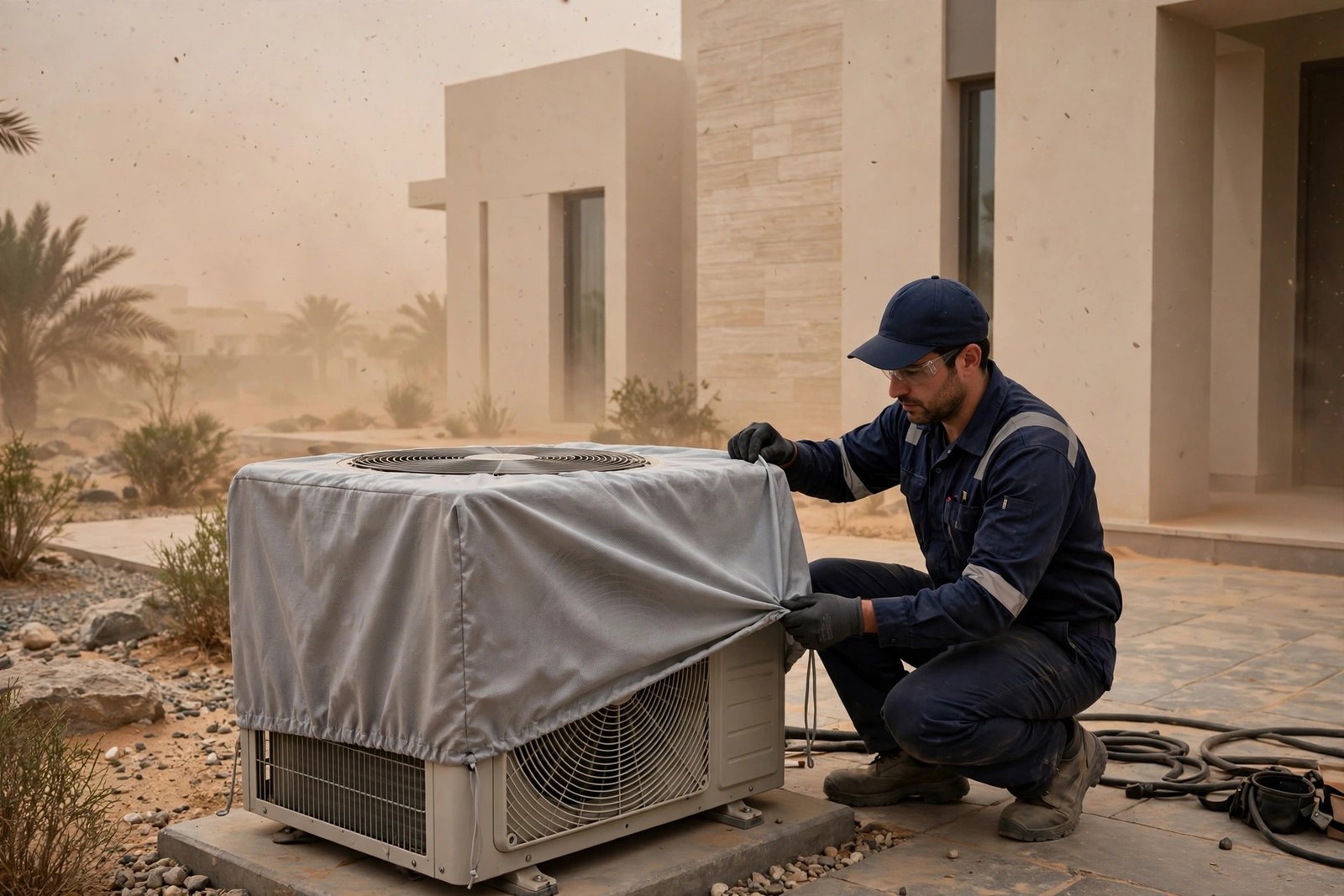
Dust Storm AC Protection Steps: Why Your Outdoor Unit Is at Risk
Your outdoor unit, called the condenser, is built to move heat out of your home. Its metal fins pull in huge volumes of air, which means that during a dust storm they also pull in huge volumes of dust. Within hours, fine sand can clog the coil, slow the fan, and coat the electrical contacts. The unit then runs longer cycles, draws more power, and strains the compressor, the most expensive part to replace.
Riyadh’s climate makes this worse. Storms here arrive with little warning from spring through early autumn, exactly when your AC is running hardest. One storm leaves a light film of dust, but three or four storms in a season turn that film into a thick, baked-on layer. Left untreated, the buildup causes weak airflow, warm supply air, frozen indoor coils, and sudden breakdowns on the hottest days of the year. A post-storm service visit costs far less than a compressor replacement.
Before the Storm: 4 Protection Steps
The best time to protect your AC is before the dust arrives. These dust storm ac protection steps take less than 30 minutes and make the biggest difference to your unit’s lifespan.
Step 1: Switch Off the Outdoor Unit
When a heavy storm rolls in, turn the AC off at the thermostat. If the storm looks severe, switch off the outdoor disconnect box as well. A running fan actively pulls dust deep into the coil, while a still unit only collects dust on the surface, which is far easier to clean later. Never open the unit or spray water into it while it is powered, and wait until the storm fully passes before switching it back on.
Step 2: Cover the Condenser With a Breathable Cover
A fitted, breathable AC cover keeps most dust off the coil and fan. Choose a cover made for outdoor condensers with ventilation panels that let trapped heat escape. Avoid wrapping the unit in plastic sheeting, which traps moisture and can corrode electrical parts. Always remove the cover before you switch the AC back on, since running a covered unit will overheat it within minutes. For year-round performance, pair seasonal covers with regular servicing like our Split AC Maintenance in Riyadh, which includes nine checks that prevent breakdowns.
Step 3: Clear a Safe Zone Around the Unit
High wind turns loose objects into projectiles. Move plant pots, outdoor furniture, and children’s toys away from the condenser before every storm. Trim branches and shrubs so at least 60 cm of clear space surrounds the unit on all sides, which also improves airflow on normal days. Check that the unit sits level on its concrete pad so storm water drains away instead of pooling under the electrical box.
Step 4: Secure the Mounting Against High Wind
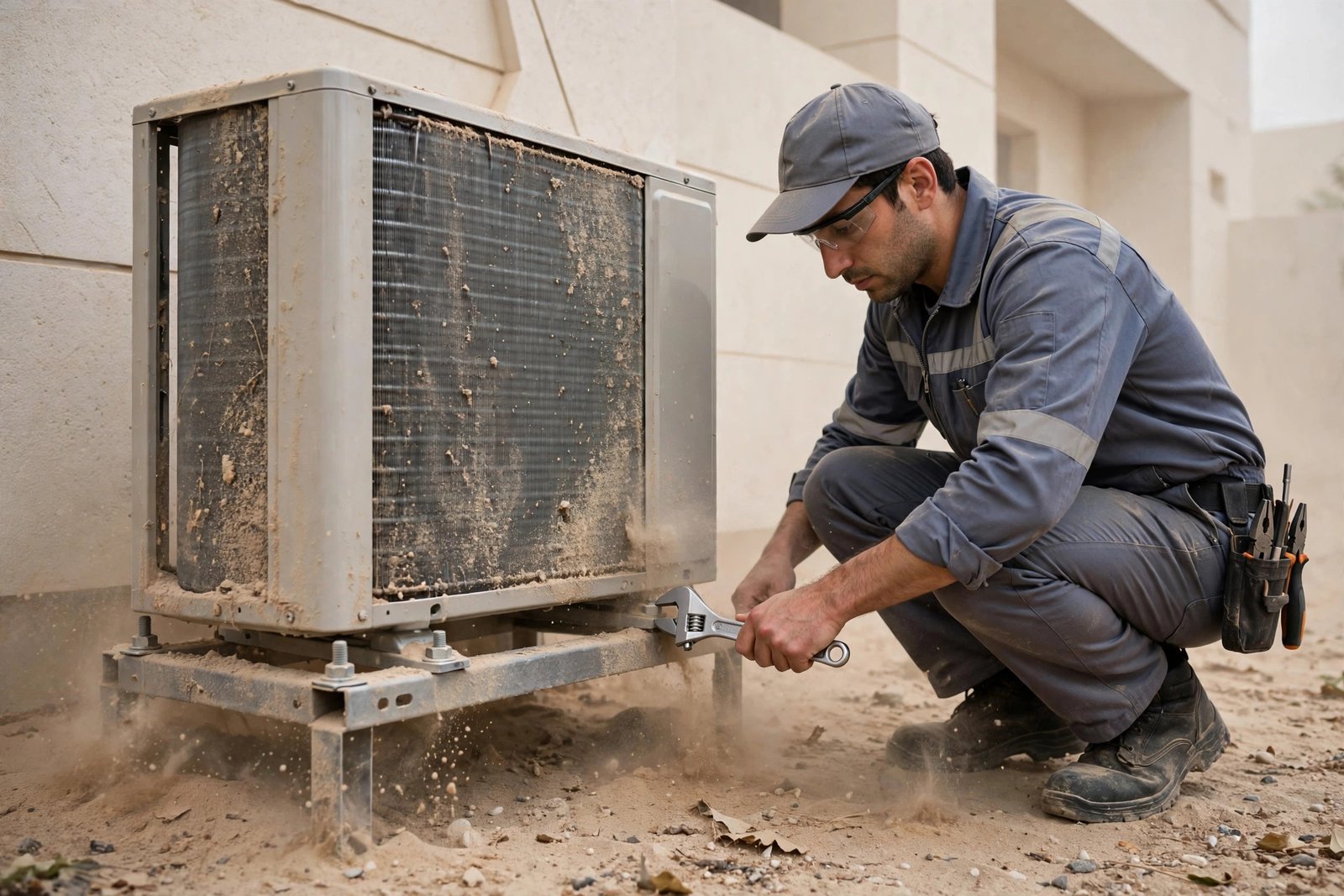
Vibration loosens bolts over time, and a loose unit rattles dangerously in storm winds. Tighten the mounting bolts, check the rubber vibration pads, and confirm the refrigerant line insulation is intact with no exposed copper. If the unit rocks on its pad or the lines are damaged, book a technician before the next storm. A secure, level mount is one of the first things our team checks during a Split AC Installation in Riyadh, and it matters just as much for units that have been running for years.

After the Storm: 3 Clean-Up Steps
The storm passes, but the dust stays behind. These three steps bring your unit back to full efficiency.
Step 5: Remove the Cover and Brush Off Surface Dust
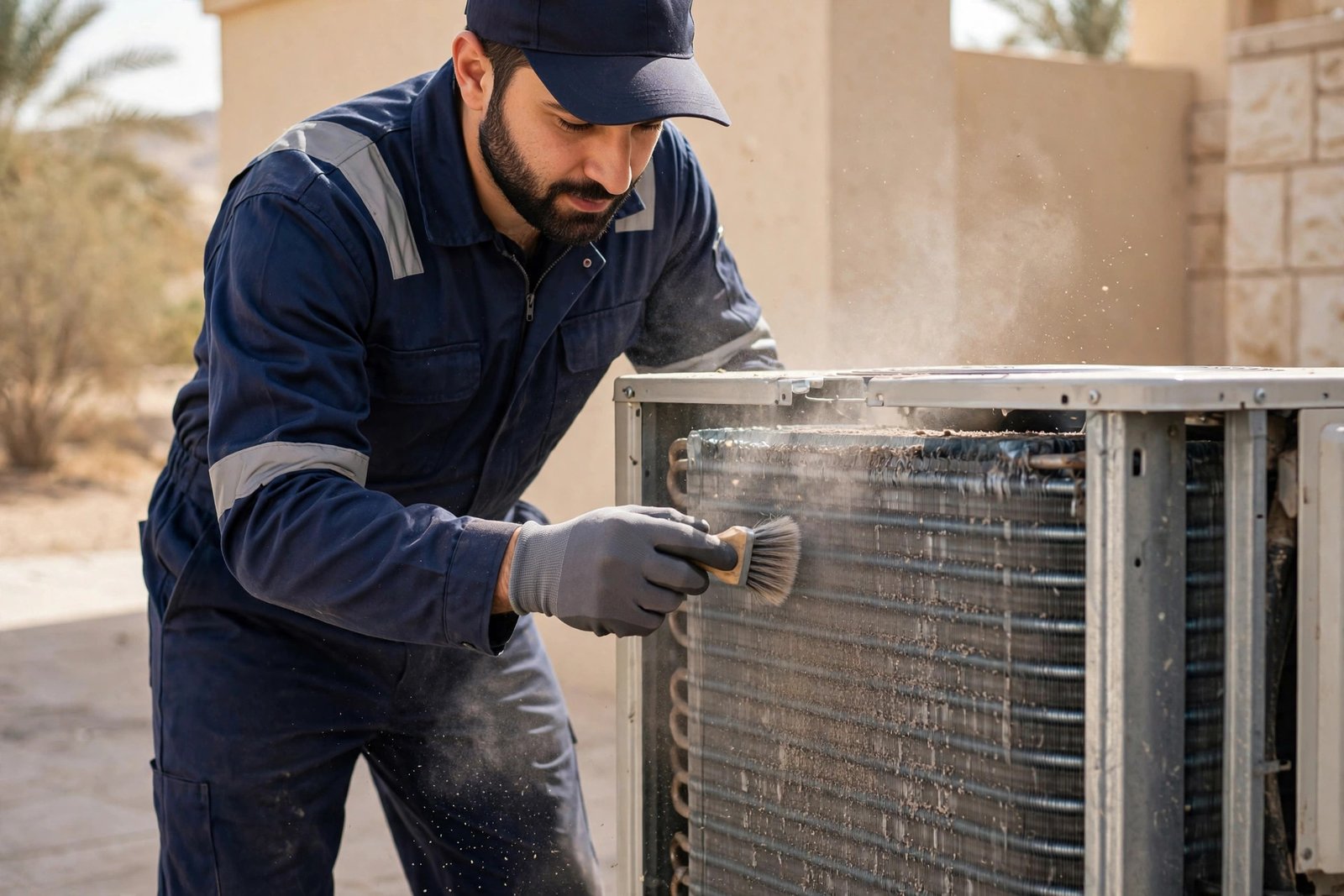
Wait until the air fully clears, then remove the cover and brush loose dust off the cabinet with a soft brush. Work from top to bottom so dust falls away from the fan opening rather than into it. Do not use a pressure washer on the coil fins, because bent fins block airflow just as badly as dust does. A gentle rinse with a garden hose from the inside out is the most you should attempt yourself.
Step 6: Clean or Replace the Indoor Filters
Dust storms push fine particles indoors too, and clogged filters are the most common cause of weak cooling after a storm. A blocked filter starves the system of airflow and can freeze the evaporator coil, which then drips water inside your home. Slide the filters out, rinse washable ones, and replace disposable ones. If your filters are more than two months old, change them after every major storm. For a deeper reset, our Split AC Deep Chemical Wash in Riyadh removes the dust that filters cannot catch.
Step 7: Book a Professional Coil Clean and Inspection
Surface brushing cannot reach dust packed between coil fins, which is why the final one of these dust storm ac protection steps is a professional visit. Our certified technicians flush the coil with a deep chemical wash, check refrigerant pressure, test the electrics, and confirm the unit is storm-ready. The Split AC Deep Chemical Wash costs 200 SAR (was 250), and AC Diagnostics and Rapid Repair starts at 120 SAR (was 180). Every visit includes 45-minute rapid dispatch anywhere in Riyadh, 24/7 availability, certified technicians with genuine parts, and our 30-day golden warranty.
Warning Signs Your AC Needs Help After a Storm
Some damage hides until the next heatwave. Call a professional if you notice warm air from the vents, short cycling, a tripping breaker, water leaking indoors, or a sudden jump in your electricity bill. These are classic signs of a dust-damaged coil, a struggling compressor, or an electrical fault. The U.S. Department of Energy recommends regular air conditioner maintenance to keep efficiency high, and that advice applies double in Riyadh’s dusty climate.
Conclusion: Protect Your AC Before the Next Storm
Dust storms are part of life in Riyadh, but AC breakdowns do not have to be. These dust storm ac protection steps, switching off the unit, covering the condenser, clearing the area, securing the mount, brushing off dust, refreshing filters, and booking a professional clean, take little time and save you from costly repairs. With a 4.9/5 rating from more than 18,500 jobs, SheelTalab keeps Riyadh’s ACs storm-ready all year. Call 0570328344 or 0570328344, and we will be at your door within 45 minutes.