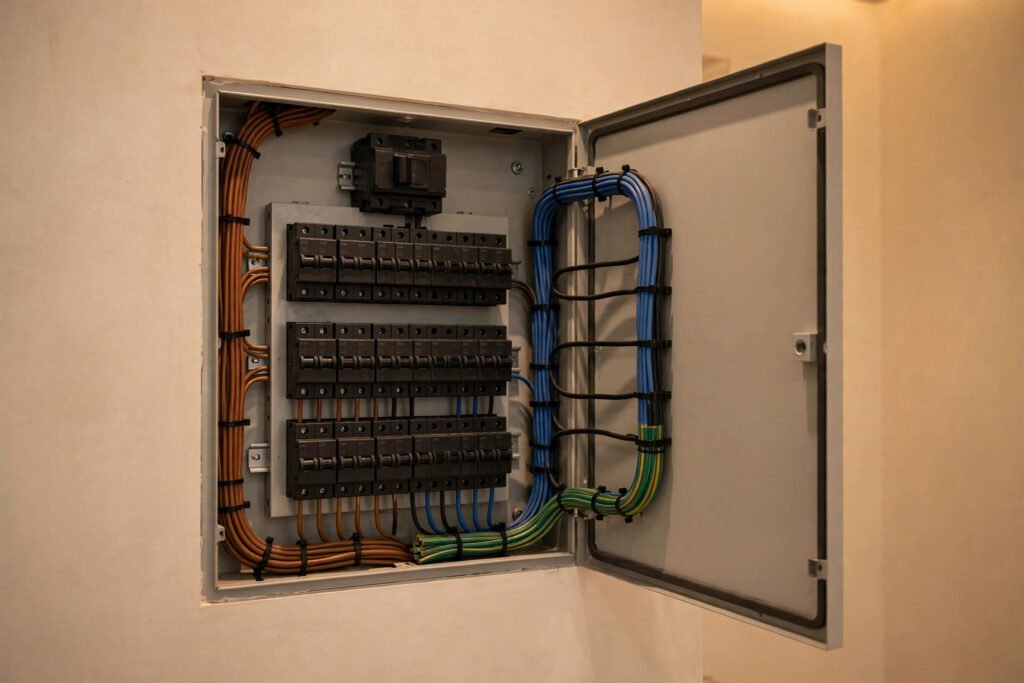
It is 2am, the bedroom AC has died, and you are standing in front of your electrical panel with a phone flashlight, staring at two rows of identical black breakers with no idea which one feeds the AC. An electrical panel labeling system is the simple upgrade that ends this guessing game for good, and you can build one in about an hour.
Riyadh villas make this problem worse than in most homes. A typical villa panel feeds split ACs in every room, water heaters, a pressure booster pump, the majlis, outdoor lighting, and sometimes a separate annex. When nothing is labeled, every tripped breaker becomes a 20-minute treasure hunt, and in a real emergency, like a burning smell from an appliance, those wasted minutes matter.
The good news is that labeling your panel is safe, cheap, and straightforward. Below is the exact 5-step process our electricians follow on every job, adapted so any homeowner can do it with a marker, some labels, and a patient helper.
What Is an Electrical Panel Labeling System?
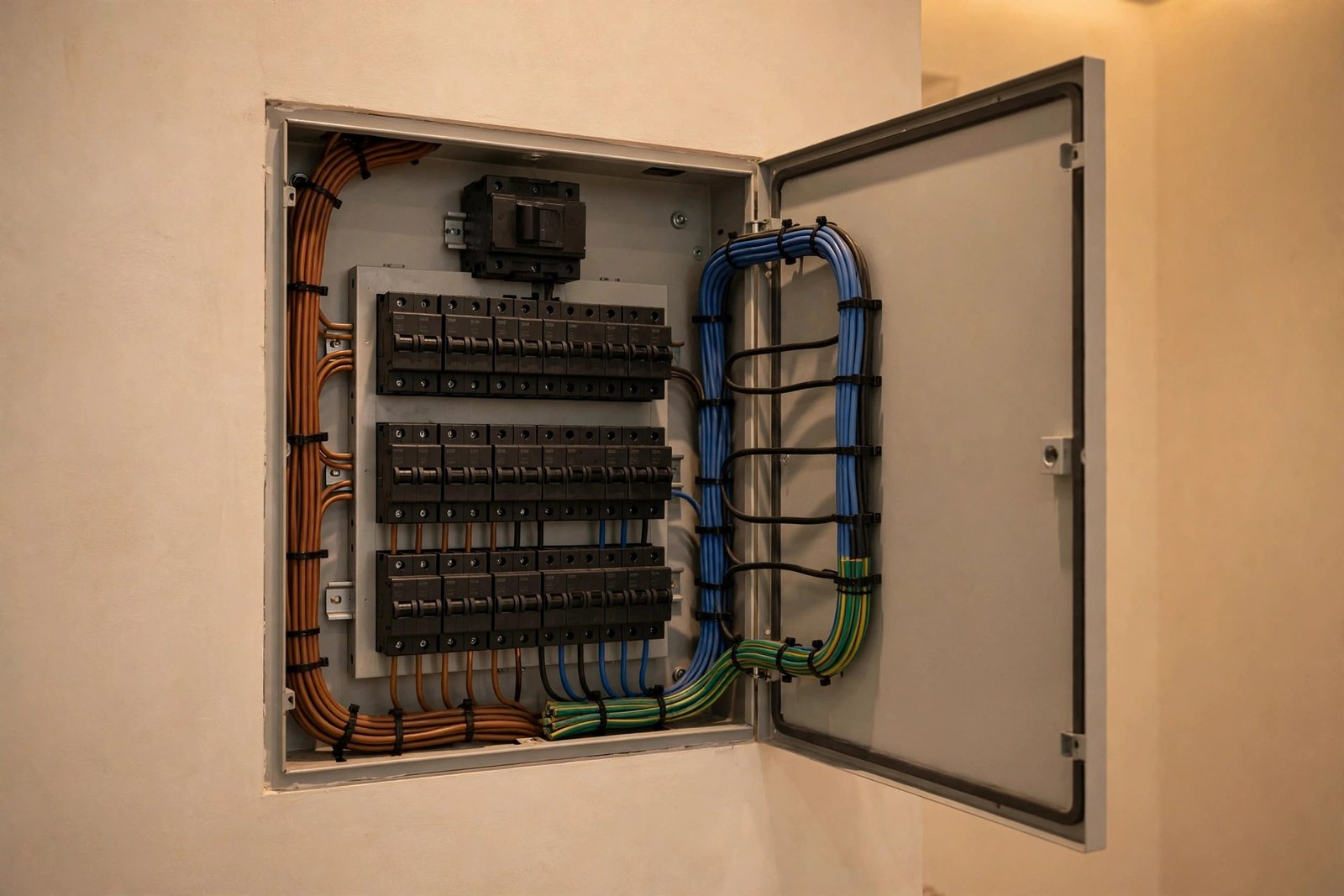
An electrical panel labeling system is a method of mapping every circuit breaker in your distribution board to the exact rooms and appliances it controls, then marking each breaker with a clear, durable label. It has two parts: short labels at each breaker, and a master directory chart fixed to the inside of the panel door that lists every circuit, its breaker size, and what it powers.
Without a system like this, most people resort to flipping breakers at random until the right thing turns off. That works until you have guests over, a tenant in the annex, or a domestic worker who needs to reset a tripped breaker while you are at work. A proper electrical panel labeling system turns that guessing game into a 10-second task anyone in the house can do confidently.
Your 5-Step Electrical Panel Labeling System
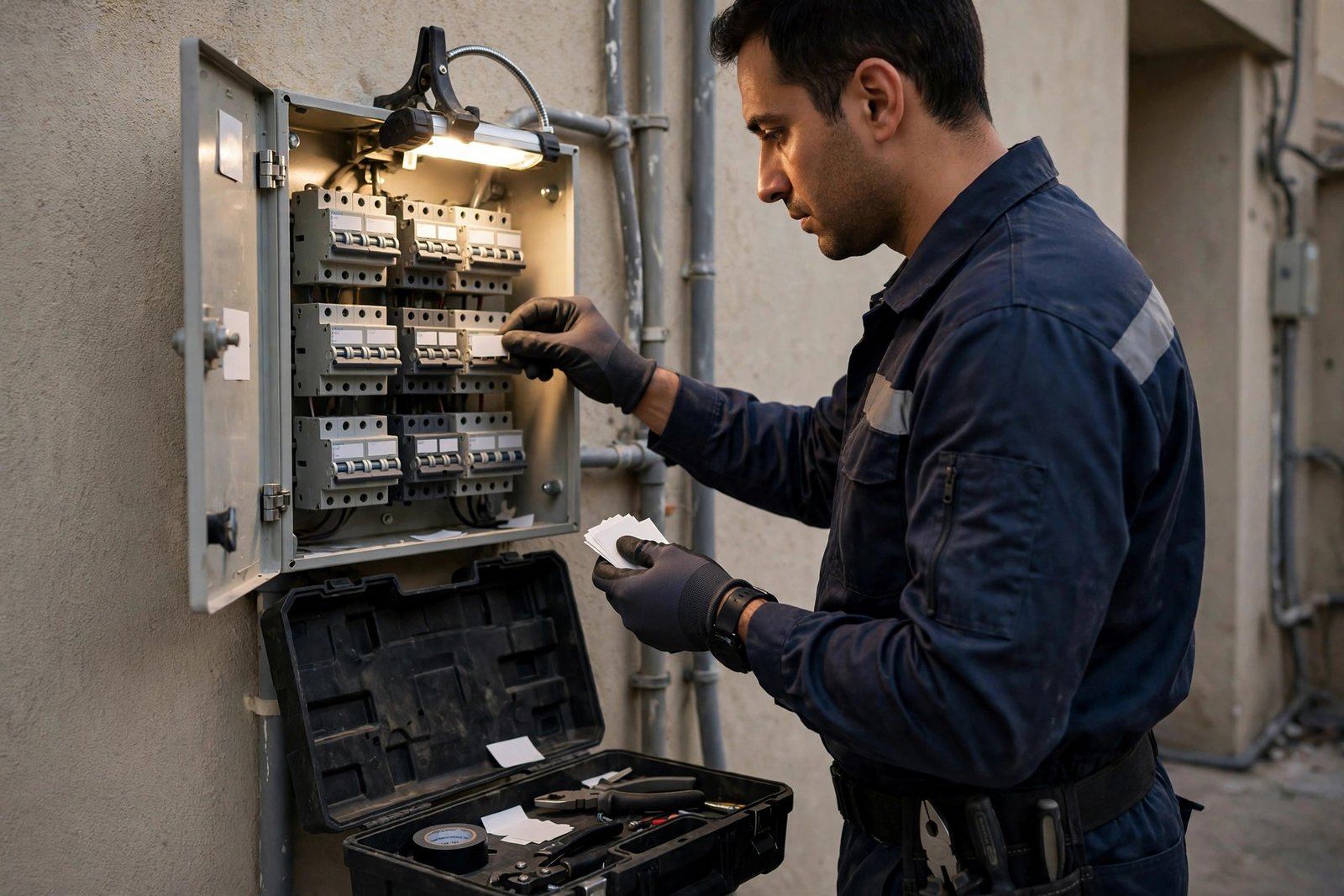
Set aside about an hour, grab a partner, and work through these five steps in order. Steps 1 and 2 are the thinking work, steps 3 to 5 are the doing.
Step 1: Map Every Circuit
Start by finding out what each breaker actually controls. With a partner on the phone or shouting across rooms, switch off one breaker at a time and note everything that loses power: lights, sockets, AC units, the water heater, the pump. Write it all down in a notebook or your phone. Do this in daylight so you are not stumbling around in the dark, and unplug sensitive electronics first. Most villa panels have 18 to 36 breakers, so expect this step to take 20 to 30 minutes.
Step 2: Design a Clear Label Format
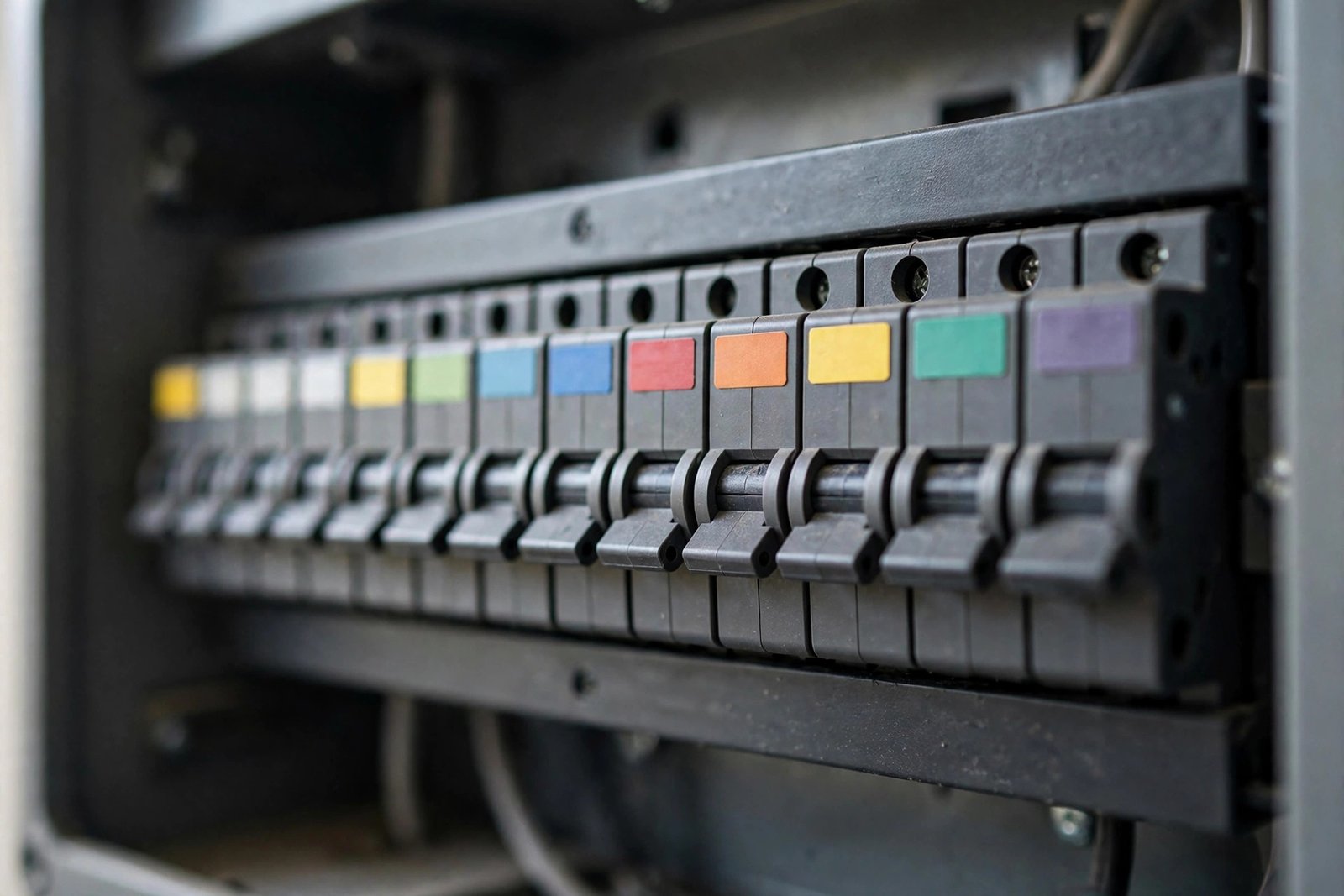
Consistency is what separates a real system from a mess of sticky notes. Use a short format for every label: room name plus appliance, such as “Majlis AC”, “Kitchen Sockets”, “Water Heater”, “Stairwell Lights”, or “Annex Lights”. Number every circuit (C1, C2, C3) and keep a legend of any abbreviations. In Riyadh homes, where family members, tenants, and domestic workers may read different languages, bilingual labels in English and Arabic are a smart upgrade that costs nothing extra.
Step 3: Attach Durable Labels
Skip the masking tape, which dries out and falls off in Riyadh heat within months. Use proper electrical label tape, printed adhesive labels, or a handheld label printer if you have one. Place each label directly beneath its breaker, aligned neatly so the panel stays readable. If your panel has a dead-front cover with numbered slots, match each label to the slot number so nothing shifts out of place later.
Step 4: Build the Master Circuit Directory
This is the step most DIY guides skip, and it is the most valuable part of the system. Create a full chart for the inside of the panel door with four columns: circuit number, label, breaker rating in amps, and notes. The notes column is where you record the details that matter in a fault, like “dedicated line, 30A, water heater” or “shares with upstairs sockets”. Laminate the chart or slide it into a clear plastic sleeve so it survives years of heat and dust, and take a photo of it for your phone.
Step 5: Test, Verify, and Schedule Reviews
Flip each breaker once more to confirm every label matches reality, then leave the directory in place. Once a year, exercise every breaker by switching it off and back on, which keeps the internal contacts clean and is recommended by breaker manufacturers and safety bodies. Revisit your labels after any electrical work, a new appliance, or a renovation, because an outdated directory is almost as bad as none at all.
Panel Safety Rules Before You Start
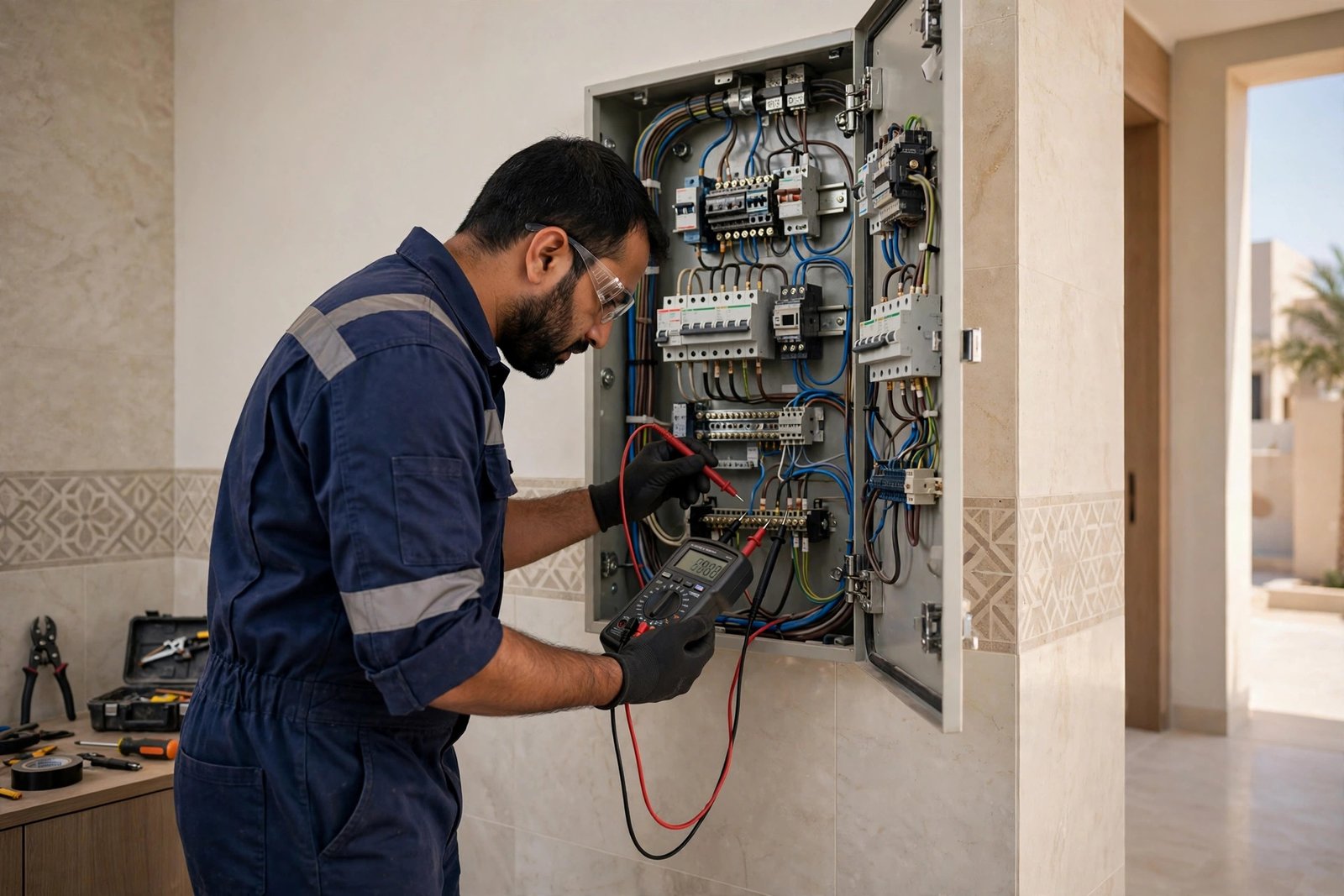
Mapping and labeling are safe for homeowners, but the panel itself deserves respect. Never touch the thick main cables, bus bars, or any loose wire inside the box. Keep the panel dry, keep at least a meter of clear space in front of it, and never force a breaker that resists switching. If you see scorch marks, hear buzzing, or find a breaker that feels hot, stop immediately and call a professional.
The NFPA electrical safety checklist lists frequent breaker tripping, warm or discolored outlets, and burning smells as warning signs that call for a qualified electrician rather than DIY. If your circuit breaker keeps tripping in your Riyadh home, labeling will not fix the underlying fault, so get it diagnosed first.
When to Call a Professional Electrician in Riyadh
Labeling is DIY-friendly, but some panel jobs are not: adding new circuits, replacing faulty breakers, upgrading an overloaded panel, or tracking down why half the villa flickers when the AC kicks in. These are the warning signs your home needs an electrician fast, and delaying them risks appliance damage or worse.
SheelTalab’s certified electricians handle full panel inspections, professional circuit mapping, and installing a complete electrical panel labeling system as part of every visit. Our electrician service is 150 SAR (was 190, labor only, materials extra), with 45-minute rapid dispatch anywhere in Riyadh, 24/7 availability, a 30-day golden warranty, and a 4.9/5 rating from more than 18,500 jobs. Call 0570328344 or 0570328344, and for urgent faults our emergency electrician in Riyadh is on call around the clock.
Conclusion: A Small Job With a Big Payoff
Once your electrical panel labeling system is in place, tripped breakers, power cuts, and maintenance visits all get faster and safer for everyone in the house. It is about an hour of work today that saves you from midnight guesswork for years. And if you would rather have a certified electrician map, test, and label your panel for you, SheelTalab is one call away.