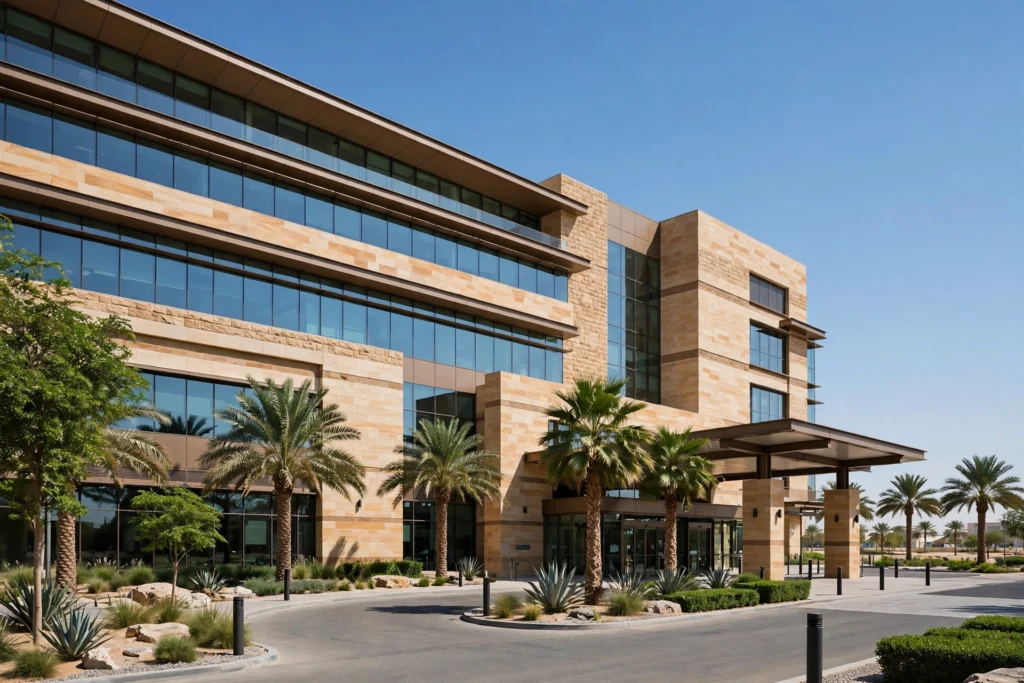
Hospitals are among the most demanding environments for any air conditioning system. In Riyadh, where summer temperatures push past 47°C, a healthcare facility cannot afford a single hour of HVAC failure. That is why hospital HVAC standards compliance is treated as a patient safety issue, not just a maintenance task. Ventilation, filtration, and temperature control directly affect infection rates, surgical outcomes, and staff performance.
Saudi Arabia’s healthcare sector follows a strict set of rules. The Saudi Central Board for Accreditation of Healthcare Institutions, known as CBAHI, requires hospitals to document and maintain their HVAC systems to recognized international benchmarks. The most important of these is ASHRAE Standard 170, which sets minimum ventilation requirements for healthcare facilities worldwide. Facilities that ignore hospital HVAC standards compliance risk failed accreditation surveys, patient harm, and costly emergency repairs.
In this guide, we break down the 6 compliance facts every Riyadh hospital, clinic, and medical center should know. Whether you manage a large hospital or a small private clinic, these facts will help you keep your facility safe, comfortable, and fully compliant. SheelTalab supports Riyadh healthcare facilities with certified HVAC technicians, 24/7 rapid response, and maintenance programs built around compliance documentation.
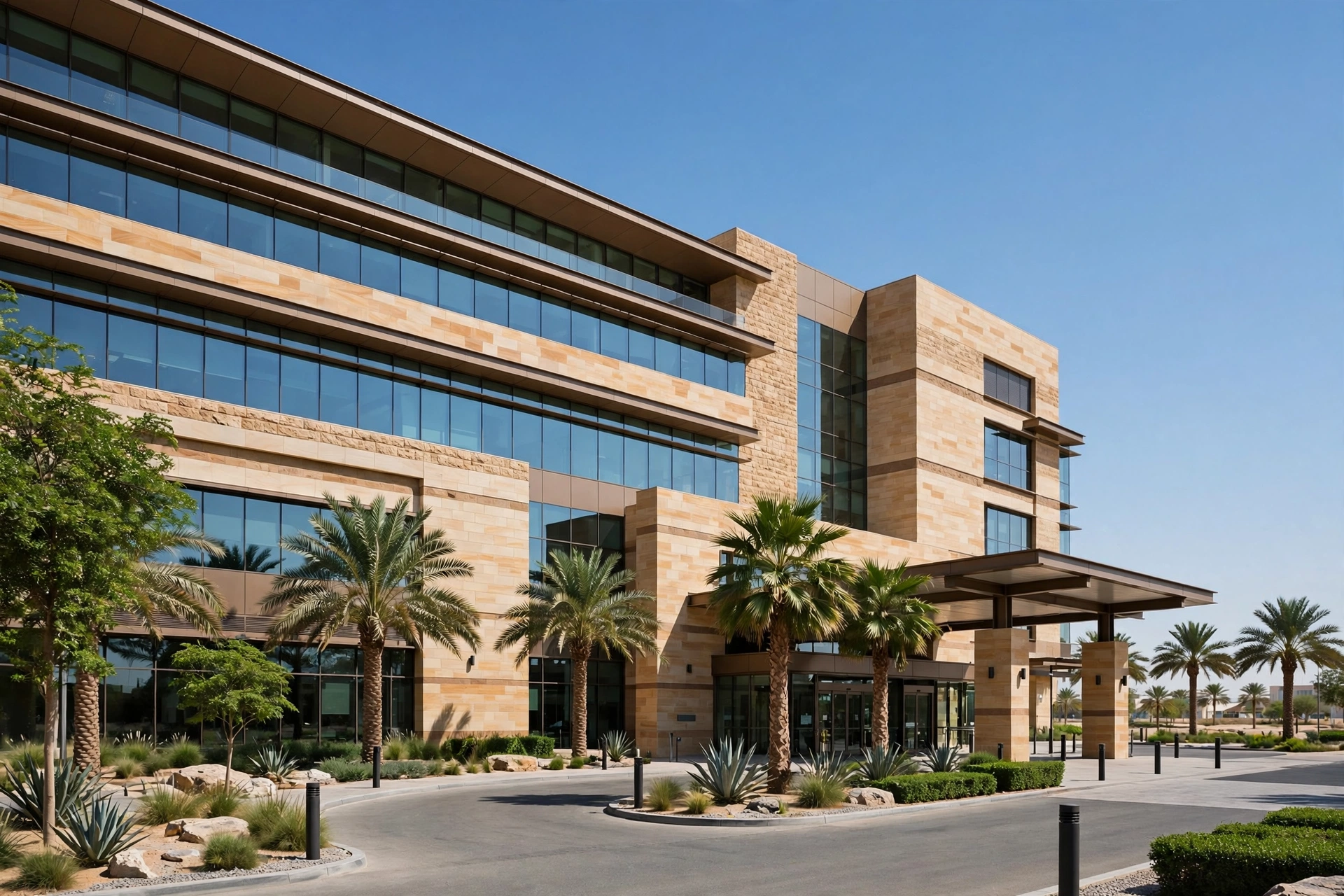
Fact 1: Hospital HVAC Standards Compliance Starts With ASHRAE Standard 170
The foundation of hospital HVAC standards compliance is ASHRAE Standard 170, titled Ventilation of Health Care Facilities. This standard defines how much outdoor air and total air each room in a hospital must receive, measured in air changes per hour. Different rooms have different requirements, because an operating theater needs far more ventilation than a waiting room.
For example, operating rooms typically require at least 20 total air changes per hour, with a significant portion coming from fresh outdoor air. Patient rooms, isolation rooms, and laboratories each have their own prescribed rates. A compliant hospital HVAC system is designed, balanced, and tested to deliver exactly these volumes to every space, room by room.
Why Air Changes Per Hour Matter in Riyadh Hospitals
Riyadh’s climate adds a layer of difficulty. Every cubic meter of 47°C outdoor air must be cooled, dehumidified, and filtered before it reaches a patient. Undersized or poorly balanced systems struggle to meet air change targets during peak heat, which silently pushes a facility out of compliance. Regular airflow testing and digital balancing catch these problems before an accreditation survey does. You can read more about the technical benchmarks in the official ANSI/ASHRAE/ASHE Standard 170-2025 publication.
Fact 2: Filtration Ratings Must Match the Room’s Risk Level
Not all hospital air is filtered equally, and compliance demands that filtration matches clinical risk. ASHRAE Standard 170 requires minimum efficiency reporting value (MERV) ratings that increase with the sensitivity of the space. General patient areas may need MERV 14 filters, while operating rooms, protective environment rooms, and isolation rooms often require HEPA filtration as the final stage.
Dirty or incorrectly rated filters are one of the most common compliance failures in Riyadh clinics. Desert dust loads filters fast, so replacement intervals must be shorter and strictly documented, because a clogged or poorly fitted filter protects nothing.
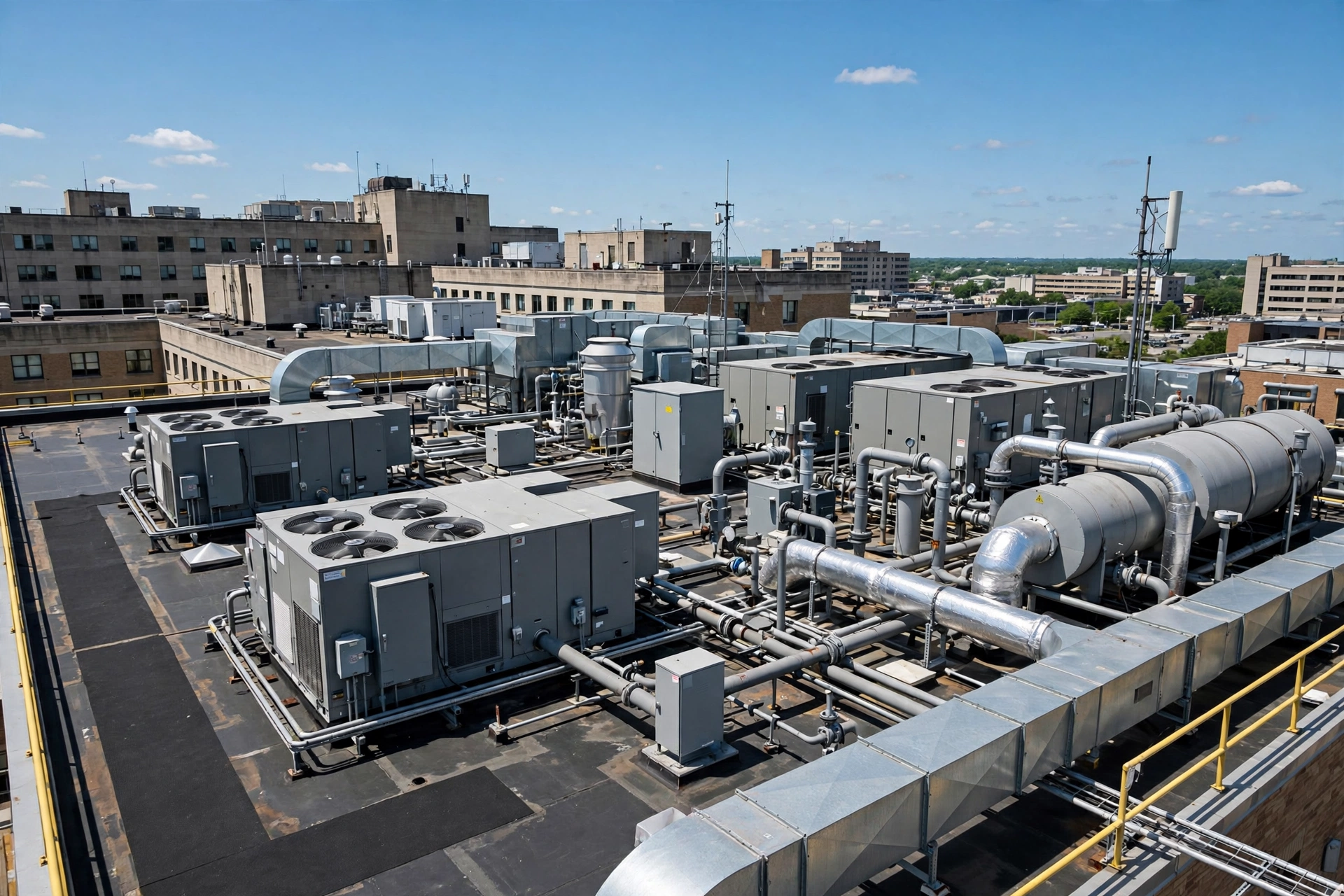
Fact 3: Pressure Relationships Between Rooms Are Legally Binding
Hospital HVAC standards compliance is not only about how much air enters a room, but also about where it flows. Protective environment rooms for immunocompromised patients must stay positively pressurized, so air flows outward and contaminants cannot drift in. Airborne infection isolation rooms must stay negatively pressurized, so contaminated air cannot escape into corridors.
These pressure relationships are measured in pascals and monitored continuously in many modern facilities. A door left open, a clogged return grille, or an unbalanced fan can flip a room from positive to negative pressure without anyone noticing. Annual or semi-annual pressure testing, logged and signed by a qualified technician, is what turns an assumption into proof of compliance during a CBAHI survey.
Fact 4: Compliance Requires a Scheduled Maintenance Contract, Not Occasional Repairs
Accreditation surveyors do not just check that the equipment works on inspection day. They review maintenance logs, filter change records, calibration certificates, and service reports going back months or years. A hospital that calls a technician only when something breaks has no documentation trail, and no trail means no compliance.
This is why a scheduled maintenance contract is the backbone of hospital HVAC standards compliance. A proper contract includes quarterly or monthly visits, filter replacement schedules, coil cleaning, motor lubrication, belt inspection, control calibration, and written reports after every visit. SheelTalab’s Central HVAC & Ducted Systems service, priced at 350 SAR (was 450) per visit, covers full inspection, heavy duty coil cleaning, duct sanitization, digital airflow balancing, filter upgrades, and motor lubrication for ducted, concealed, package, and VRV units. If you are weighing contract options, see our guide on central AC maintenance contracts in Riyadh.
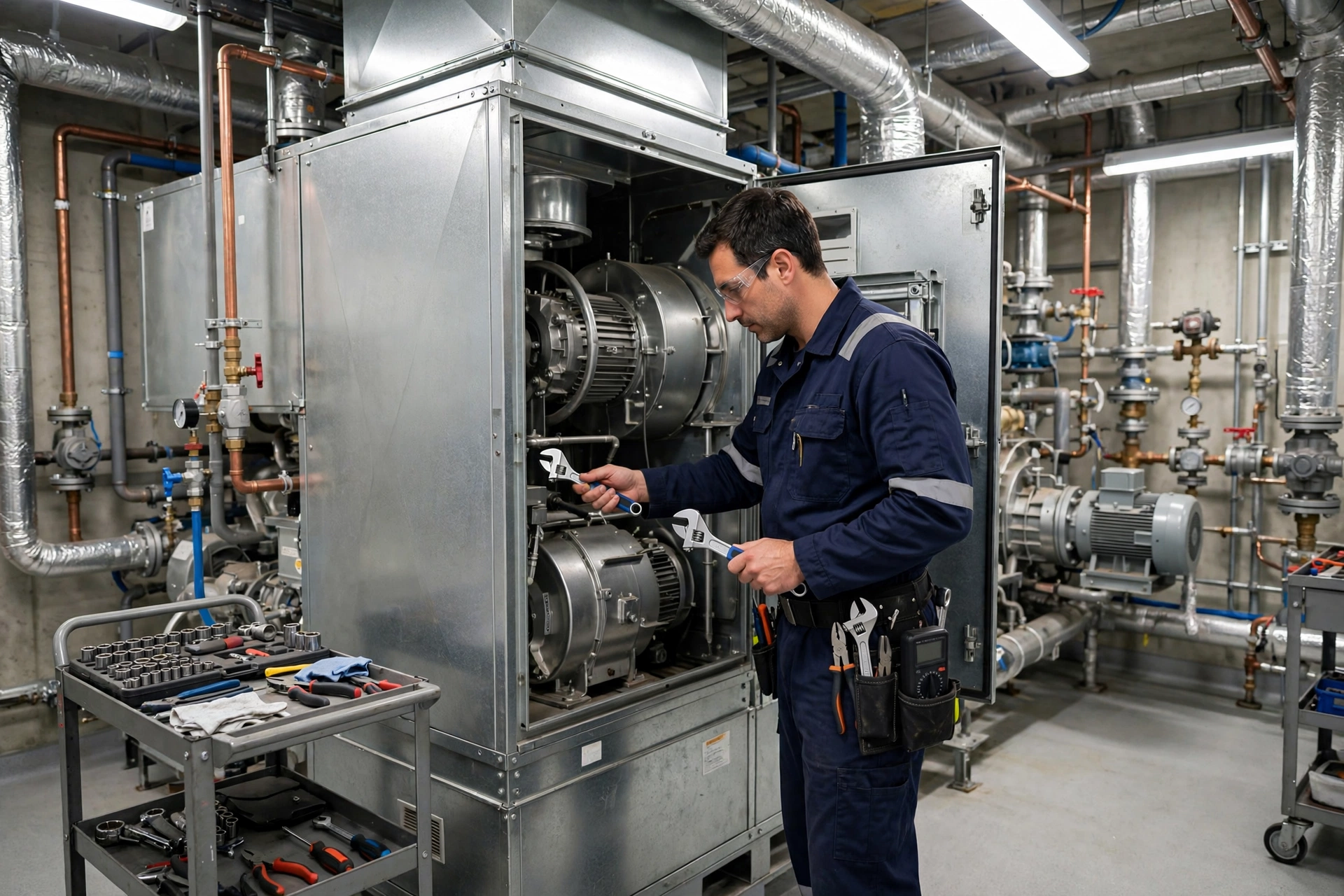
What Your Maintenance Log Must Show
Every visit should produce a dated report listing inspections, replacements, and measured readings such as airflow, temperature, and pressure. Keep them in one file a surveyor can review, because missing logs are treated the same as missing maintenance.
Fact 5: Duct Cleaning and Coil Sanitation Are Compliance Items, Not Cosmetics
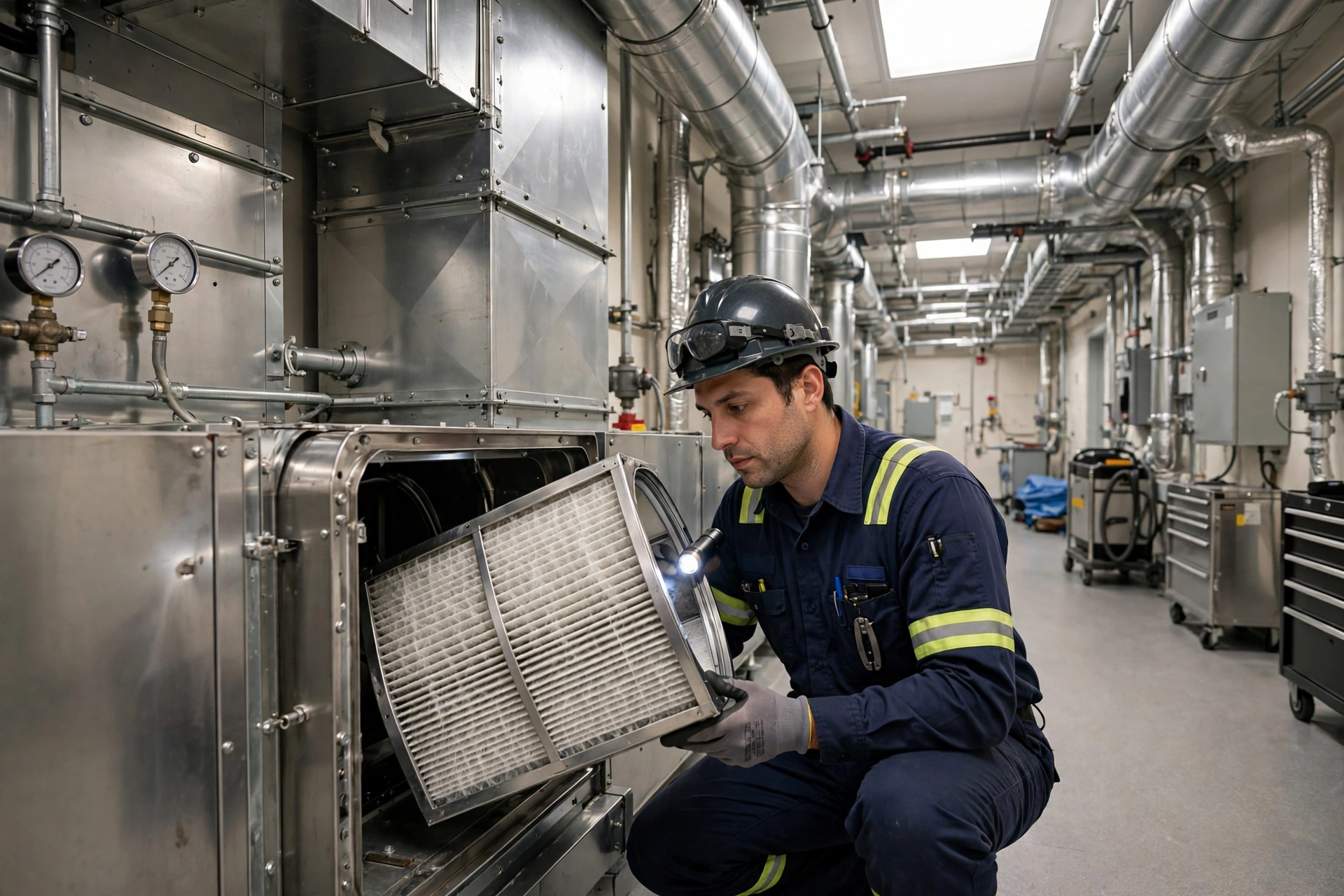
Contaminated ductwork and dirty cooling coils are breeding grounds for mold, bacteria, and Legionella. In a hospital, that contamination travels straight into patient areas through the supply air. Compliance standards therefore treat duct hygiene and coil sanitation as infection control measures, with cleaning intervals tied to risk assessments rather than appearance.
In Riyadh, fine desert dust mixes with condensate moisture to coat ducts and coil fins faster than international guidance assumes. Only professional duct cleaning with sanitization protects air quality and compliance, not a quick vacuum of visible grilles. Our detailed post on AC duct cleaning in Riyadh explains the process and the health benefits step by step.
Fact 6: Testing, Commissioning, and Documentation Close the Loop
The final pillar of hospital HVAC standards compliance is proof. New systems and major renovations must be commissioned, meaning an independent process verifies that every system performs exactly as designed. Existing systems need periodic testing and balancing to confirm that airflow, temperature, humidity, filtration, and pressure still meet the design values after years of operation.
Humidity control needs special attention in Riyadh. Standards typically require relative humidity between 20 and 60 percent in most clinical areas. Overcooling to hit temperature targets while ignoring humidity is a classic compliance trap in hot climates, and it encourages mold growth inside ducts. A competent technician measures and reports both, every visit.
Keep commissioning reports, test and balance certificates, filter change logs, and maintenance visit reports together. When a CBAHI or Ministry of Health surveyor asks how you know your HVAC system is compliant, that folder is your answer. Facilities with complete, organized documentation pass surveys faster and with far fewer corrective findings than those that rely on memory and verbal assurances.
Hospital HVAC standards compliance protects patients, staff, and your facility’s accreditation. The six facts above give any Riyadh healthcare facility a clear roadmap. The hard part is execution, and that is where an experienced partner matters. SheelTalab dispatches certified technicians anywhere in Riyadh within 45 minutes, operates 24/7, backs every job with a 30-day golden warranty, and holds a 4.9/5 rating from more than 18,500 completed jobs. For full system support, explore our central AC repair services in Riyadh. Call us at 0570328344 or 0570328344, and let us keep your facility safe, comfortable, and fully compliant.