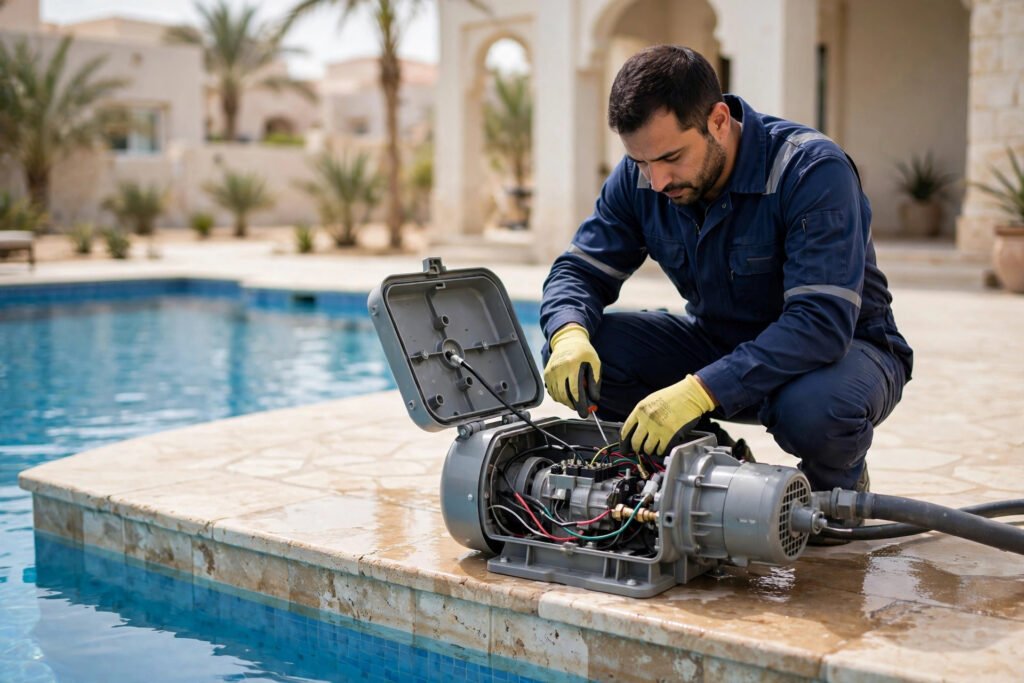
Pool pump wiring safety is one of the most overlooked electrical risks in Riyadh villas. Water and electricity are a dangerous combination, and a pool pump sits exactly where the two meet. A loose ground wire, a cracked enclosure, or a missing GFCI breaker can turn a routine swim into a serious shock hazard. The good news is that every one of these risks is preventable with the right wiring practices.
Riyadh’s climate makes pool electrical systems work harder than almost anywhere else. Summer heat bakes outdoor enclosures, dust storms push grit into every crevice, and pool pumps run long hours to keep water circulating through the hottest months. In this guide, SheelTalab’s certified electricians walk you through five safety essentials that keep your pool pump wired correctly and your family protected.
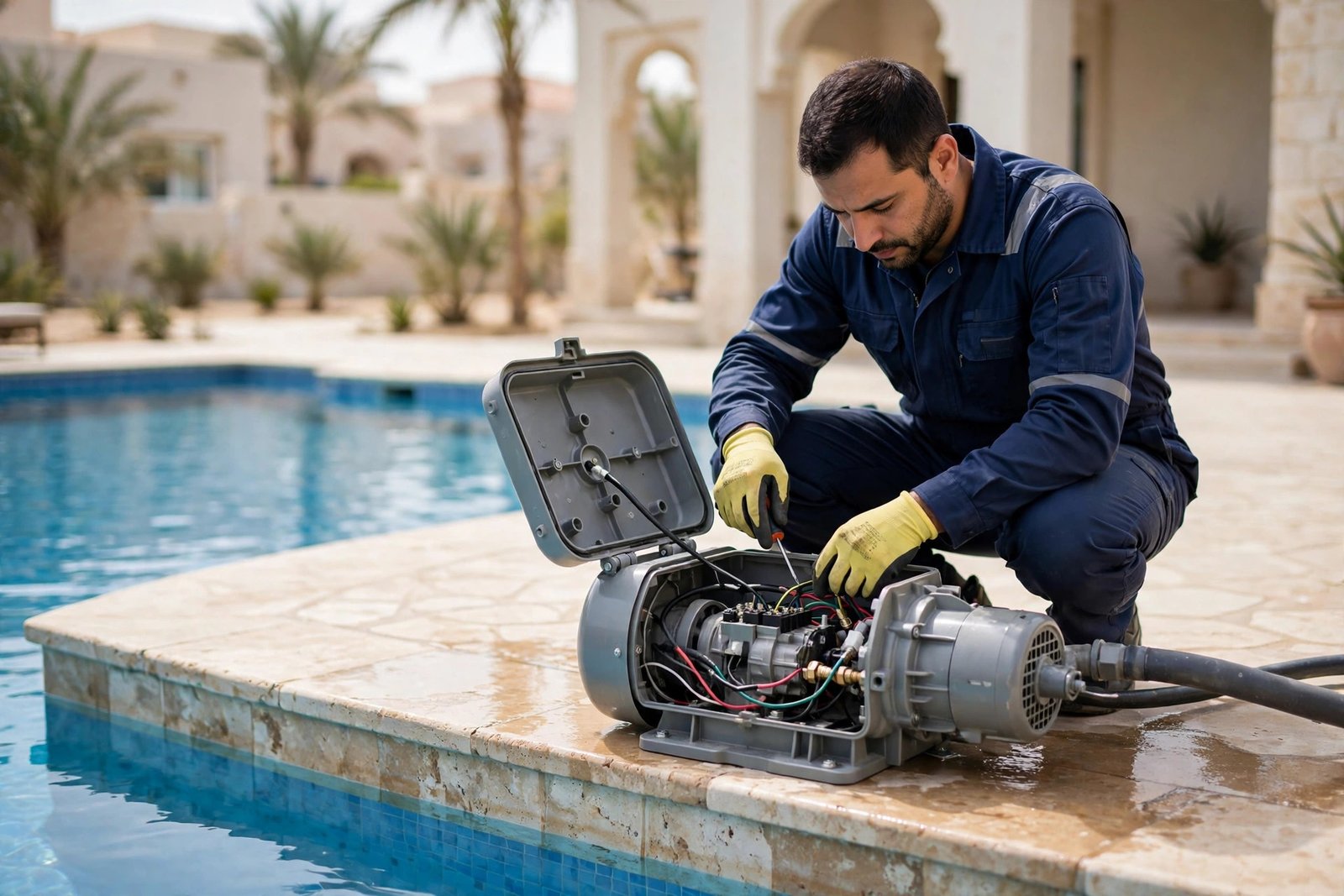
Why Pool Pump Wiring Safety Matters More in Riyadh Villas
Most villa pools in Riyadh run their pumps 8 to 12 hours a day through summer. That constant load, combined with heat, humidity from the water, and occasional dust storms, degrades wiring faster than indoor circuits. Insulation dries and cracks, terminal screws loosen from vibration, and cheap enclosures warp until their seals fail. According to the Electrical Safety Foundation International’s pool and spa safety guidance, even small electrical faults around pools can cause serious shocks, which is why they recommend professional inspection and GFCI protection for all pool equipment.
5 Pool Pump Wiring Safety Essentials for Your Villa
Use this checklist when your pool pump is installed, repaired, or inspected. Each essential below addresses one of the most common wiring failures our electricians find in Riyadh homes.
Essential 1: A Dedicated GFCI-Protected Circuit
Your pool pump should run on its own dedicated circuit, protected by a ground fault circuit interrupter (GFCI). A dedicated circuit means the pump never shares current with other loads, so a fault in a garden light or outdoor socket cannot knock out the pump or feed current back into it. The GFCI watches for even tiny leaks of current to ground, as small as 5 milliamps, and trips in milliseconds. That speed is what prevents a shock from becoming far worse. GFCI protection is a cornerstone of pool pump wiring safety, and if your pump circuit lacks it, that is the single most urgent upgrade to make. If your breaker keeps tripping instead, that often signals a developing fault; see our guide to circuit breaker tripping in Riyadh for what causes it and what to do next.
Essential 2: Proper Grounding and Equipotential Bonding
Grounding gives fault current a safe path back to the panel, while bonding connects all metal parts around the pool (the pump housing, rails, ladders, and light niches) to the same electrical potential, so no voltage difference can exist between them. Bonding is the part of pool pump wiring safety that DIY installations skip most often, and it is the one that prevents the tingle or shock you can feel when touching pool metalwork. Our technicians verify every bond with a meter and confirm the ground conductor is continuous from the pump back to the main panel.
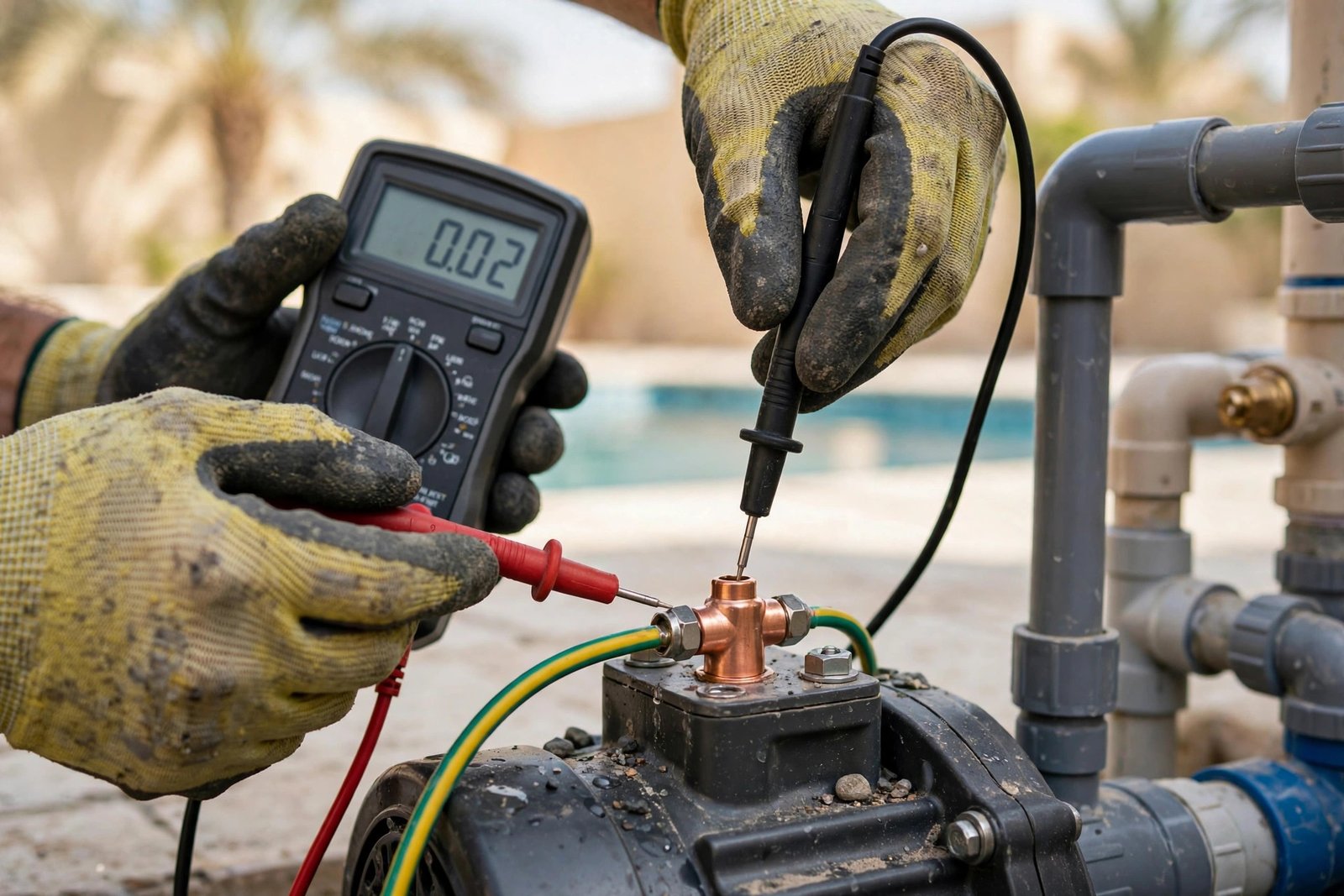
Essential 3: Weatherproof Enclosures and Sealed Conduit
Every junction box, breaker, and connection feeding the pump must live inside a weatherproof, IP-rated enclosure with intact gaskets. Riyadh’s dust and heat destroy cheap boxes within a couple of seasons: seals crack, covers warp, and moisture from pool splash or rain gets inside. Wiring should run through sealed conduit, never exposed cable lying across the deck. For lasting pool pump wiring safety in Riyadh’s climate, insist on UV-resistant conduit and enclosures rated for outdoor use, and have the seals checked each year before summer.
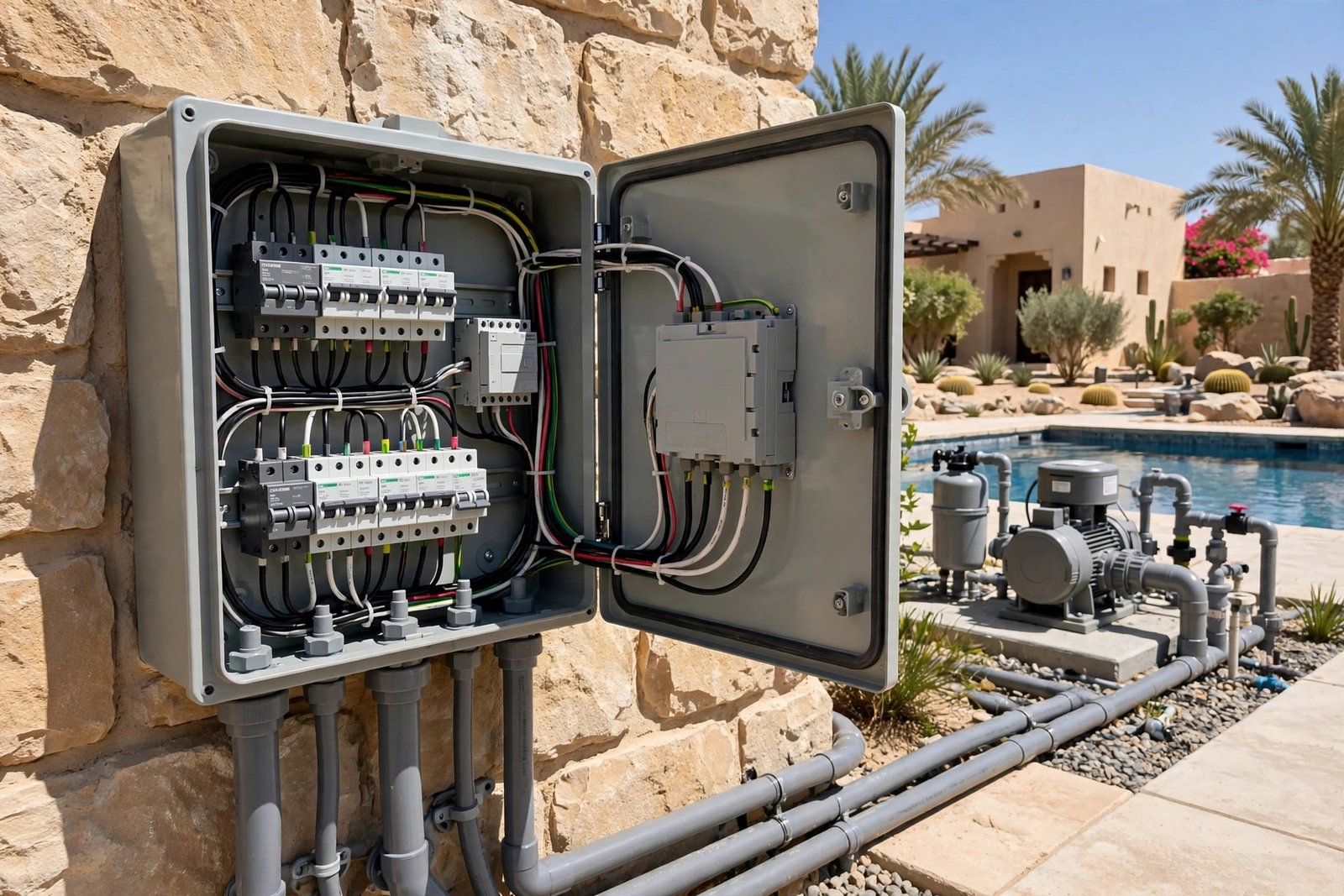
Essential 4: Correct Voltage, Wire Size, and Tight Connections
Pool pumps are high-draw motors, and undersized wire is a silent fire risk. The wire gauge must match the pump’s amperage and the length of the run, because long runs to a distant equipment pad cause voltage drop that overheats the motor. Connections inside the pump’s terminal box must be torqued tight and protected with the correct glands where cables enter. Loose terminals arc, arc faults generate heat, and heat melts insulation. During every SheelTalab visit we check voltage at the pump, confirm wire sizing against the motor plate, and retighten terminals to spec.
Essential 5: An Annual Professional Inspection
An annual inspection keeps your pool pump wiring safety from drifting out of spec between services. Our 150 SAR electrician visit (labor only, was 190) covers a full check of the pump circuit: GFCI trip test, ground and bond continuity, enclosure condition, wire and terminal condition, and a thermal scan for hot spots. With 45-minute rapid dispatch anywhere in Riyadh, 24/7 availability, and a 30-day golden warranty on every job, small problems get caught before they become dangerous or expensive. If you are unsure whether an issue needs urgent attention, review the warning signs your home needs an electrician fast.
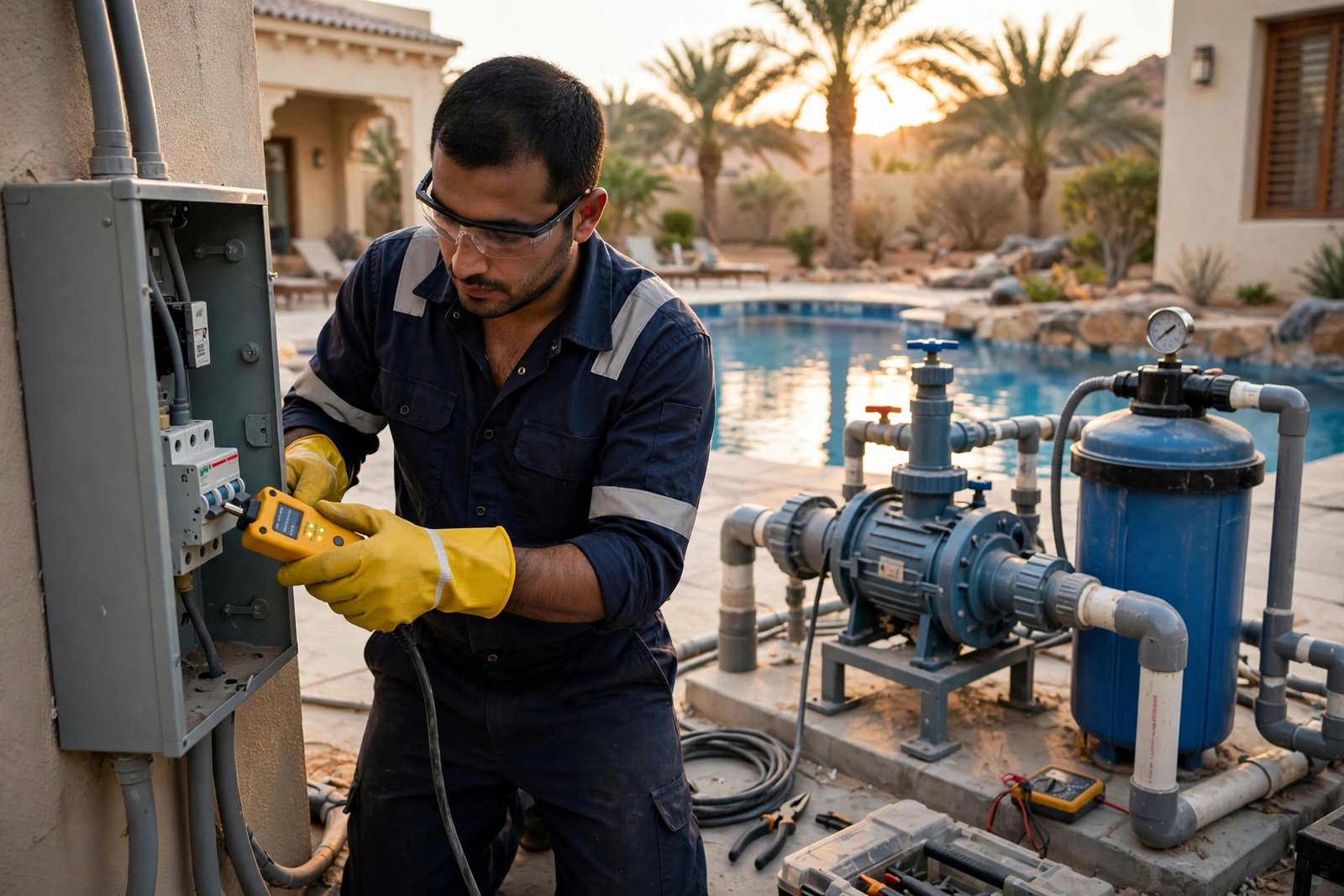
When to Call an Electrician for Your Pool Pump
Call a certified electrician right away if your pump breaker trips repeatedly, if you feel any tingle from pool water or metal fittings, if the pump hums but will not start, or if you spot burnt smells, melted insulation, or water inside an enclosure. These are not wait-and-see issues. Our emergency electrician team handles urgent pool electrical faults around the clock in Riyadh, and for anything less urgent you can book a standard inspection. Reach us 24/7 on 0570328344 or 0570328344 and we will document every finding with photos and plain-language recommendations.
Getting pool pump wiring safety right is not complicated, but it is not optional either. A dedicated GFCI circuit, solid grounding and bonding, weatherproof enclosures, correctly sized wiring, and an annual inspection add up to a pool your family can enjoy without a second thought. If any of these five essentials is missing at your villa, SheelTalab’s certified electricians can fix it in a single visit, backed by our 4.9/5 rating from more than 18,500 jobs.