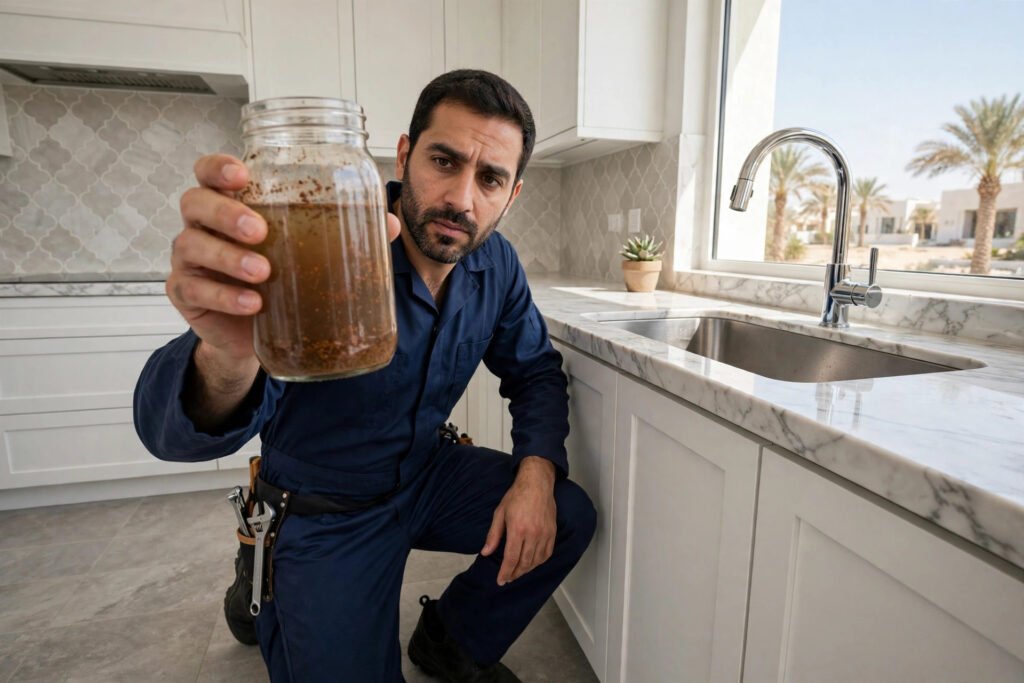
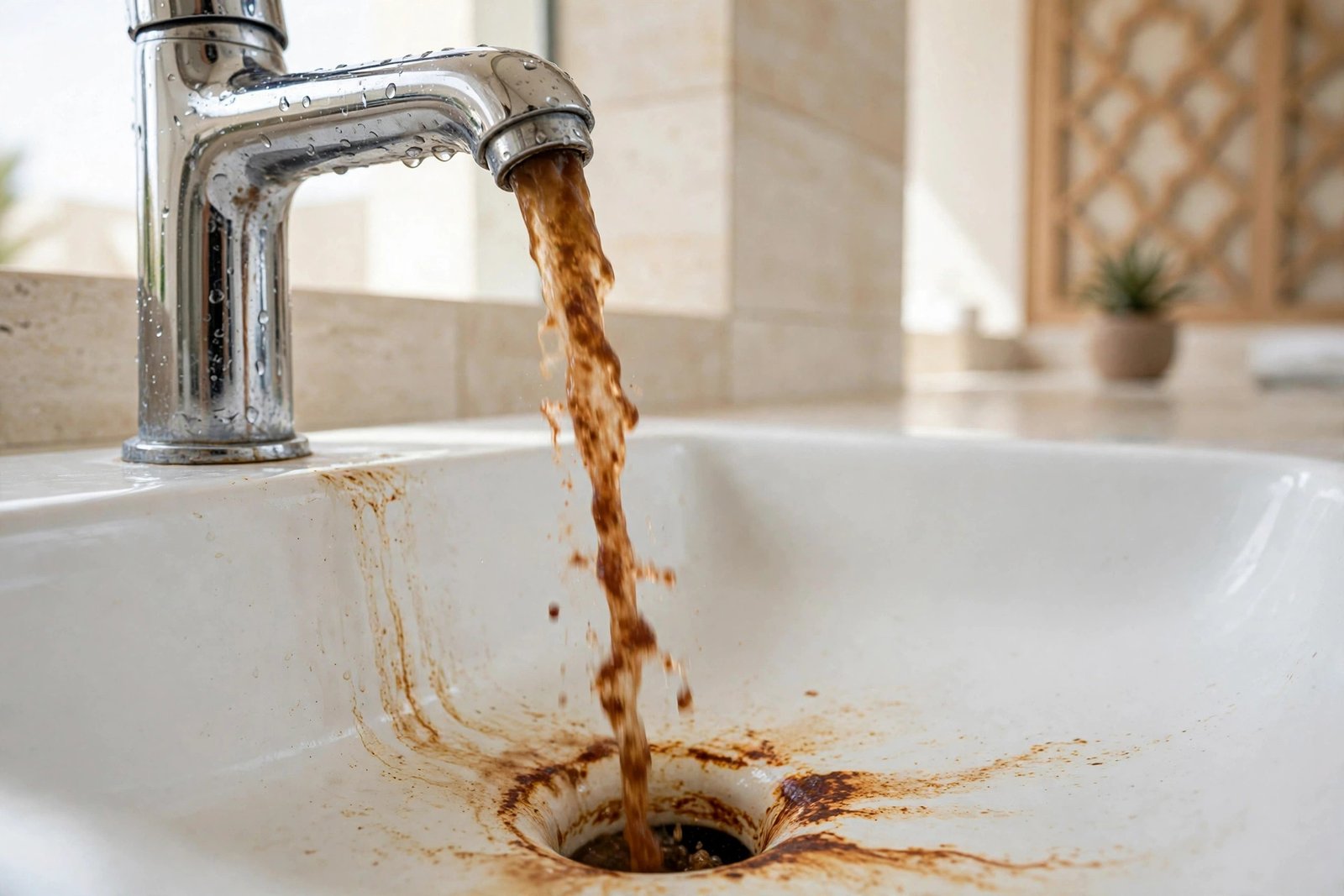
You turn on the kitchen tap in your Riyadh villa and brown water comes out instead of the clear flow you expect. It stains the sink, smells metallic, and can ruin a load of white laundry in one wash. The good news is that rusty tap water causes are almost always simple plumbing problems rather than emergencies, and most have quick, affordable fixes.
Rusty water shows up often in Riyadh homes. Older villas still run on galvanized steel pipes, rooftop water tanks bake under summer heat of 47 degrees, and mineral-rich water leaves sediment wherever it sits. Here are the 6 most common rusty tap water causes and exactly how to fix each one.
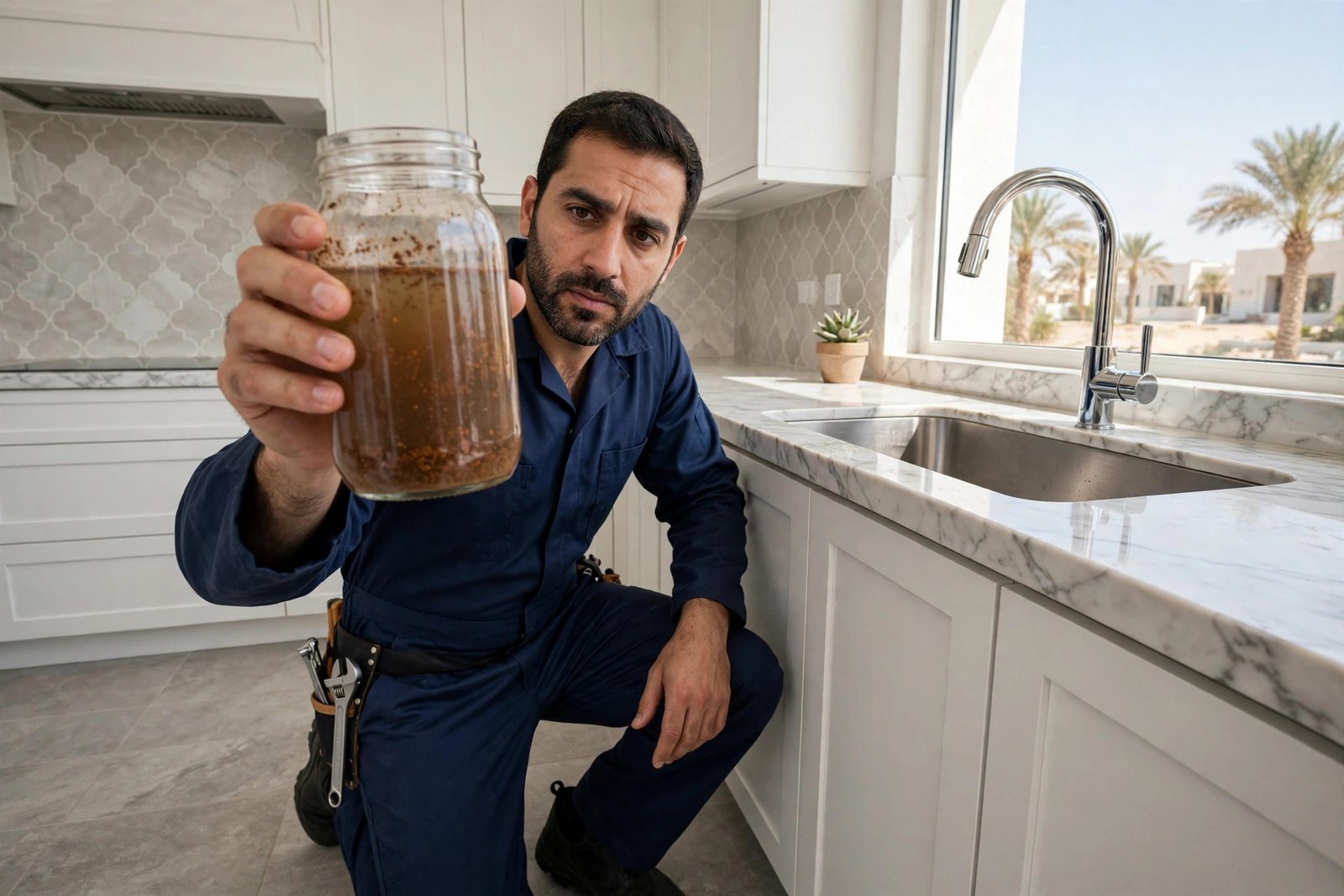
The 6 Most Common Rusty Tap Water Causes
Each of these six rusty tap water causes looks slightly different, and the clues tell you where the rust is coming from. Match your symptom to the cause below, and you will know whether this is a five-minute DIY fix or a job for a plumber.
1. Corroded Galvanized Steel Pipes
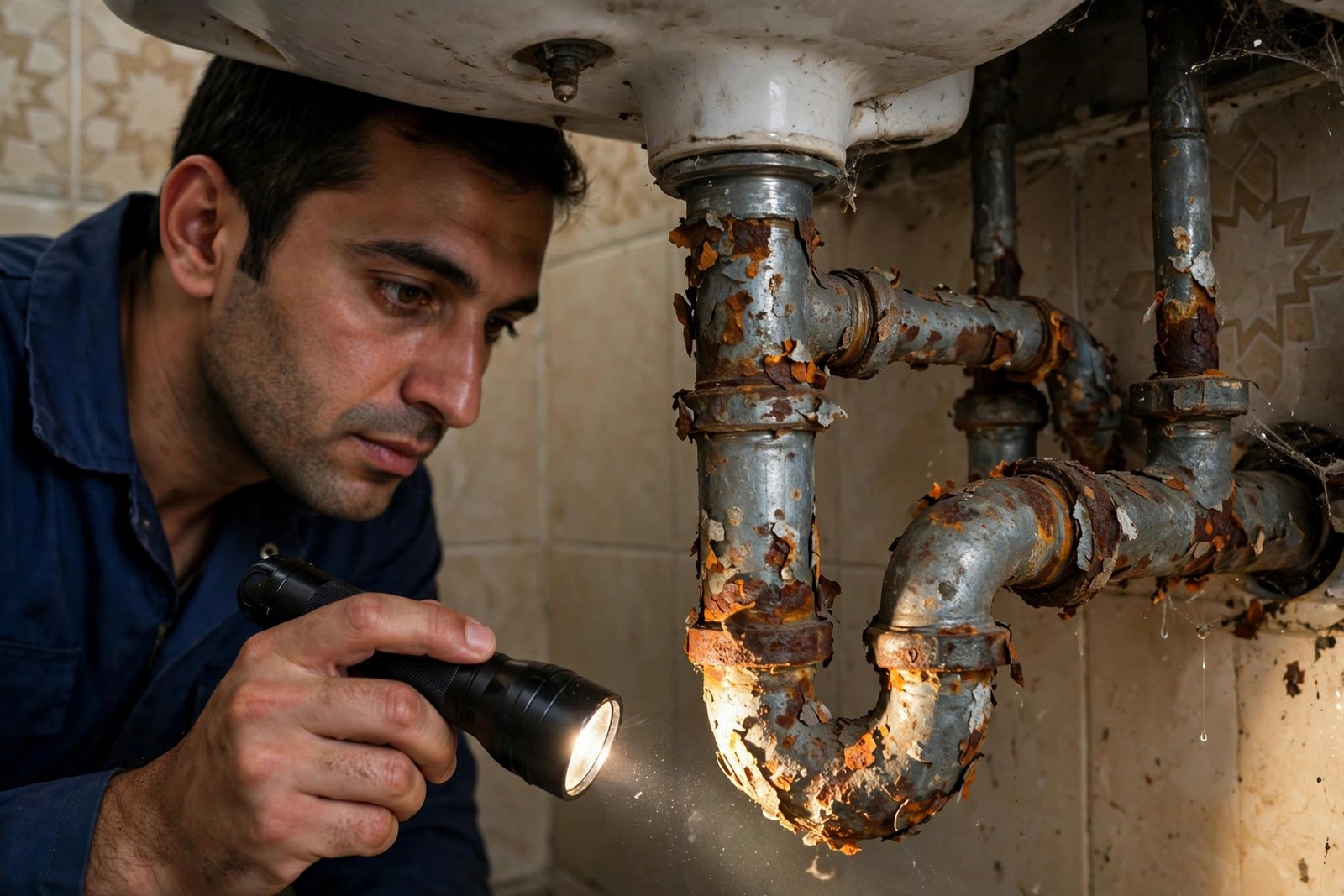
Most villas built in Riyadh before the 2000s were plumbed with galvanized steel pipes. The protective zinc coating wears away after 20 to 30 years, and the bare steel underneath rusts from the inside out. Expect brown or yellowish water, worst first thing in the morning, plus falling water pressure as rust narrows the pipe from within. This is the costliest of the rusty tap water causes to ignore, because rusted pipes eventually develop pinhole leaks that soak walls and ceilings. The fix is to cut out the corroded sections and replace them with PPR or copper pipe, which never rust. If pressure is dropping too, see our guide to low water pressure fixes in Riyadh.
2. A Rusting Water Heater Tank
If brown water comes only from your hot taps while cold water runs clear, your water heater is the source. Sediment and rust collect at the bottom of the tank, and once the sacrificial anode rod inside has dissolved, the steel tank itself starts rusting. Riyadh’s hard water speeds this up. The fix is to flush the tank and fit a new anode rod, which buys the heater several more years. If the tank is already rusting through, visible as rust streaks around the base or a damp patch underneath, replacement is the only safe option.
3. A Dirty or Rusting Rooftop Water Tank
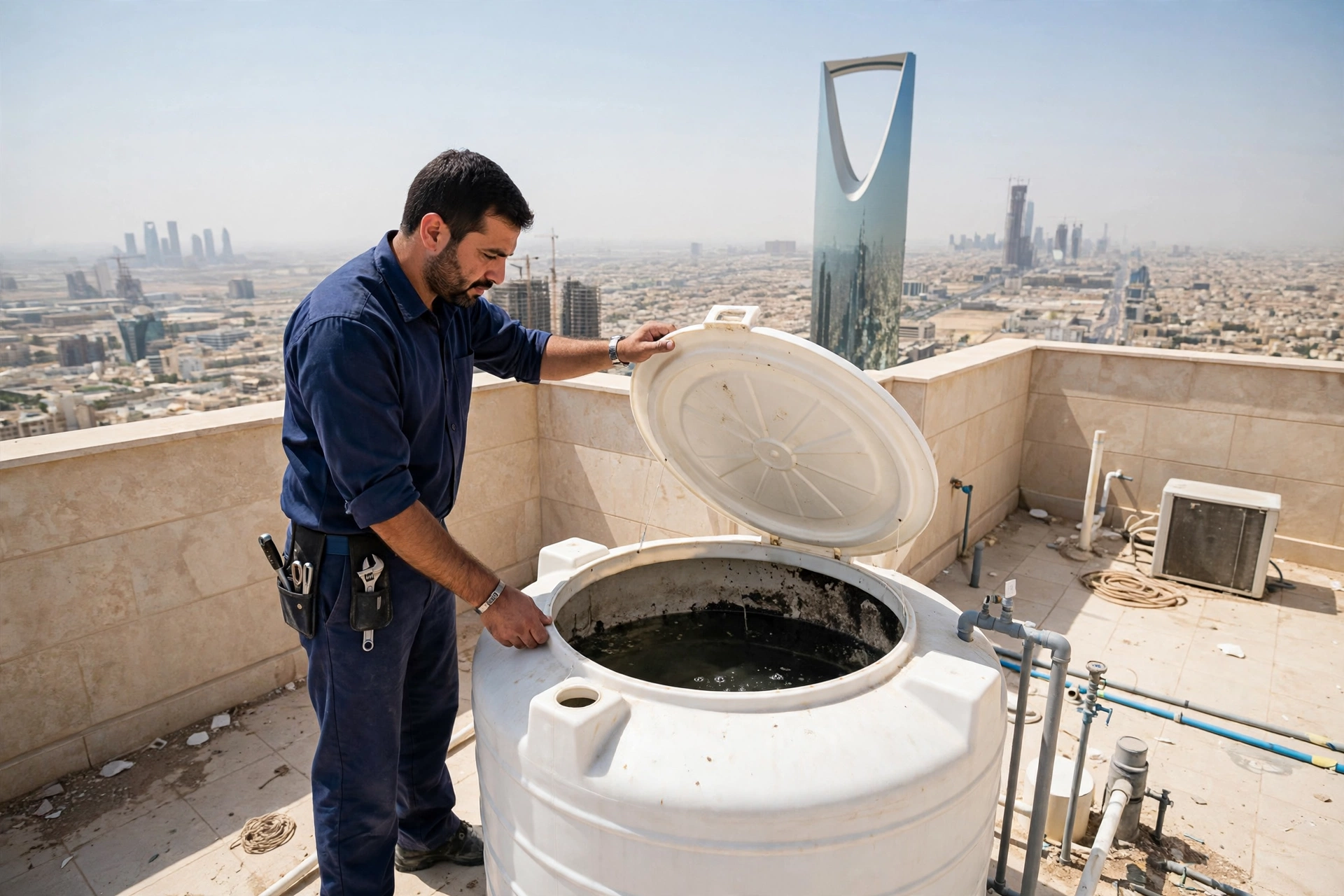
Almost every Riyadh villa stores its water in a rooftop tank, making this one of the most overlooked rusty tap water causes. Metal tanks rust from the inside out, while plastic tanks collect rust-colored sediment washed down from older supply pipes. If every tap in the house runs brown at the same time, the tank is your prime suspect. The fix is a yearly tank clean and disinfection, plus replacing a metal tank that is rusting through. We also recommend our water tank waterproofing service to seal the tank against dust and leaks.
4. Disturbed Sediment From the Supply Line
Did roadworks or maintenance happen on your street recently? When the municipal supply is shut off and restarted, sediment that sat quietly in pipes for years gets stirred up and pushed into your home. This is one of the rusty tap water causes that is usually temporary: run the taps for a few minutes and it clears on its own. If the brown water keeps coming back after a day, the sediment is being pulled from your own tank or pipes instead, which points back to cause 1 or cause 3 above.
5. Old Faucets, Valves, and Connectors
If only one tap runs brown while the rest are clear, the problem is local. Old steel faucet internals, aging shutoff valves, and deteriorating galvanized connectors rust and shed tiny flakes straight into the stream, and you may spot dark particles in the aerator screen. The fix is simple: replace the faucet, valve, or connector. It is a cheap part and a quick visit, and it restores clear water at that tap immediately.
6. Stagnant Water in Unused Pipes
Guest bathrooms and seasonal kitchens are classic offenders. Riyadh’s desalinated supply is treated with chlorine, and water that sits unused in pipes for weeks picks up rust from the pipe walls along with a slimy biofilm. The fix is to run each rarely used tap for three to five minutes to flush the stagnant water. If the discoloration returns quickly every time, the pipes feeding that bathroom are corroding and should be inspected by a professional.
Here is the quick reference our plumbers use on site: match your symptom to the cause and the fix.
| Symptom | Cause | Fix |
|---|---|---|
| Brown water from all taps, worst in the morning | Corroded galvanized pipes | Replace corroded sections with PPR or copper |
| Brown water only from hot taps | Rusting water heater tank | Flush tank, replace anode rod, or replace heater |
| Brown water from every tap, all day | Dirty or rusting rooftop tank | Clean and disinfect tank yearly; replace rusted metal tanks |
| Sudden brown water after street works | Disturbed supply sediment | Run taps a few minutes; investigate if it persists |
| Brown water from one tap only | Old faucet, valve, or connector | Replace the faucet or valve |
| Brown burst from rarely used taps | Stagnant water in pipes | Flush taps 3 to 5 minutes; inspect pipes if it returns |
Is Rusty Tap Water Dangerous?
Rust itself, which is iron oxide, is classed as a nuisance contaminant rather than a health hazard at household levels. The US Environmental Protection Agency sets a secondary drinking water standard of 0.3 milligrams of iron per liter, mainly for staining and taste rather than toxicity (see the EPA secondary drinking water standards). Still, rust can mask bacterial growth inside neglected tanks, and very old plumbing can release lead from old solder along with the iron. Do not drink or cook with discolored water until you find the source.
5 Quick DIY Checks Before You Call a Plumber
These take five minutes and tell a plumber exactly where to look. First, hot or cold? Brown water only from hot taps points to the water heater; brown from cold taps too points to pipes or the tank. Second, one tap or every tap? A single tap means a local fixture problem, while every tap means the tank or main pipes. Third, the glass test: fill a clear glass and wait five minutes. Rust particles sink to the bottom, while harmless air bubbles rise. Fourth, check the roof tank: lift the lid carefully and look for rust flakes or sludge. Fifth, flush it out: run the tap for three to five minutes. If brown water returns within a day, book a professional inspection.
Why Riyadh Homes Get Rusty Water More Often
Three local factors gang up on Riyadh plumbing. Summer heat above 45 degrees bakes rooftop tanks and accelerates corrosion. Many older districts still rely on galvanized steel networks installed decades ago, now past the lifespan of their protective coating. And desalinated water treated with chlorine is slightly aggressive toward bare metal, so unprotected steel rusts faster here than in cooler climates. A yearly tank clean and a pipe inspection every few years keep these problems small and cheap.
How SheelTalab Plumbers Fix Rusty Water for Good
When you book SheelTalab, a certified plumber reaches you within 45 minutes anywhere in Riyadh, day or night. We trace the rust to its source with acoustic leak scanning, then fix it properly: corroded sections replaced with rust-proof PPR, water heaters flushed with new anode rods, rooftop tanks cleaned and disinfected, and tired fixtures swapped for quality brass. Plumbing and leak detection starts at 150 SAR (was 180), labor only, with our 30-day golden warranty and a 4.9 out of 5 rating from more than 18,500 completed jobs. Call 0570328344 or 0570328344 at any hour, we are open 24/7. If corrosion has already caused hidden damage, our water leak detection service finds leaks without breaking a single tile.
Rusty tap water is unpleasant, but it is also your plumbing’s early warning system. These six rusty tap water causes cover nearly every case our plumbers see in Riyadh, and catching corrosion early is always cheaper than repairing the leaks it eventually causes. Run the quick checks above, and if the brown water keeps coming back, let SheelTalab find the source and fix it in a single visit.