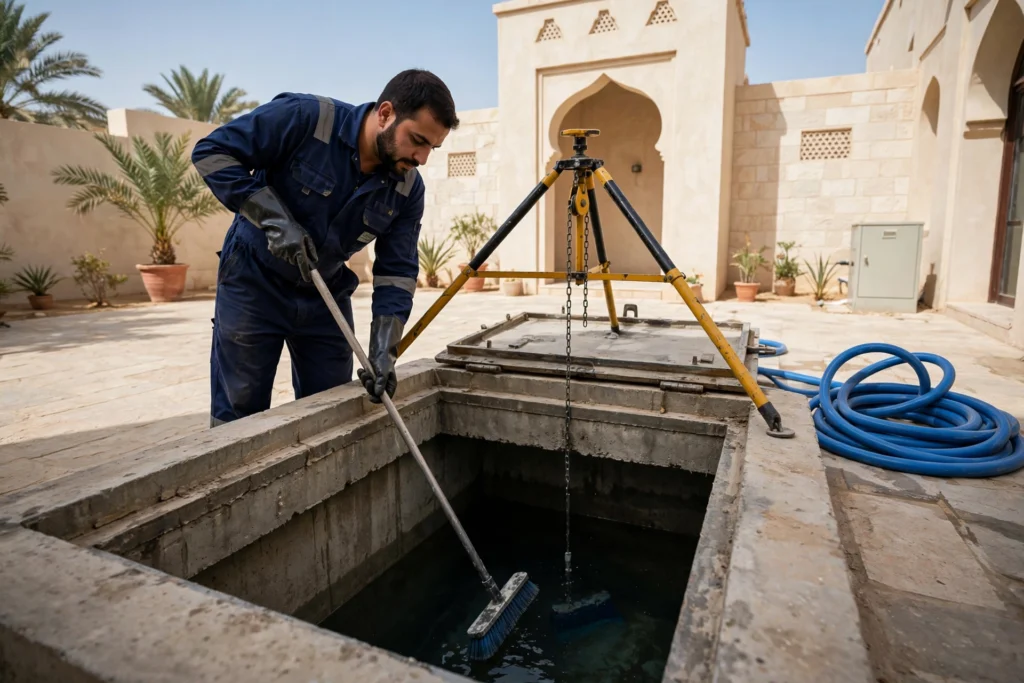
Your underground water tank is the first storage point for every drop your family drinks, cooks with, and bathes in. Yet because it sits buried under the courtyard or garage, underground water tank maintenance is the most forgotten home service in Riyadh. Sand, dust, algae, and bacteria build up quietly out of sight, and by the time your water smells odd or turns cloudy, the contamination is already advanced.
In Riyadh’s hot climate, tank water can reach temperatures that speed up bacterial growth and algae blooms, especially when the tank sits shallow or the lid seal is damaged. A proper cleaning and disinfection routine protects your family’s health, keeps pumps and float valves working smoothly, and extends the tank’s life by years. This guide walks you through the warning signs, the right cleaning method for each tank type, and how professionals do the job safely.
SheelTalab’s certified plumbers serve all of Riyadh with 45-minute rapid dispatch, 24/7 availability, and a 30-day golden warranty. Plumbing visits start at 150 SAR (was 180, labor only). Call 0570328344 or 0570328344 to book, or tap below.
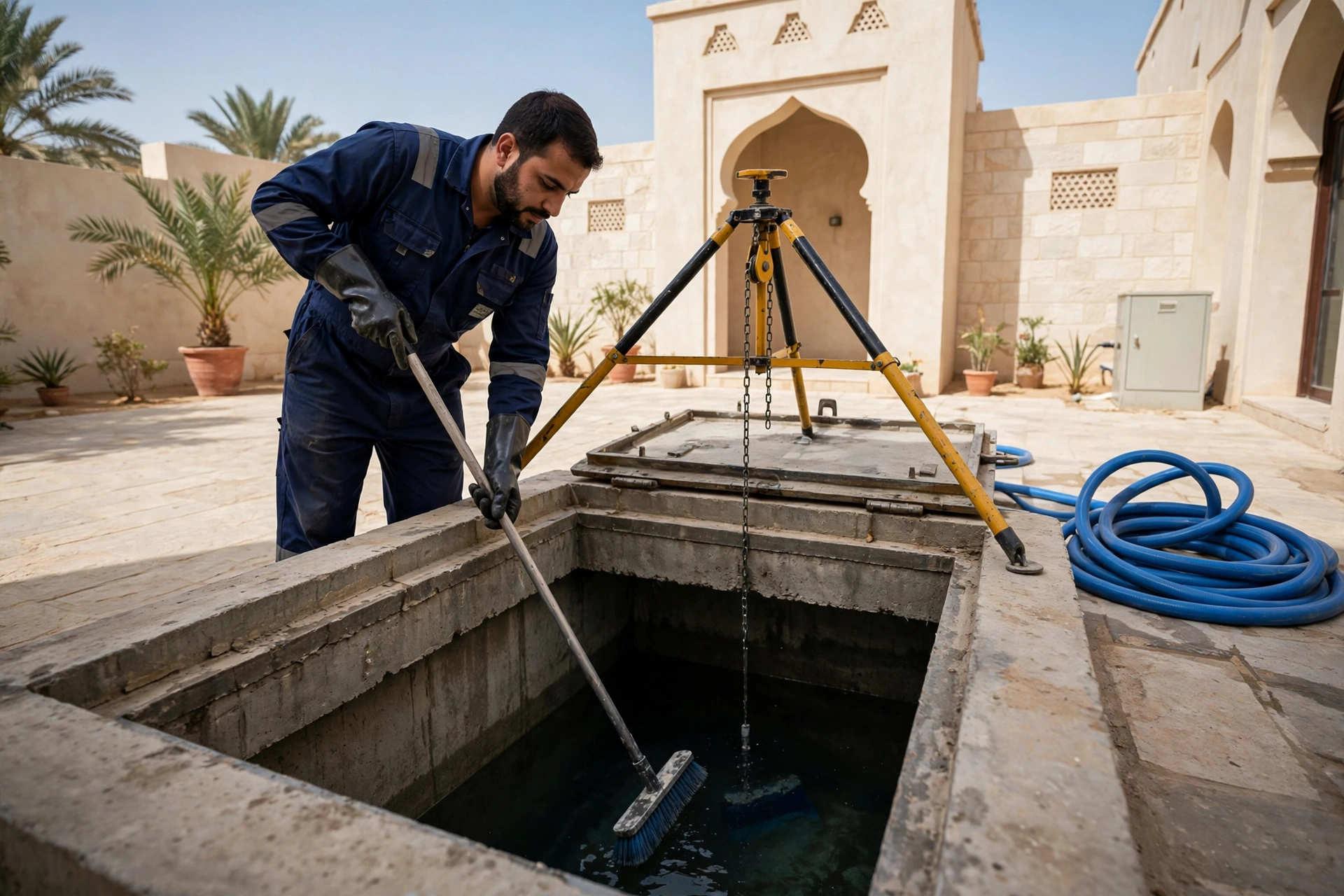
Why Underground Water Tank Maintenance Matters in Riyadh
Underground tanks face a harsher environment than rooftop tanks. Fine desert dust slips through imperfect seals, groundwater minerals settle as sludge, and summer heat turns the tank into a warm incubator for biofilm, the slimy layer where bacteria thrive. Over months, this sediment coats the tank floor and walls, corrodes metal fittings, and clogs float valves and suction lines.
The consequences show up around the house. Water heaters and washing machines wear out faster when fed gritty water, pressure booster pumps short cycle as filters choke, and family members may notice stomach upsets, skin irritation, or an unpleasant taste in drinking water. The U.S. CDC notes that stored water should be protected from contamination and treated when quality is in doubt, which is exactly what a scheduled tank service does (CDC guidance on making water safe).
7 Signs Your Tank Needs Cleaning Now
If you notice any of these signs, do not wait for your next scheduled service. Book underground water tank maintenance right away:
- Cloudy, yellowish, or greenish water coming from taps
- A musty, earthy, or rotten-egg smell in drinking water
- Fine sand or black particles settling in glasses and kettles
- A slimy film inside toilet tanks or on tap aerators
- Skin itching or eye irritation after bathing
- Mosquitoes or small flies gathering around the tank hatch
- More than 12 months since the last professional cleaning
Underground Tank Types and How Each Is Cleaned
Not every tank can be cleaned the same way. The material decides the tools, the pressure, and the disinfectant dose. Here is how the common underground tank types found in Riyadh villas compare:
| Tank Type | Construction | Recommended Cleaning Method | Service Frequency | Watch-Outs |
|---|---|---|---|---|
| Reinforced concrete | Poured or block walls, often tiled or coated inside | Drain, vacuum sludge, medium-pressure wash, stiff-bristle scrub, inspect coating | Every 6 months | Cracks and worn waterproof coating let groundwater seep in |
| Fiberglass (FRP) | Factory-molded glass-fiber shell | Soft brush and low-pressure wash, non-abrasive cleaners only | Every 6 to 12 months | Abrasive pads scratch the gel coat and invite algae |
| Polyethylene (plastic) | Rotomolded food-grade plastic | Soft sponge wash, mild detergent rinse, full disinfection | Every 6 to 12 months | Harsh chemicals can degrade the plastic over time |
| Galvanized steel | Steel panels, sometimes buried in older villas | Gentle wash, rust spot treatment, check sacrificial anodes | Every 6 months | Corrosion flakes contaminate water; relining may be needed |
| GRP sectional panels | Bolted glass-reinforced panels assembled on site | Panel-by-panel scrub, bolt and gasket inspection, disinfection | Every 6 months | Leaking gaskets at panel joints are the main failure point |
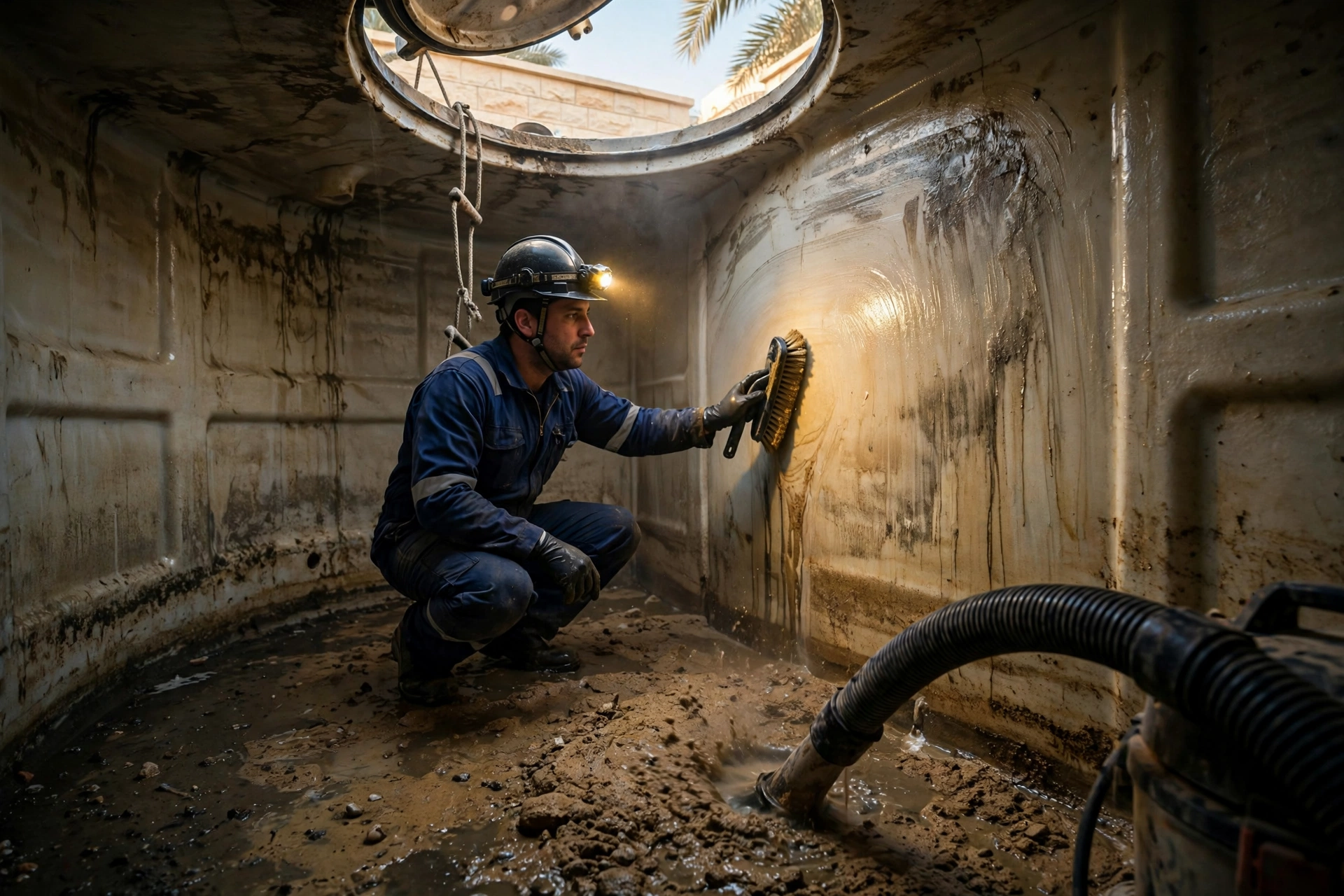
Concrete tanks: check the coating, not just the dirt
Most older Riyadh villas have poured concrete underground tanks. They hold up well structurally, but their waterproof coating wears out after a few years, so a technician should check for hairline cracks, hollow tiles, and damp patches during cleaning. If the coating has failed, cleaning alone will not keep water clean, and the tank may need re-waterproofing. See our guide on water tank waterproofing in Riyadh.
Plastic and fiberglass tanks: gentle methods win
Factory-molded tanks have smooth, non-porous walls that resist buildup, which makes them faster to clean. The trade-off is that their surfaces scratch easily, so high-pressure jets and wire brushes are off the table. A soft wash followed by proper disinfection is all they need, and their sealed lids keep dust out far better than old concrete hatches.
Our 5-Step Professional Cleaning Process
A proper service is more than pumping the tank out and spraying it. Here is the exact sequence our plumbers follow:
- Isolation and safe drain-down: we shut the inlet, protect the pump, and drain the tank so technicians can work safely inside.
- Sludge and sediment removal: accumulated silt, sand, and debris are vacuumed or scooped out by hand, never just stirred up and flushed.
- Wall and floor scrubbing: every surface is scrubbed with brushes matched to the tank material, removing biofilm and mineral scale.
- Disinfection: the tank is treated with a measured chlorine solution, held for the correct contact time, then rinsed thoroughly.
- Refill, flush, and testing: the tank is refilled, lines are flushed, and water clarity and smell are checked before we hand the system back.
While the tank is open, we also inspect the float valve, suction pipe, lid seal, and overflow line. A surprising number of “dirty water” complaints trace back to a broken lid seal letting dust pour in, or a failing float valve that our water leak detection service can pinpoint with acoustic scanning before it floods the courtyard.
Safe Disinfection and Water Testing
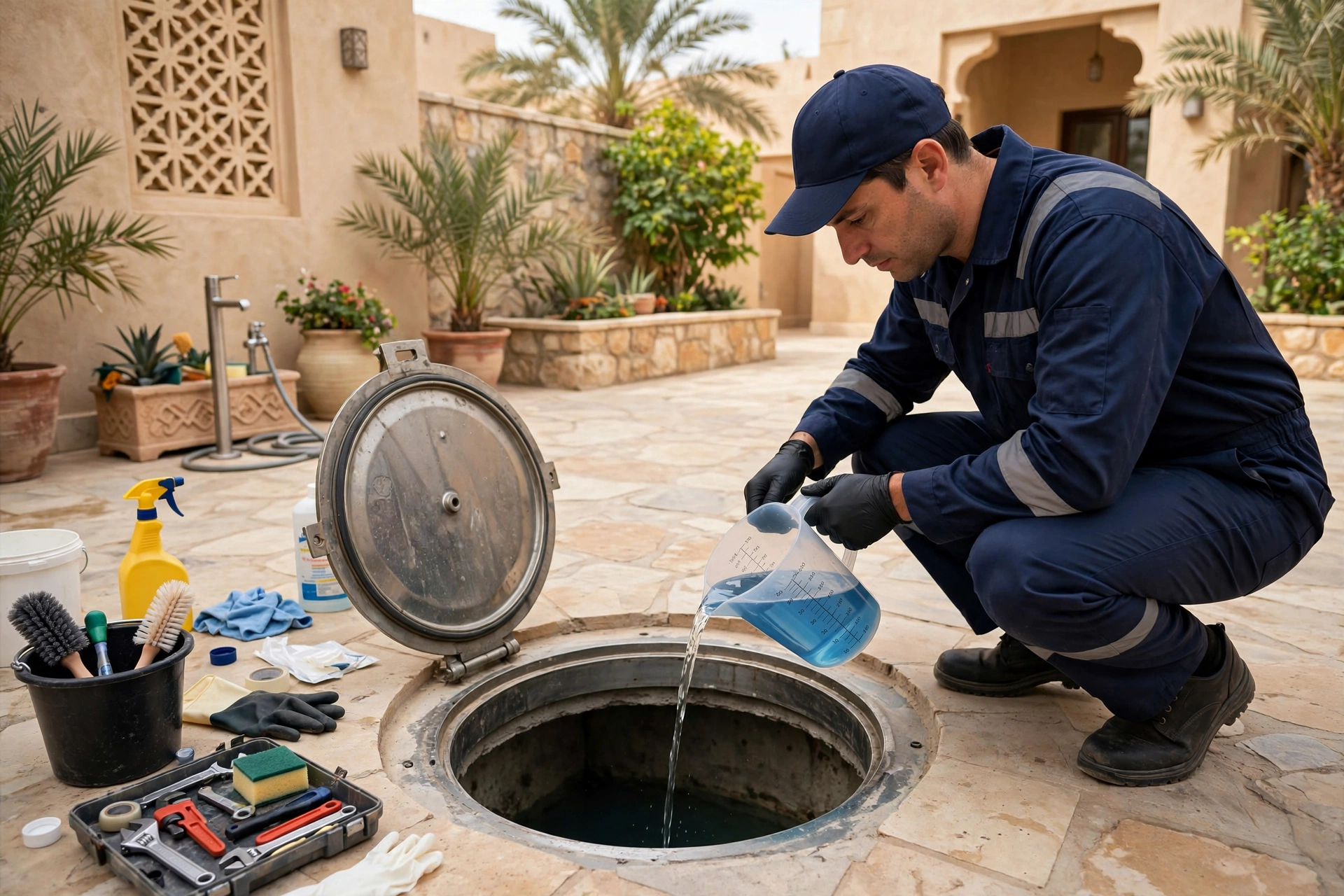
Disinfection is where DIY tank cleaning most often goes wrong. Too little chlorine leaves bacteria alive; too much leaves water that smells like a swimming pool and irritates skin. Professionals dose by tank volume (roughly 50 mg of chlorine per liter for shock disinfection), keep the solution in contact with all surfaces for several hours, then flush until no chlorine smell remains. The World Health Organization publishes the reference guidelines for drinking-water quality that our dosing follows.
After refilling, water should be crystal clear in a glass, with no odor and no visible particles. If your area’s municipal water carries heavy sediment, ask about fitting a simple inlet strainer, a small upgrade that stretches the time between cleanings.
How Often to Schedule Underground Water Tank Maintenance
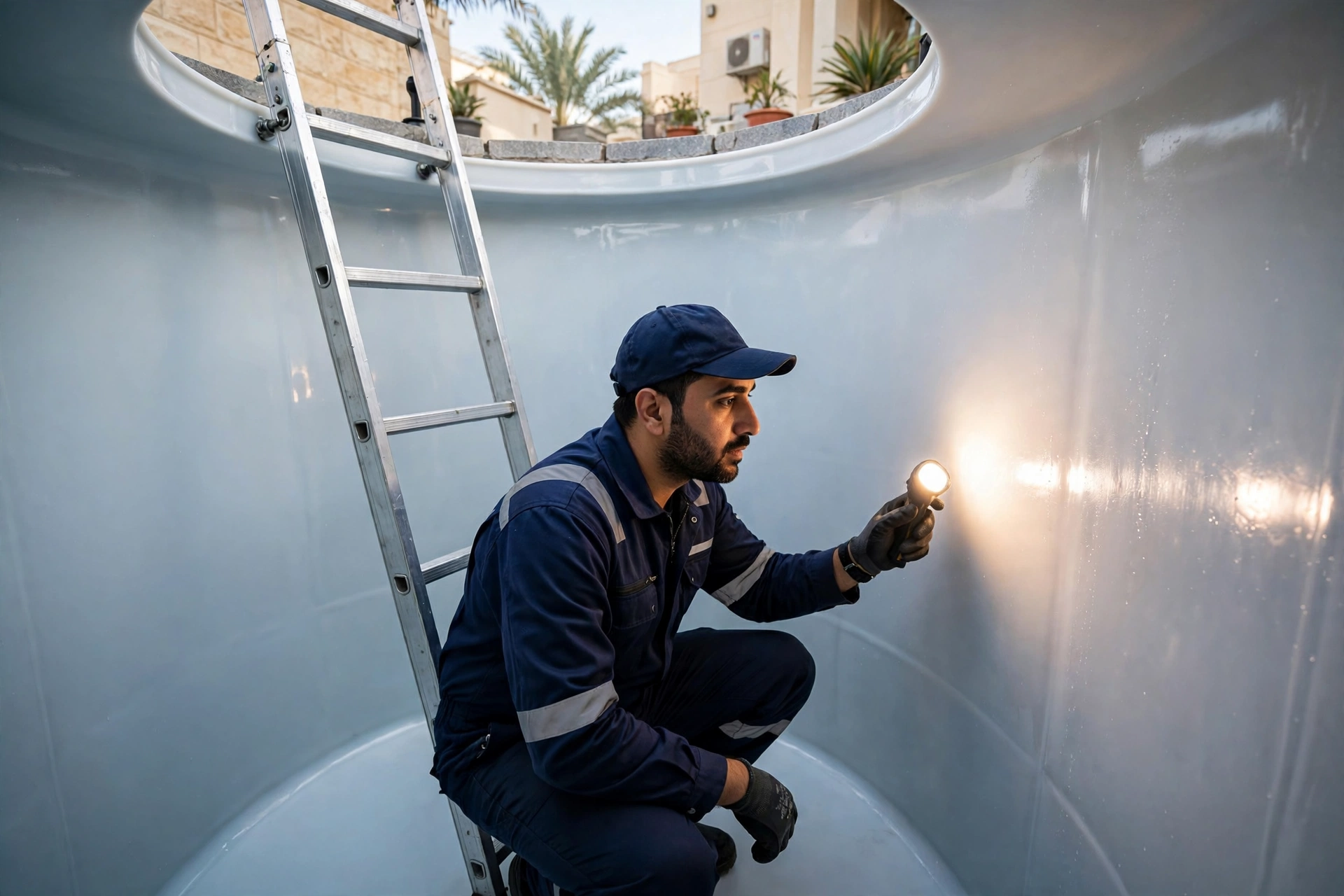
For Riyadh villas, every 6 months is the sweet spot: once before summer heat peaks and once after the dusty season, and never let a full year pass. Book an extra cleaning after nearby construction, a major dust storm, or any repair that opened the system. Restaurants and compounds with high water turnover should keep a strict 6-month cycle.
Sediment from a neglected tank also travels into your pipes, where it chokes fixtures and starves upper floors of pressure. If your showers have gone weak alongside dirty water, our guide on low water pressure fixes in Riyadh explains the 7 checks that restore flow. And remember, regular underground water tank maintenance costs far less than replacing a burned-out booster pump or a scaled-up water heater.
Book Your Tank Cleaning Today
Clean water starts with a clean tank. SheelTalab’s certified plumbers serve every Riyadh neighborhood with 45-minute rapid dispatch, 24/7 availability, genuine parts, and a 30-day golden warranty on every job. Plumbing visits start at 150 SAR (was 180, labor only). Call 0570328344 or 0570328344 now, and give your family water you can trust.