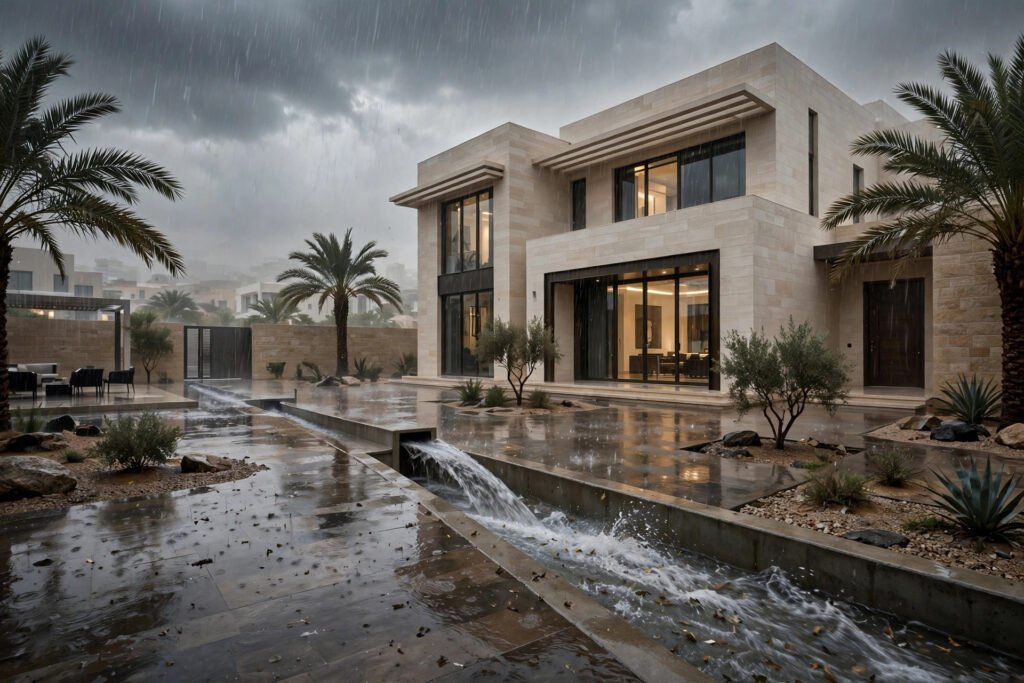
Riyadh may be a desert city, but when winter storms arrive, they arrive hard. Mastering villa rain drainage essentials is the difference between a dry home and thousands of riyals in water damage. Most villa owners focus on AC and painting, yet a single heavy downpour can overwhelm clogged gutters, flat roofs and blocked courtyard drains in under an hour.
In this guide, we walk through 6 practical villa rain drainage essentials that protect your roof, walls and foundation. These are the same checks our technicians perform on waterproofing visits across Riyadh, from Al Yasmin to Al Nakheel, and they work for both new builds and older villas.
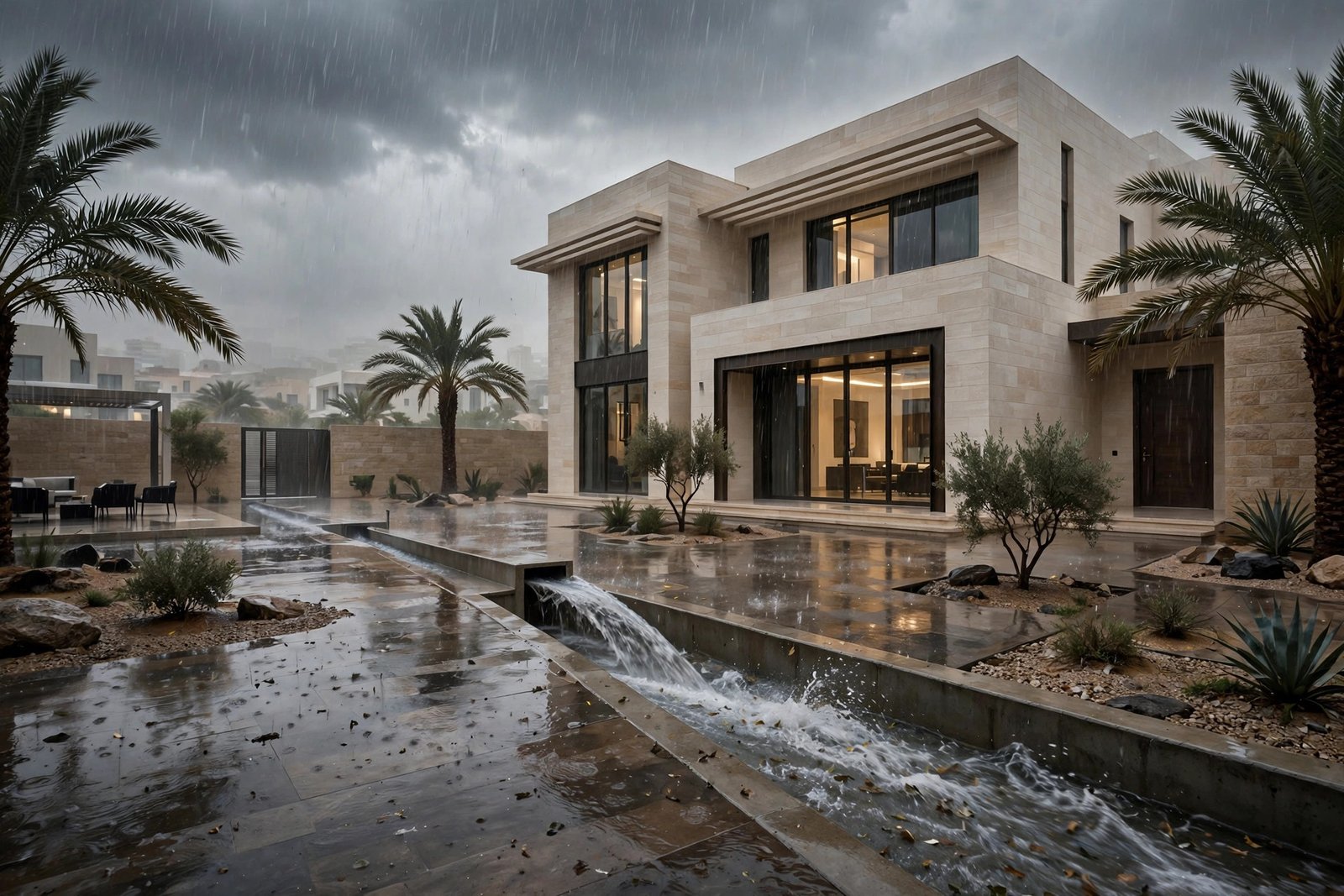
Why Villa Rain Drainage Essentials Matter in Riyadh
Riyadh averages only a handful of rainy days per year, but storms here are short and violent. A villa roof can collect thousands of liters of water in minutes, and older neighborhoods with aging drainage infrastructure can flood fast. Water with nowhere to go finds the weakest point: roof joints, waterproofing seams, basement entries and foundation walls. Repairing storm damage almost always costs more than preventing it, which is why drainage deserves a place on every villa maintenance checklist.
1. Keep Roof Gutters and Downspouts Clear
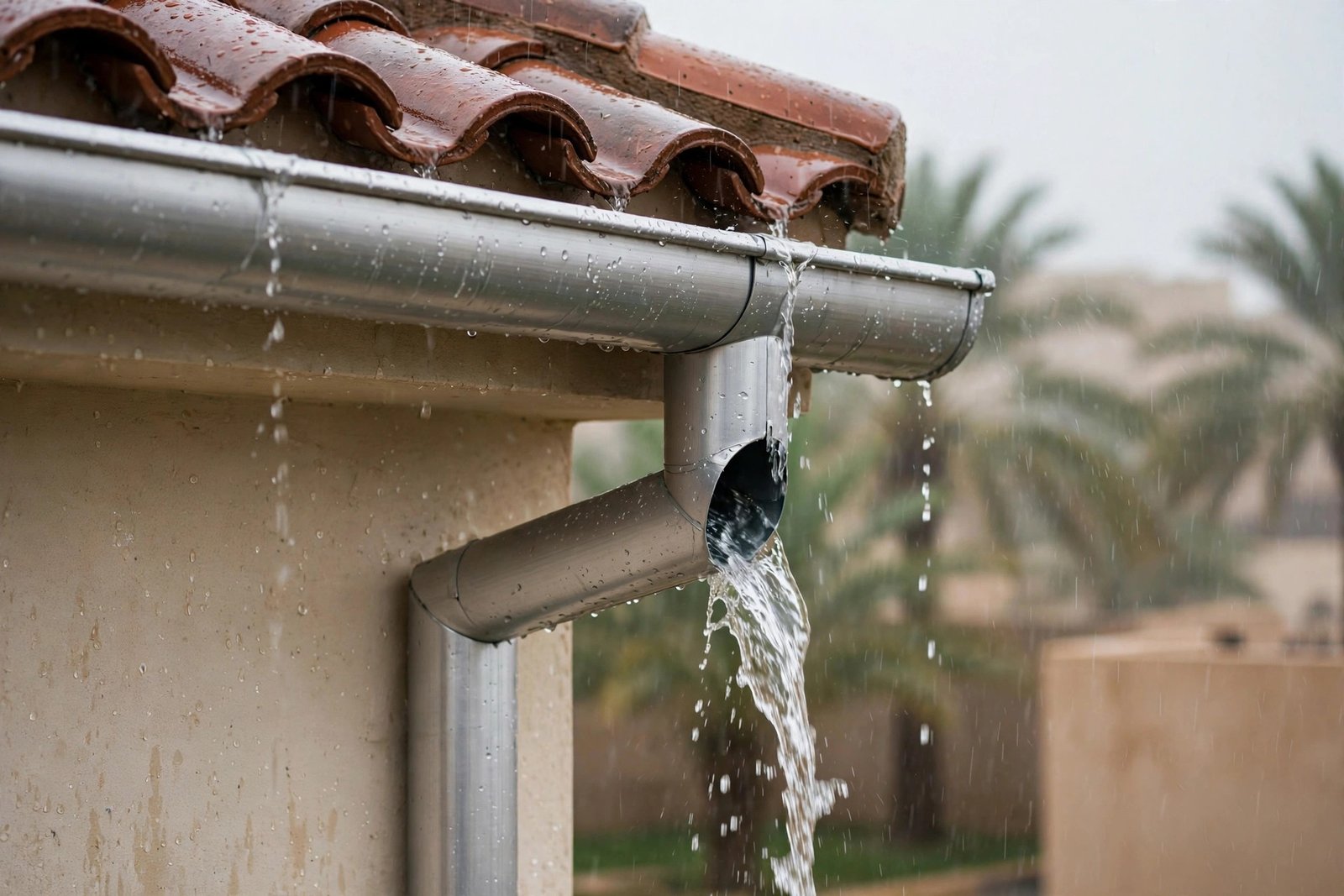
Gutters and downspouts are your villa’s first line of defense, and they are also the first thing to fail. Dust, leaves and bird nests clog them during the long dry months, so when rain arrives the water simply spills over the edges and pours down your walls. Clean every gutter and downspout before the rainy season, then check again after the first storm. Look for sagging sections, separated joints and downspouts that discharge right next to the wall.
As a rule of thumb, downspout outlets should send water at least one to two meters away from the villa’s walls. If yours stop at the base of the wall, add simple extensions or splash channels. This one fix alone prevents a surprising share of damp walls and foundation seepage in Riyadh villas.
2. Give Your Roof the Right Slope
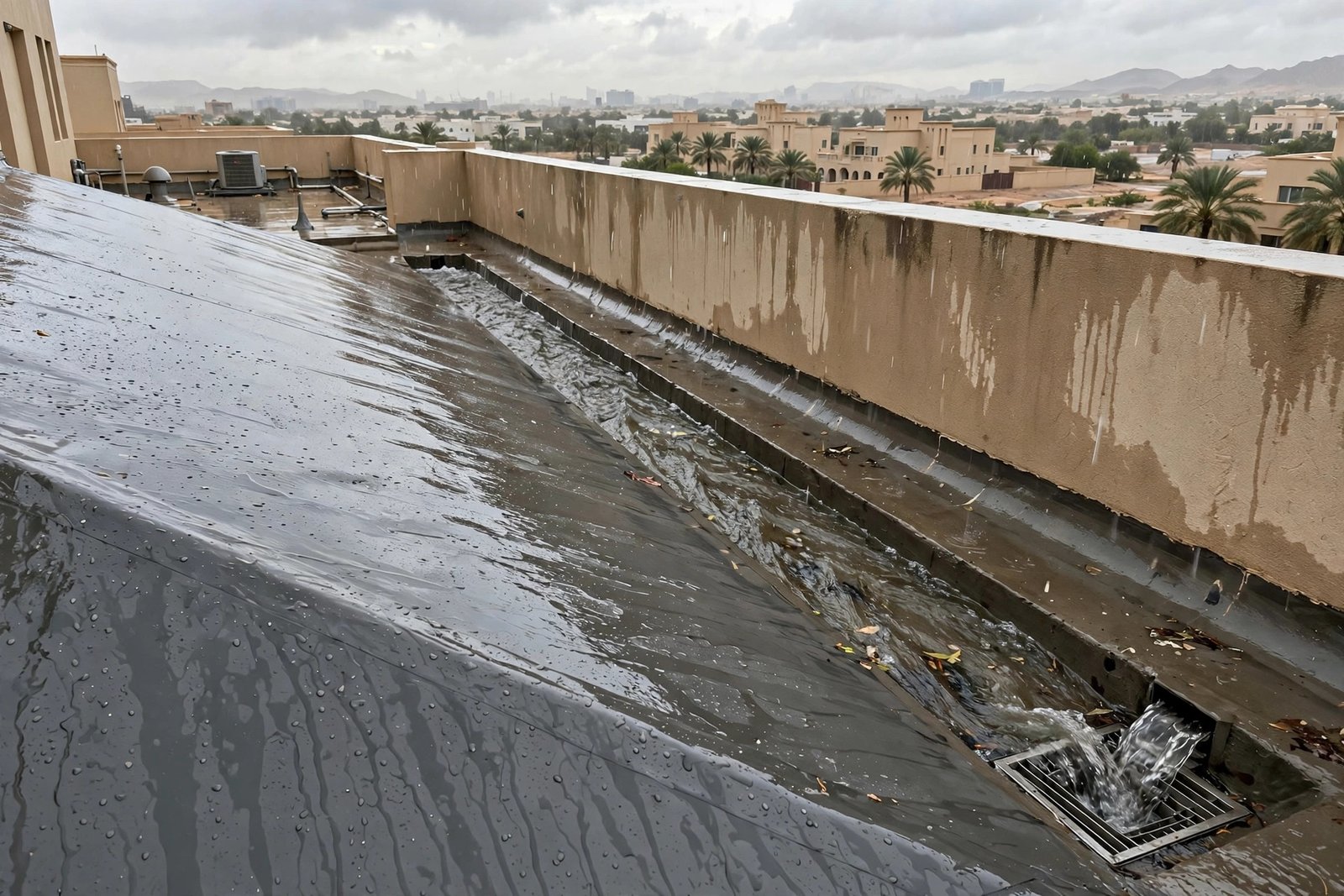
Many Riyadh villa roofs are nearly flat, and even small low spots become ponds during heavy rain. Standing water finds tiny cracks in the waterproofing membrane and forces its way through over time. After rain, walk the roof and mark every spot where water sits for more than 48 hours. Those ponds tell you exactly where the slope needs correction.
Professionals fix this with tapered insulation or screed layers that guide water toward drains, then seal the surface with a quality waterproofing membrane. It is a bigger job than cleaning gutters, but it stops the cycle of patching the same leak every season.
3. Maintain Courtyard and Perimeter Drainage Channels
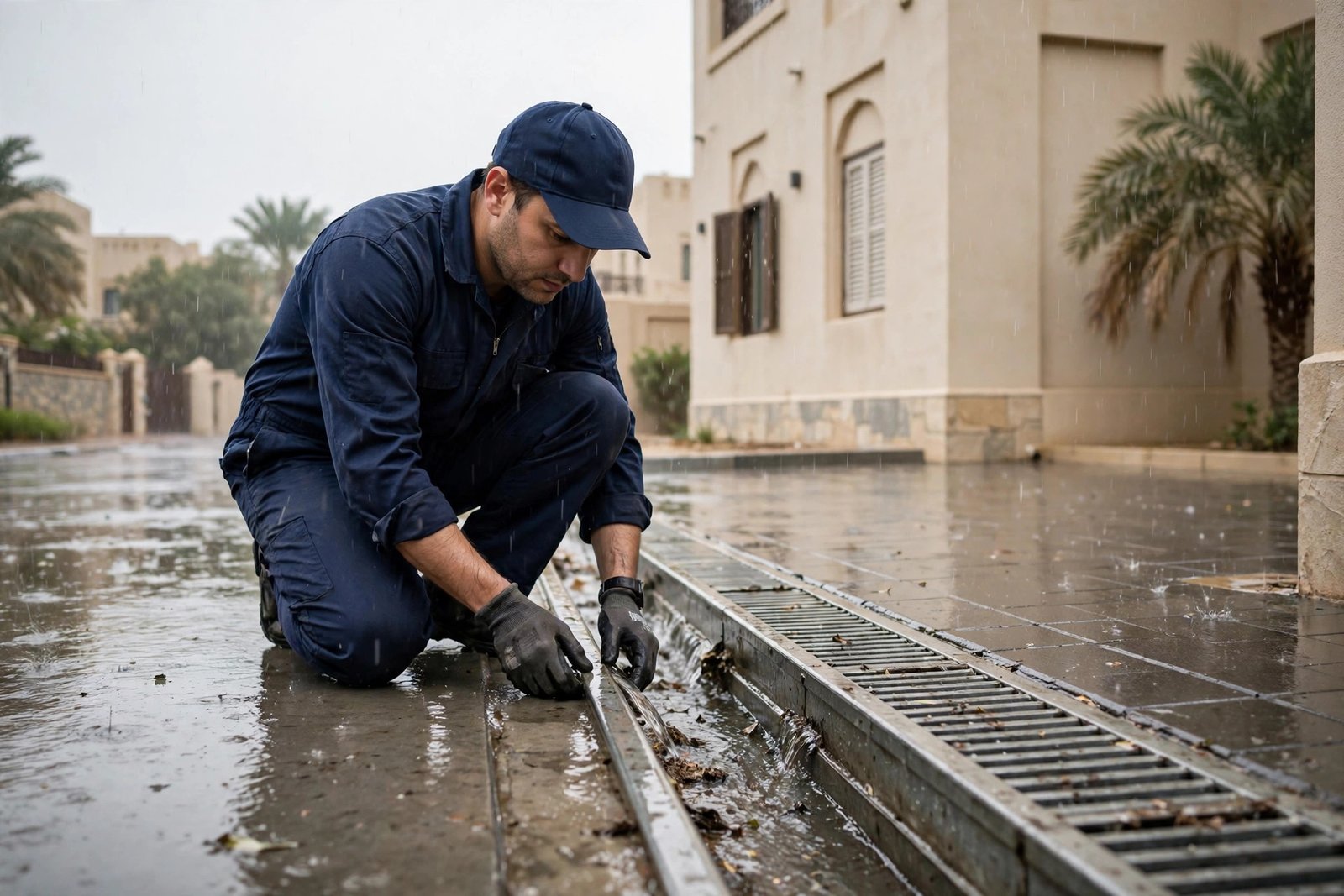
Villa courtyards, driveways and garden edges collect huge volumes of runoff from roofs and paved areas. Most are built with shallow surface channels that carry water to the street or a soak pit. When sand and debris block these channels, water backs up against doors and ground-floor walls instead. Rake them clear before storm season and test them with a garden hose.
Check that channel grates sit level with the paving so water actually flows into them, and make sure the outlet is not buried under soil or landscaping. If your courtyard floods every year, it is a design problem rather than bad luck, and a technician can redesign the channel layout or add extra drain points.
4. Waterproof Exposed Surfaces Before the Rain Arrives
Drainage moves water away, but waterproofing stops the water that reaches your surfaces. Roof membranes, parapet walls, skylight curbs and terrace floors all need intact waterproofing to survive a storm. Look for blistering, cracked sealant and peeling coatings, since these are early warnings of a membrane that is about to fail. Villa rain drainage essentials always pair drainage with waterproofing, because one without the other is only half a solution.
Our waterproofing service starts at 50 SAR per meter (was 70), covering professional-grade membranes backed by our 30-day golden warranty. For roof-specific work, see our guide to roof waterproofing in Riyadh, which covers the 7 leak signs to fix fast.
5. Protect Your Foundation from Standing Water
Foundation damage is the most expensive consequence of bad drainage. When downspouts dump water at the base of the walls or courtyard channels overflow toward the house, the soil around your foundation becomes saturated. In Riyadh’s sandy soils this can cause settlement cracks, damp ground-floor walls and damaged interior finishes.
The fix combines everything above: extend downspouts away from the walls, keep perimeter channels flowing, and grade the soil so it slopes away from the villa. For a deeper look at how gutters protect foundations, this foundation drainage guide explains why outlet placement matters so much.
6. Book a Professional Drainage Inspection
The hardest drainage problems to spot are the ones you cannot see: a partially crushed underground pipe, a membrane blister hiding under gravel, a downspout connection that separated inside a wall. A professional inspection finds these before they become leaks. Villa rain drainage essentials are easy to follow on your own, but an annual check by a certified technician catches the hidden issues.
SheelTalab technicians inspect gutters, roof slopes, courtyard channels and waterproofing in a single visit, with 45-minute rapid dispatch anywhere in Riyadh and service available 24/7. We hold a 4.9/5 rating from more than 18,500 jobs. If your drains are blocked rather than broken, our drain cleaning service clears them fast, and bathroom trouble is covered in our bathroom waterproofing guide.
What Does Professional Drainage Help Cost in Riyadh?
Professional waterproofing and drainage work in Riyadh starts at just 50 SAR per meter, down from 70, with our 30-day golden warranty on every job. Compare that with the cost of repainting a water-damaged facade or replacing soaked gypsum boards, and prevention wins easily. Call 0570328344 or 0570328344 for a free assessment and same-day dispatch.
The Bottom Line
Storms in Riyadh are rare but ruthless, and your villa’s drainage system is what stands between a passing downpour and an expensive repair bill. Work through these villa rain drainage essentials before the clouds gather: clear the gutters, fix the slopes, keep the channels flowing, waterproof the exposed surfaces, protect the foundation, and get a professional inspection. Do that, and the next storm becomes a non-event.