If you are building, renovating, or repiping a villa in Riyadh, the ppr vs pvc pipes debate comes up fast. Both are plastic piping systems used across Saudi homes, but they behave very differently under our 47°C summers, hard groundwater, and high-pressure booster pumps. Picking the wrong one means leaks, low pressure, or a full repipe years too early.
This guide breaks down the real differences between PPR (polypropylene random copolymer) and PVC (polyvinyl chloride) pipes so you can make a confident choice. We will compare heat tolerance, lifespan, jointing methods, cost, and the best uses for each in Riyadh villas.
SheelTalab’s plumbers install and repair both systems every week, so this is practical advice from the field. Our Plumbing & Leak Detection visit starts at just 150 SAR (was 180), with acoustic pipe leak scanning included when needed.
What Are PPR and PVC Pipes?
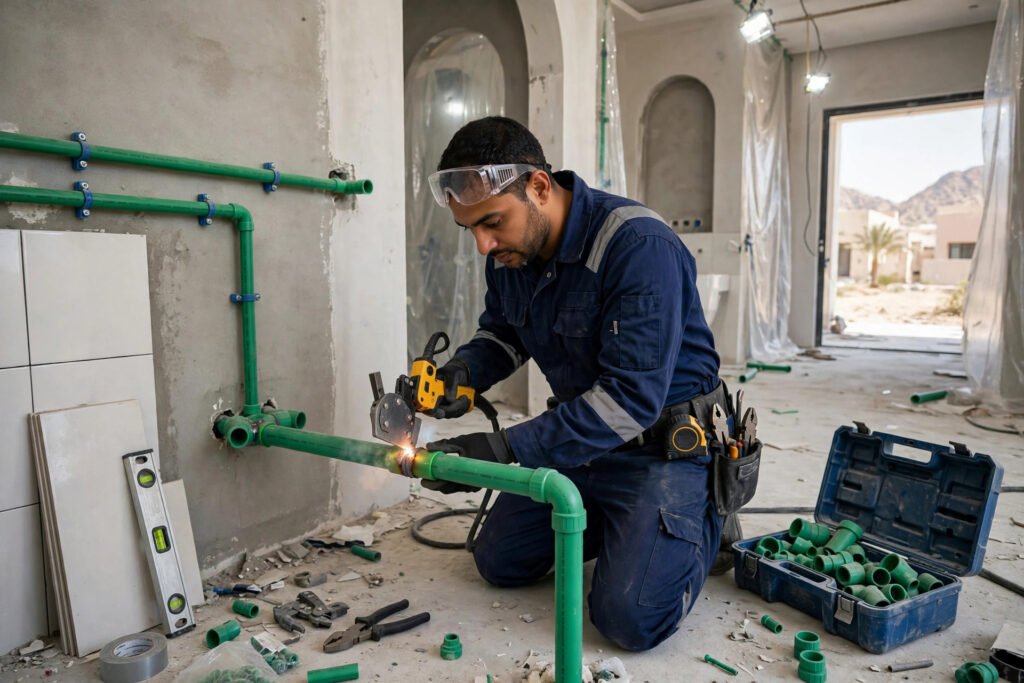
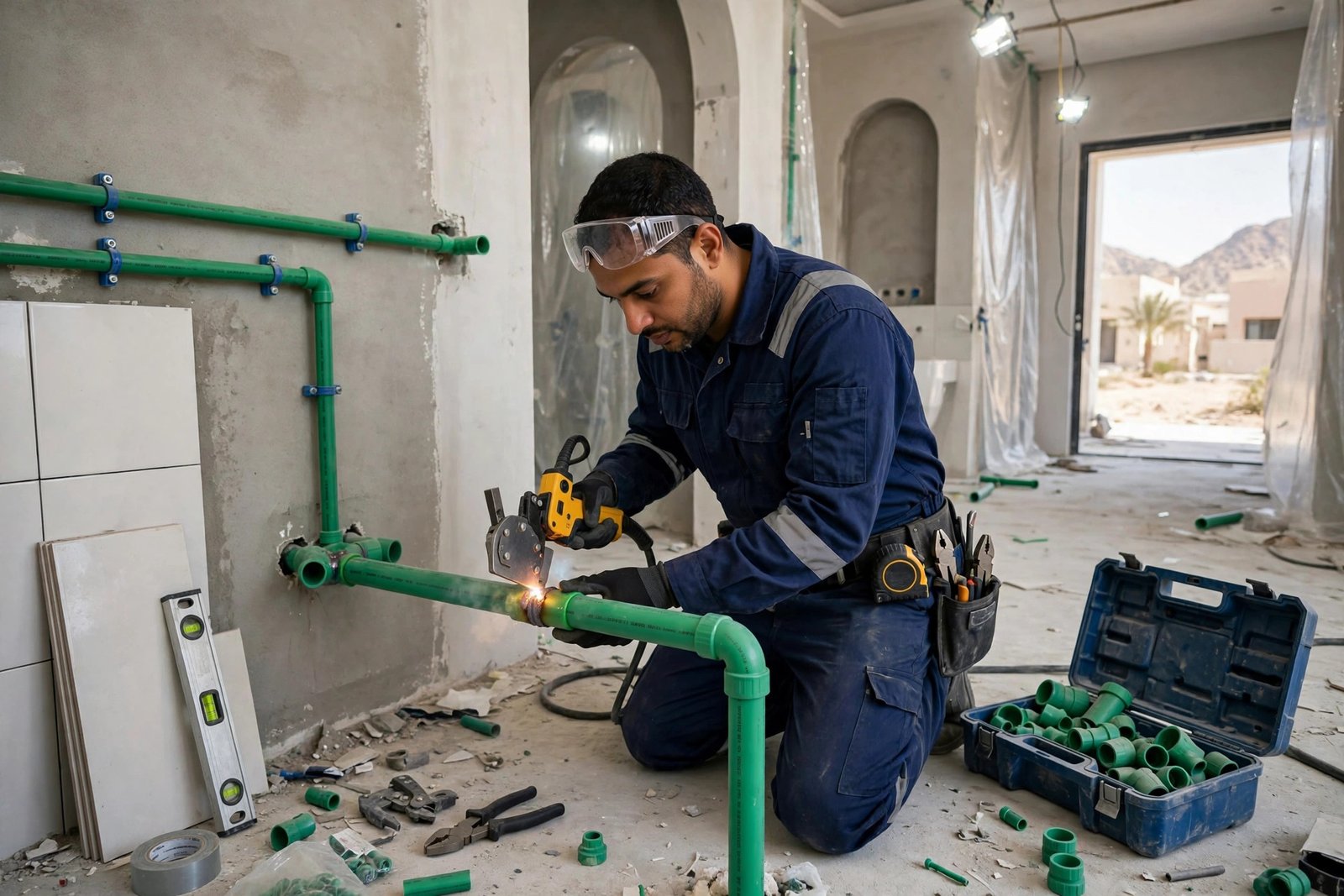
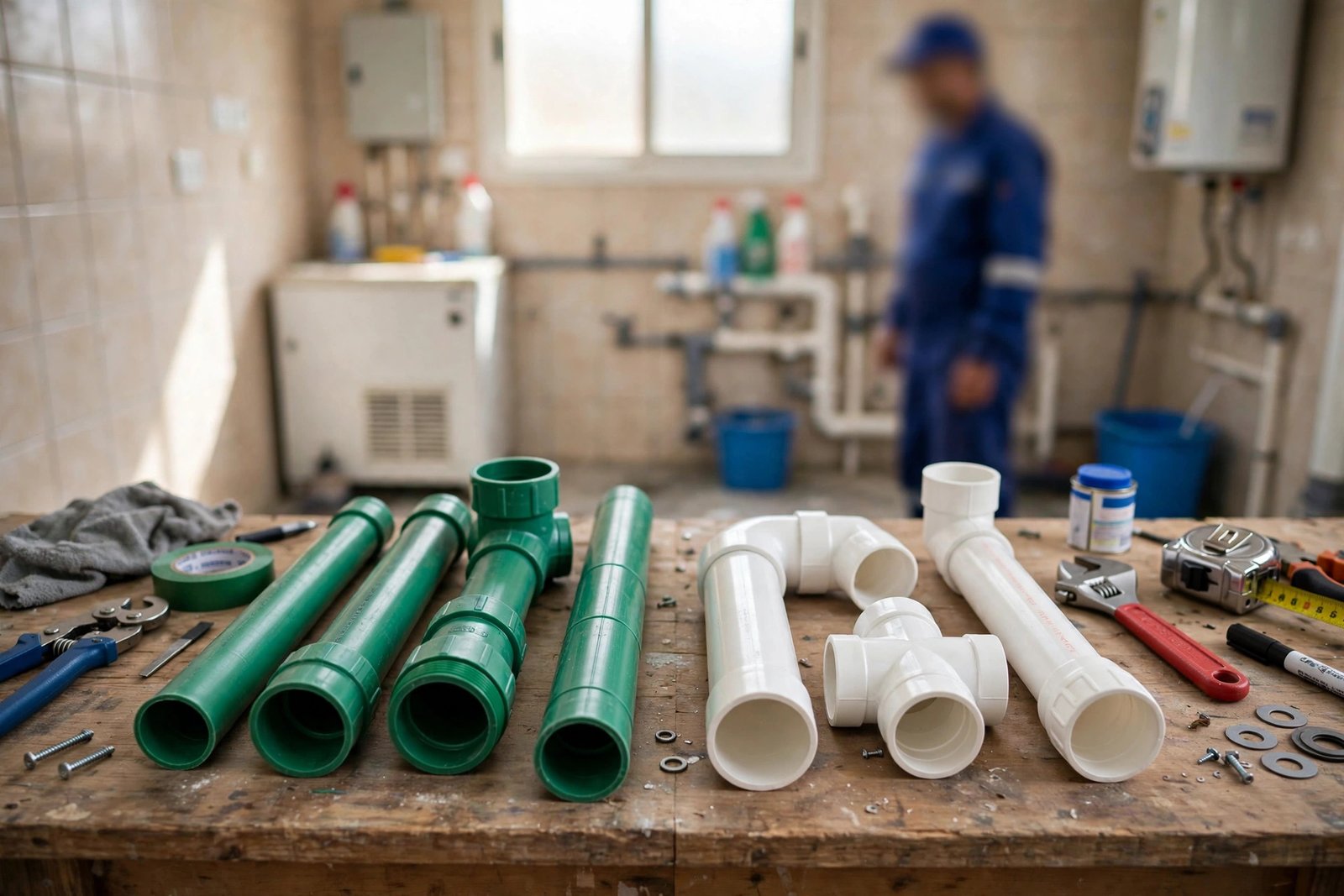
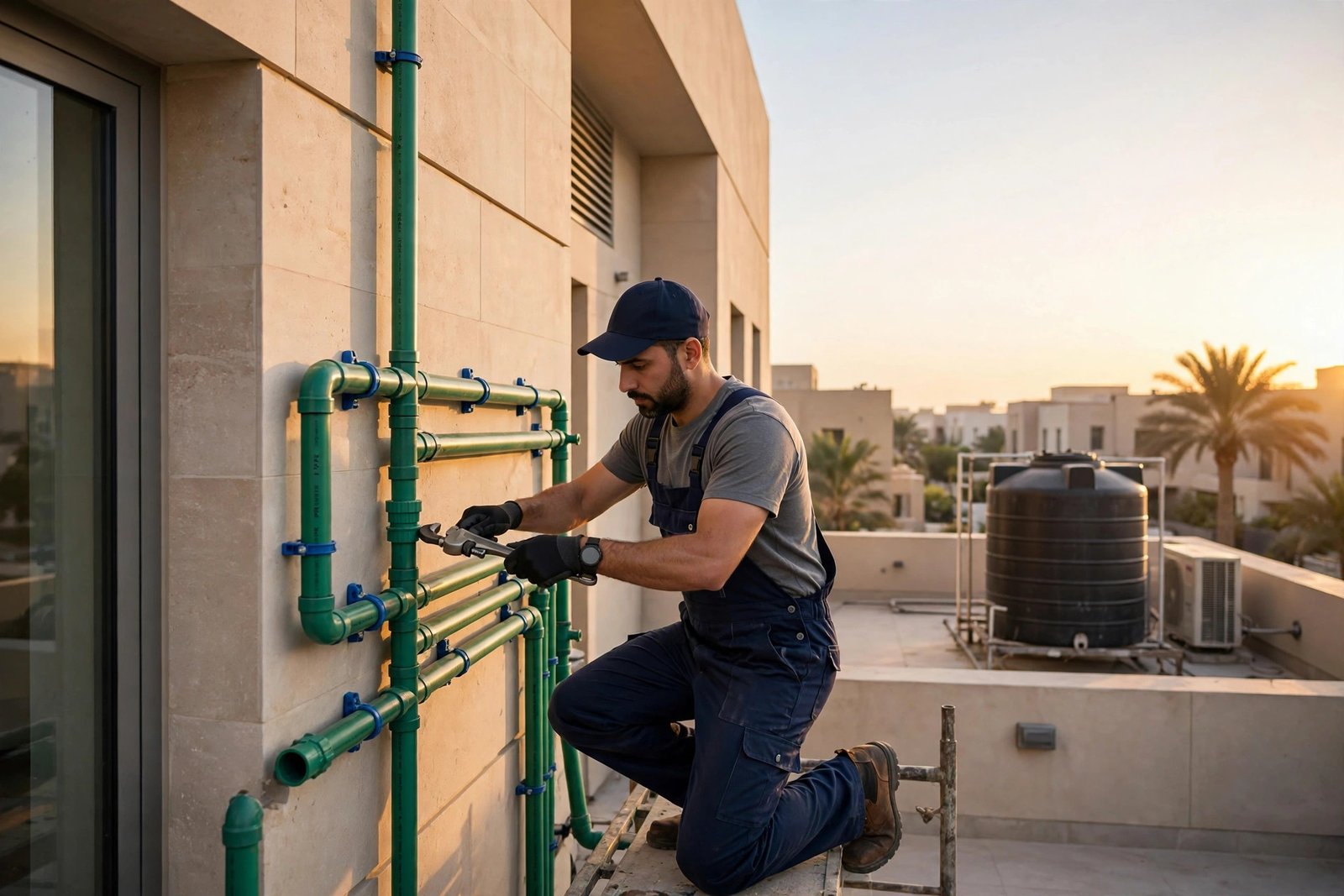
PPR pipes are made from polypropylene random copolymer, a heat-stable plastic that is fused together with a special welding tool. The joints literally melt into one solid piece, which is why PPR is the standard for hot and cold water supply lines in most new Riyadh villas. The pipes are usually green or white.
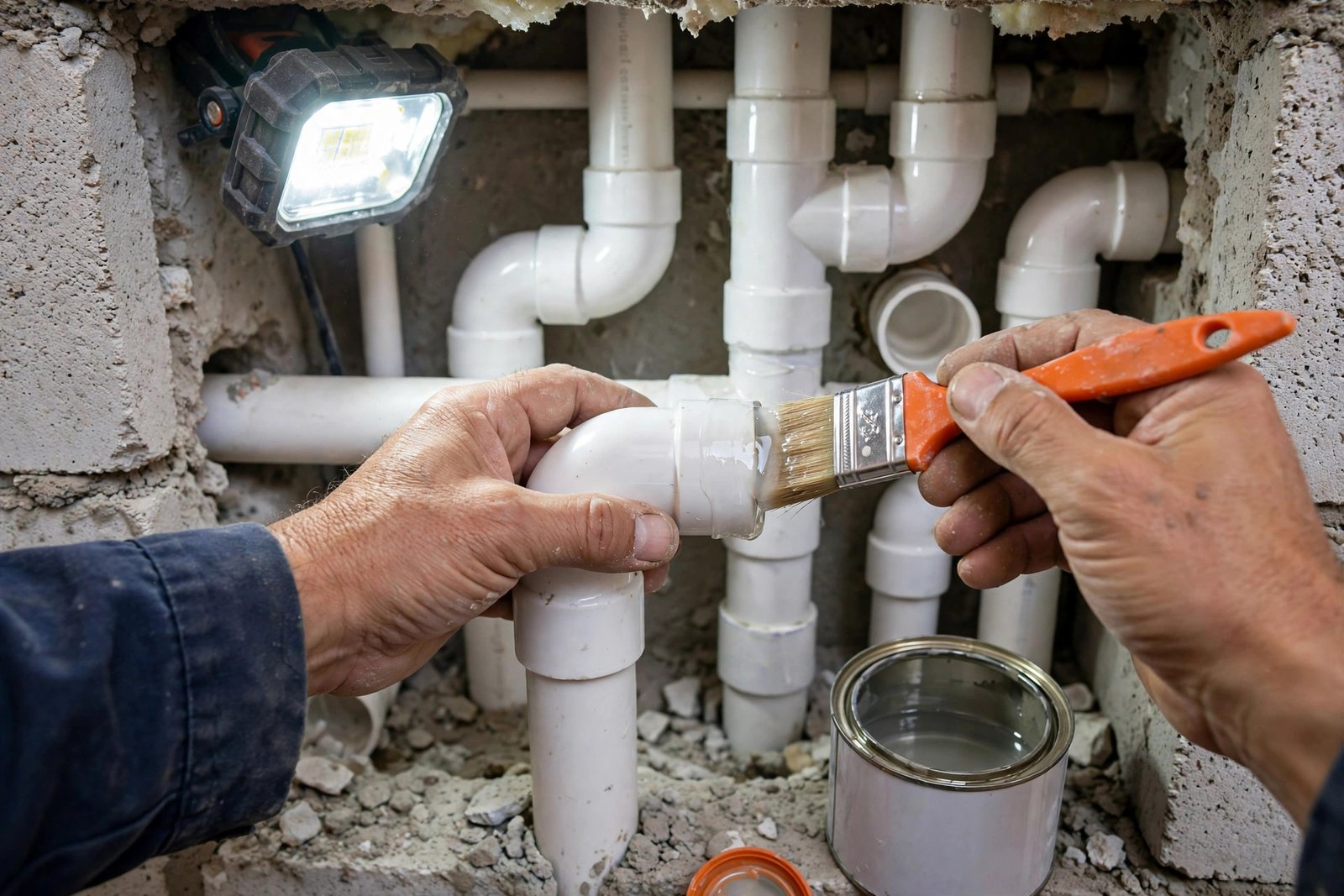
PVC pipes are made from polyvinyl chloride, a rigid plastic joined with solvent cement (glue). PVC has been used for decades in Saudi homes, mainly for drainage, vent lines, irrigation, and cold water supply. It is affordable and easy to work with, but it cannot handle hot water or direct Riyadh sun exposure on rooftop lines.
PPR vs PVC Pipes: 7 Differences Explained
Here are the seven differences that actually matter for a homeowner in Riyadh, from heat tolerance to cost.
1. Heat Tolerance in Riyadh’s Extreme Summers
This is the biggest difference. PPR pipes handle continuous hot water up to 95°C, so rooftop pipes baking in 47°C sun and hot water lines from your heater are no problem. PVC pipes max out around 60°C and soften or warp when exposed to heat. That is why we never recommend PVC for hot water supply or sun-exposed rooftop runs in Riyadh villas.
2. Lifespan and Durability
A properly installed PPR system lasts 50 years or more. Its fused joints become part of the pipe itself, so there is no weak point to fail. PVC systems typically last 25 to 40 years, and the glued joints weaken first under pressure or temperature swings. For a villa you plan to live in long term, PPR wins.
3. Jointing Method: Fusion vs Glue
PPR pipes are joined by heat fusion. The plumber heats both ends and presses them together, creating a single seamless piece with zero leak paths. PVC pipes use solvent cement, which chemically bonds the fitting. It works well when done right, but a rushed glue job (common with cheap contractors) creates joints that drip or burst under pressure. Failed joints are one of the main reasons for hidden pipe leaks in older Riyadh homes; our water leak detection service finds these failed joints without breaking a single tile.
4. Cost: Materials and Installation
PVC is the budget option: the pipes and fittings cost noticeably less, and any plumber can install them with basic tools. PPR materials cost more and need a fusion welding machine plus a trained technician. But cheap quotes hide the real math: a PVC system that needs repairs or replacement in 15 years costs far more than doing PPR right once. SheelTalab’s plumbing labor starts at 150 SAR (was 180, labor only), and we quote both options honestly so you can compare true lifetime cost.
5. Corrosion, Scale, and Riyadh’s Hard Water
Both plastics resist corrosion far better than old galvanized steel, which is why repiping with either is an upgrade. PPR has the edge on scale: its smooth, fused interior resists the mineral buildup common in Riyadh’s hard groundwater. PVC collects scale faster at joints and bends, which gradually narrows the pipe and contributes to low water pressure problems many villa owners notice after a few years.
6. Pressure Rating and Booster Pumps
Many Riyadh villas use pressure booster pumps to push water to upper floors and rooftop tanks. PPR handles higher working pressures comfortably, making it the safer match for pumped systems. Standard PVC suits normal gravity-fed pressure, but high-pressure PVC grades cost more and still cannot match PPR’s fused-joint strength. If your villa runs a booster pump, choose PPR.
7. Best Uses in Riyadh Villas
Neither pipe does everything, and most well-plumbed villas use both. PPR is best for all hot and cold water supply lines, rooftop runs, and full villa repiping. PVC is best for drainage and waste lines, vent stacks, and garden irrigation, where heat and pressure are not concerns. A good plumber puts each material in its right place, keeping total project cost sensible without compromising the lines that matter.
PPR vs PVC Pipes: Quick Comparison Table
This ppr vs pvc pipes comparison table puts the key facts side by side so you can decide at a glance.
| Feature | PPR Pipes | PVC Pipes |
|---|---|---|
| Heat tolerance | Up to 95°C, handles hot water and rooftop sun | Up to 60°C, cold water only, warps near heat |
| Lifespan | 50+ years with fusion joints | 25 to 40 years depending on grade |
| Jointing method | Heat fusion, one solid seamless piece | Solvent cement glue, joints can weaken over time |
| Cost | Higher material cost, premium long-term value | Lower cost, budget-friendly upfront |
| Scale resistance | Excellent, smooth interior resists hard-water scale | Good, but scale builds up faster at joints |
| Pressure rating | High, ideal with booster pumps | Standard, fine for gravity-fed systems |
| Best use in Riyadh villas | Hot and cold supply lines, rooftop runs, full repiping | Drainage, vent lines, irrigation |
Which Pipe Should You Choose for Your Riyadh Villa?
In the ppr vs pvc pipes debate for Riyadh villas, our recommendation is simple: use PPR for every water supply line (hot and cold), especially rooftop runs and anything connected to a booster pump. Use PVC for drainage, vents, and irrigation where it performs perfectly and saves you money. This mixed approach is what professional plumbing design looks like, and it is how we pipe most new villas.
If your villa still runs on old galvanized steel, a full repipe in PPR is often cheaper than patching failures one by one. For authoritative technical background on plastic piping standards, the Plastics Pipe Institute publishes detailed material guides. And if your drains are the problem rather than the supply lines, see our guide on professional drain cleaning in Riyadh.
Get Expert Pipe Installation from SheelTalab
Still have questions about ppr vs pvc pipes for your villa? Our certified plumbers will inspect your system, explain exactly what you need, and install it right the first time. Every job comes with our 30-day golden warranty, 45-minute rapid dispatch anywhere in Riyadh, and 24/7 availability. With a 4.9/5 rating from 18,500+ completed jobs, your plumbing is in trusted hands. Call 0570328344 or 0570328344 to book.
Understanding ppr vs pvc pipes helps you spend wisely: premium PPR where your drinking and hot water flows, affordable PVC where drainage and irrigation do the job. Get the mix right once, and your villa’s plumbing will serve you quietly for decades.