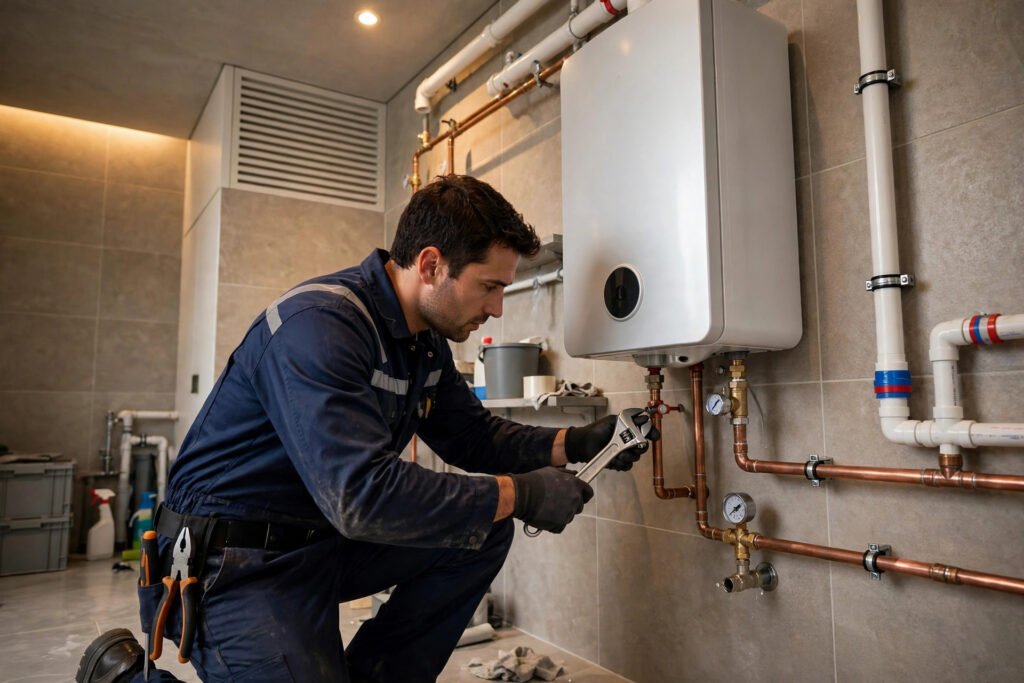
If your home in Riyadh depends on hot water for showers, dishwashing, and everyday comfort, you have probably faced one important question when buying a new unit: tankless water heater vs sakhana, which one is actually better? The sakhana, the familiar tall cylindrical tank, has been the default in Saudi homes for decades. Tankless water heaters, compact units that heat water the instant you open a tap, are now winning over villa owners and landlords across Riyadh.
Both systems deliver hot water, but they work in completely different ways, and the difference shows up in your electricity bill, your bathroom space, and how long you wait for the shower to warm up. This guide breaks down the six differences that matter most for Riyadh homes, including hard water, large families, and our hot climate.
By the end, you will know exactly which system suits your home and your budget. And if you need help installing, repairing, or replacing either type, SheelTalab’s certified plumbers serve all of Riyadh with 45-minute rapid dispatch.
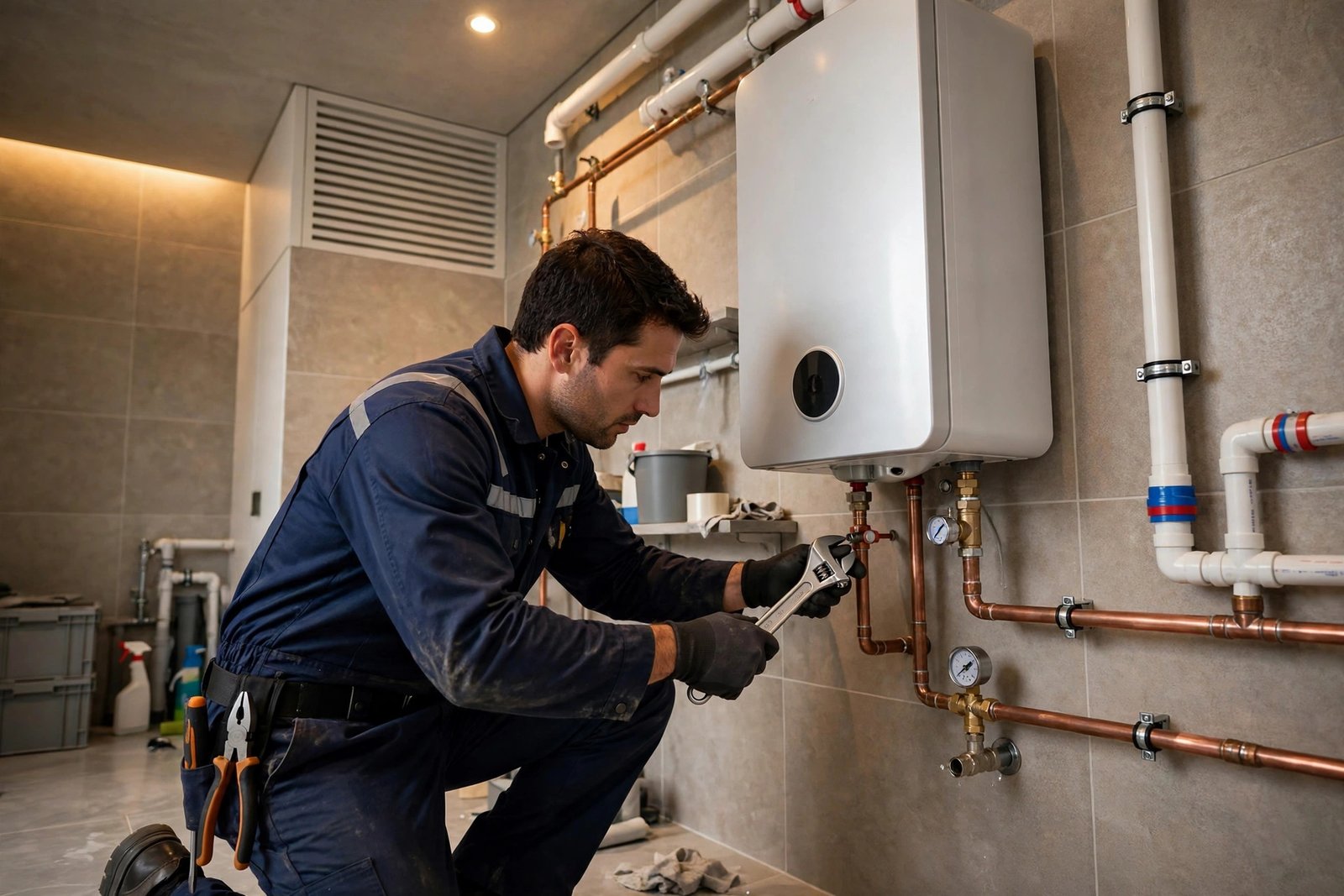
Tankless Water Heater vs Sakhana: The 6 Key Differences
Here is the honest side-by-side comparison our technicians explain on real callouts across Riyadh. Each of these six differences affects your wallet, your daily comfort, or your maintenance routine, so read them all before you decide.
1. How They Heat Water
A sakhana works like a giant thermos. Its internal heating element keeps 50 to 200 liters of stored water hot around the clock, switching on and off all day and night to replace heat that escapes through the tank walls. A tankless water heater works the opposite way: cold water flows through a powerful heat exchanger only when you open a hot tap, and the water is heated in seconds as it passes through. There is no stored water and no reheating cycles, which is the root of almost every difference below.
2. Hot Water Supply: Endless or Limited
This is the difference families feel first. A tankless unit gives you an endless supply of hot water: two or three showers in a row, a running dishwasher, and a washing machine can all draw hot water without the temperature dropping. A sakhana gives you exactly what the tank holds. Once a large family drains an 80-liter tank during morning showers, the next person waits 30 to 60 minutes for the water to reheat. In Riyadh villas with multiple bathrooms, that limitation causes the most complaints we hear about traditional tanks.
3. Energy Use and Electricity Bills
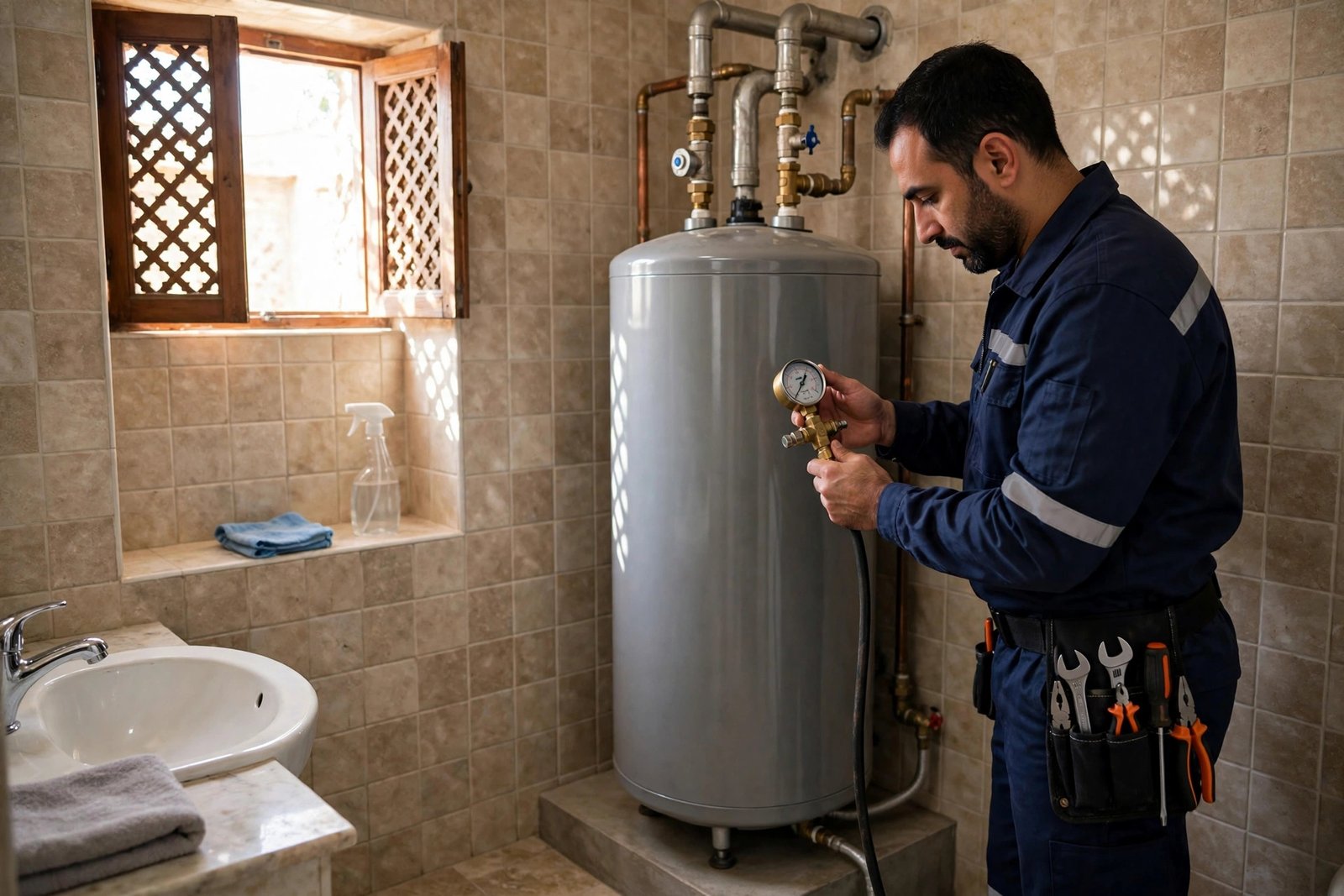
A sakhana spends electricity even when nobody is home. Standby heat loss means the element keeps reheating stored water 24 hours a day, and in a hot garage or rooftop installation the tank also absorbs extra heat stress. A tankless unit has zero standby loss: it only draws power while water is actually flowing. Energy agencies such as the U.S. Department of Energy note that on-demand (tankless) water heaters avoid the standby losses that make storage tanks wasteful, which is why they consistently rate better on efficiency for typical household use (source). One practical note: tankless units need a strong electrical supply, so the wiring must be checked before installation.
4. Size and Space
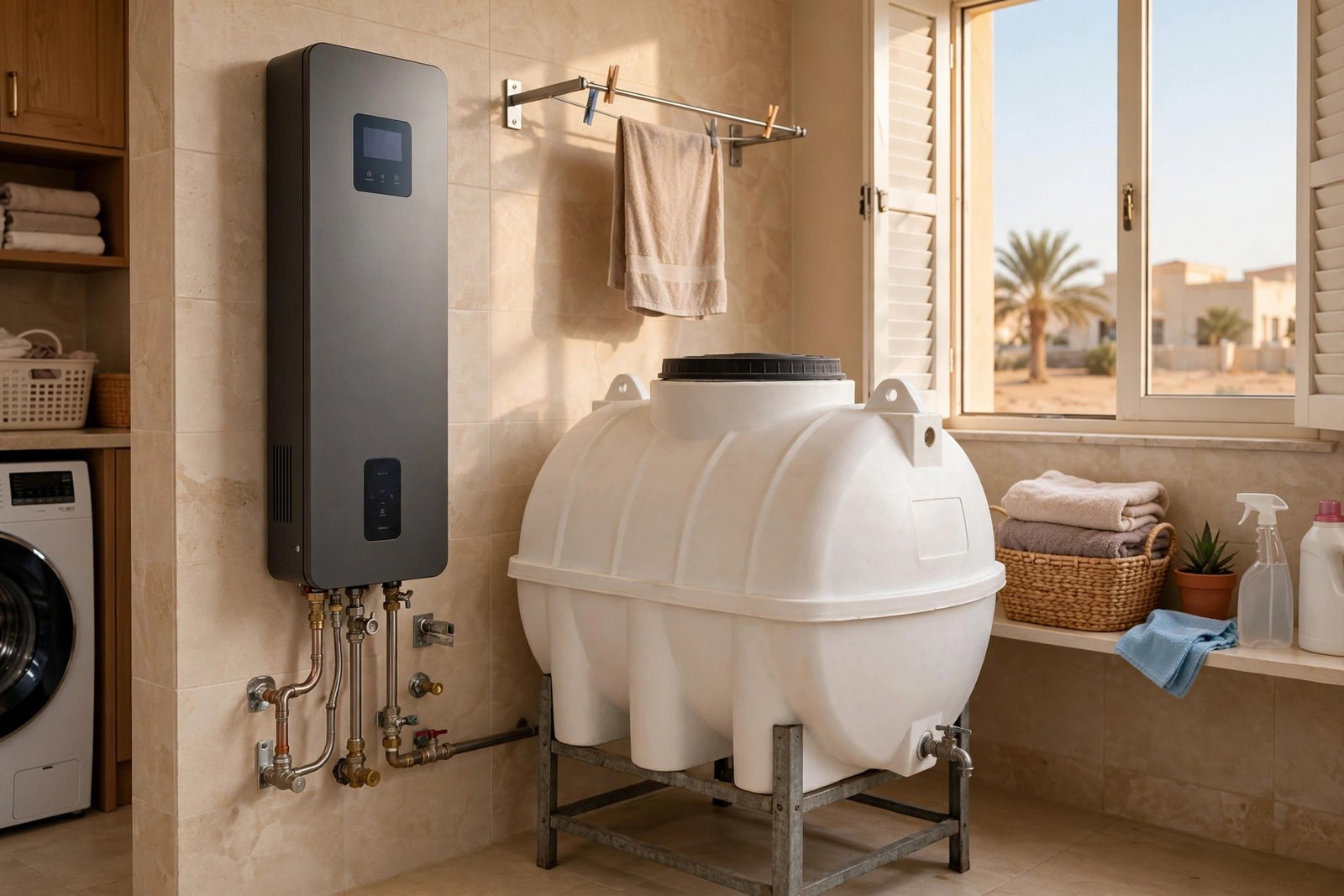
Space matters in modern Riyadh apartments and compact villas. A sakhana is a floor-standing cylinder roughly 1.2 to 1.5 meters tall that demands its own patch of floor, usually in the bathroom, kitchen, or on the roof. A tankless heater is a slim box mounted on the wall, about the size of a small suitcase, which frees up valuable floor space and looks far tidier. For small bathrooms, this alone can settle the decision.
5. Upfront Cost and Installation
This is where the sakhana fights back. A traditional tank unit is cheaper to buy, and swapping an old sakhana for a new one is a straightforward job most plumbers finish in an hour or two. A tankless unit costs more to purchase, and installation is more involved: proper pipework, pressure checks, and an electrical load assessment are all needed for safe, reliable performance. Our Plumbing & Leak Detection visit is 150 SAR (was 180, labor only) and covers professional installation, acoustic leak scanning, and pressure checks, so whichever you choose, it is installed right the first time.
6. Lifespan and Maintenance
Over the long run, the tankless unit usually wins. With annual descaling to fight Riyadh’s hard water, a tankless heater can serve 20 years or more, because there is no tank to corrode. A sakhana typically lasts 8 to 12 years: the steel tank slowly corrodes, scale builds up on the element, and eventually the tank starts leaking. When that happens, hidden water leak detection and a full replacement become unavoidable. Regular flushing and anode rod replacement extend a sakhana’s life, but they cannot stop tank corrosion forever.
| Feature | Tankless Water Heater | Sakhana |
|---|---|---|
| Heating method | Heats water instantly as it flows through a high-power heat exchanger; no stored water | Keeps 50-200 liters of stored water hot around the clock with an internal element |
| Hot water supply | Endless, as long as the tap is running; ideal for back-to-back showers | Limited to tank capacity; a drained tank needs 30-60 minutes to reheat |
| Energy use | No standby heat loss; only consumes power while water flows | Standby loss reheats stored water 24/7, raising electricity bills |
| Size and space | Slim wall-mounted box; frees up floor space | Tall floor-standing cylinder; needs dedicated floor space |
| Upfront cost | Higher unit price plus more involved installation | Lower unit price and simpler, cheaper installation |
| Lifespan | 20+ years with regular descaling | 8-12 years; tank corrosion and scale shorten life in hard water |
| Maintenance | Annual descaling (essential in Riyadh’s hard water) and filter cleaning | Periodic flushing and anode rod replacement; higher rust and leak risk |
Which One Should You Choose for Your Riyadh Home?
When homeowners ask us about tankless water heater vs sakhana, our honest answer depends on their situation. Choose a tankless water heater if you have a large family, multiple bathrooms, limited space, or you plan to stay in the home long enough for the energy savings to pay back the higher upfront cost. Choose a sakhana if your budget is tight, your hot water use is modest, or your current tank setup works fine and just needs replacing.
One thing applies to both: correct installation decides how well and how long the unit performs. Poor pipework, wrong pressure settings, or an undersized electrical supply cause most of the water heater failures we fix. If your home also struggles with low water pressure, get that checked first, because weak flow affects tankless performance and sakhana refill speed alike.

Tankless Water Heater Installation and Sakhana Repair in Riyadh
SheelTalab’s certified plumbers install, service, descale, and repair both tankless water heaters and sakhana units across Riyadh. Our Plumbing & Leak Detection service is 150 SAR (was 180, labor only) and includes acoustic pipe leak scanning, pressure booster pump repair, drain de-clogging, and sanitary valve replacement. Every visit comes with 45-minute rapid dispatch, 24/7 availability, a 30-day golden warranty, and the backing of a 4.9/5 rating from over 18,500 completed jobs. Reach us anytime on 920084252 or 0570328344.
Now that you know exactly how tankless water heater vs sakhana compares on supply, energy use, space, cost, lifespan, and maintenance, you can buy with confidence. Need a hand choosing, installing, or fixing your water heater? Our plumbers are one call away, any time of day or night.